



There's been a curious trend at college graduations around the country. Technology leaders are being invited to speak, but are met with boos when they mention one thing, AI.
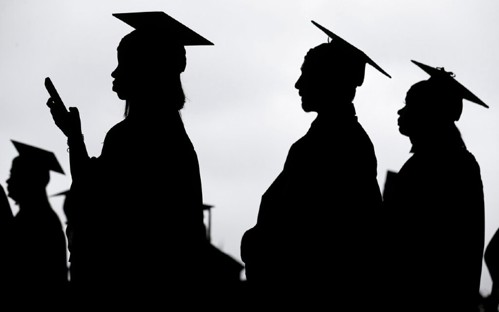 According to the New York Post, Gloria Caulfield of the real estate firm Tavistock spoke to the graduating class at the University of Central Florida.
“The rise of artificial intelligence is the next industrial revolution,” Caulfield said, which was met with boos of disapproval from the audience.
While bewildered at the response, she continued with the speech, later acknowledging the crowd’s mixed reaction to the controversial topic as some still booed while others applauded.
The Wall Street Journal published an article titled “The American Rebellion Against AI is Gaining Steam.” It highlights the multiple ways in which the American public show their disapproval of AI advancement.
The article begins with Eric Schmidt, former Chief Executive at Google, giving a speech at the University of Arizona’s graduation, where he also made the mistake of bringing up AI. He was met with boos as he said AI will bring a “technological transformation” unlike what came before.

Robert Maginnis, author of “AI for Mankind’s Future,” says America's graduating workforce are concerned about two things.
“Gallup says 71% of Americans oppose the data centers in their backyards,” Maginnis states, a statistic mentioned in an article on The Washington Stand.
The centers will consume massive amounts of electricity and water, potentially making both commodities more expensive, although there are innovations that will mitigate those costs.
AFN reported previously on data centers being built in Texas and Virginia, sparking disapproval as electricity bills increase.
Secondly, students are worried that AI will devastate the employment market.
“They're upset because they may not have a job. And we've seen, demographically, the decrease in the number of jobs that are available,” Maginnis says.

Adam Magana, CEO of Optima, says every cultural revolution has had its fearmongers.
“Every time we have an industrial revolution, there are folks who should be skeptical,” Magana states.
In the short term, he says the graduates are right. It may be harder for them to find work, but if history is any guide, AI will produce more jobs than it takes.
“Because the cost of knowledge is coming to zero, there will be so many opportunities for these students to benefit from this future,” Magana says.