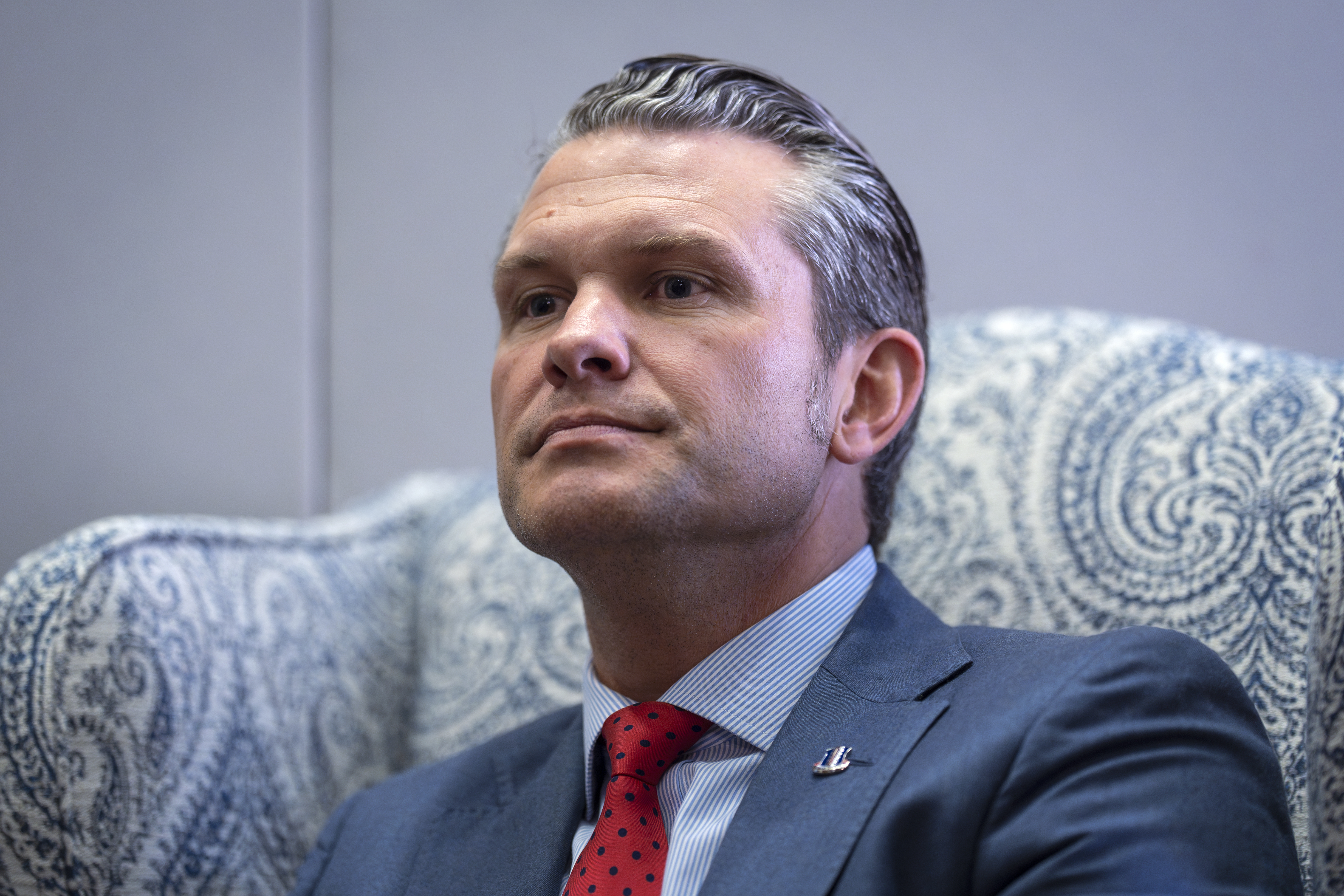



President Donald Trump made North Carolina his first campaign stop since last week's midterm GOP convention. Wednesday night, he held a rally in Gastonia, a few miles outside of Charlotte, stumping for Republican Senate hopeful Michael Whatley (pictured above), who faces a tough challenge from former Governor Roy Cooper (D).
Dr. Alex McFarland doubts the polling, which shows that Whatley trails the Democrat by almost eight points.
"Questionable polling aside, North Carolinians of all strata need to get out and vote and need to do what they can to elect Senate candidate Michael Whatley," he submits.

Like many other southern states, North Carolina voted almost exclusively Democratic from 1876 through 1964 and almost exclusively Republican beginning in 1968. Historically, the state's registered Republican voters have turned out at higher rates in presidential years than midterms, with GOP turnout reaching about 82% in 2020 compared with 59% in the 2022 midterm.
Republicans have also generally turned out at a higher rate than Democrats in recent general elections. In 2022, for example, GOP turnout was 58.6%, compared with 51.3% for Democrats and 44.8% for unaffiliated voters.
Cooper left office in January 2025 after serving two consecutive terms, but despite his re-election in 2020, McFarland says he was a poor leader.
"Roy Cooper is known to be very soft on crime," the apologist notes. "During COVID, Roy Cooper kept public schools closed for much too long. Many, many school administrators were all but begging Gov. Cooper to open the schools. North Carolina public school students really, really suffered because of his unconstitutional and very draconian overreach during COVID."
Under the former governor's leadership, the state's public schools initially shifted to complete remote learning in March 2020 before transitioning to a phased, hybrid reopening for the 2020–2021 school year. Under his "safety" framework, elementary schools returned to classrooms first, while older students utilized a mix of online and in-person learning with required safety protocols like mandatory masking until 2022, increased cleaning, and social distancing.