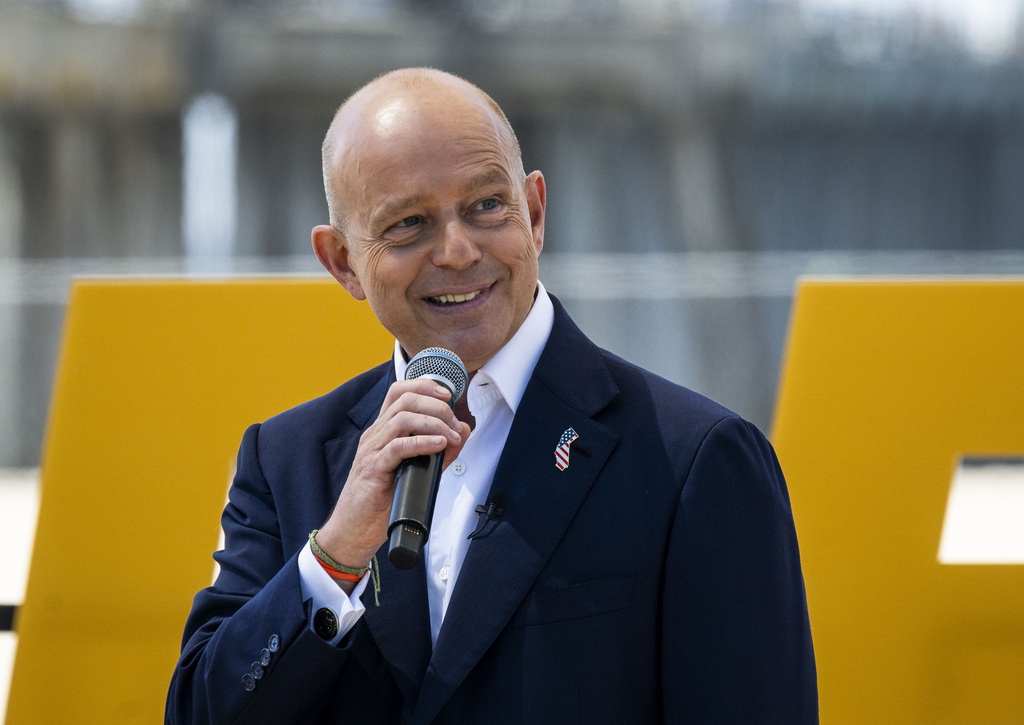



Now Donald Trump’s decision to block the Strait of Hormuz could be the tipping point for an unarmed Iranian citizenry to do just that, Scott Uehlinger, a former U.S. intelligence officer, said on American Family Radio Tuesday.
Iran's dire economic conditions were a motivating factor when roughly a million people protested nationwide in January. The numbers of those killed by the Islamic regime were hard to track but were estimated at more than 30,000.
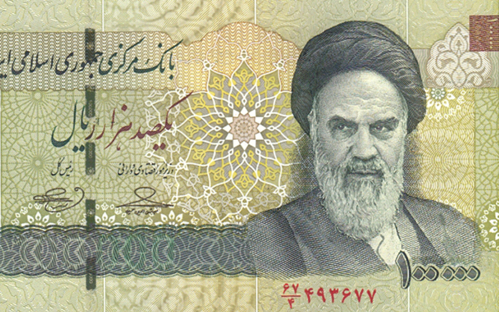 Now the U.S. Naval blockade of Iranian ports, just 24 hours old, could cost Iran about $435 million a day in economic damage, according to Miad Maleki, a senior fellow at the Foundation for Defense of Democracies and a former Treasury official, via The Wall Street Journal.
That estimate includes $276 million in lost daily exports.
“So when this happens, the economy, which already is in really bad shape, is going into an absolute tailspin,” Uehlinger told show host Jenna Ellis. “Once that happens, then the likelihood of someone rising up or the people rising up and stepping in and getting rid of the mullahs gets greater by the day.”
The tensions rise in spite of the fact Iranian citizens cannot legally own firearms.
Still, the fear of uprisal “is what’s causing panic with the mullahs in Iran,” Uehlinger said.
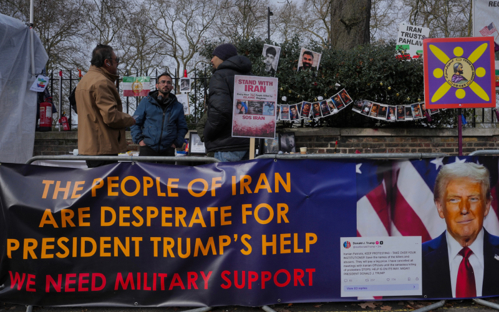 Inflation, according to the independent news outlet Iran Wire, had reached levels not seen since Iran’s occupation in World War II before the beginning of Operation Epic Fury on Feb. 28.
Data from the Statistical Center of Iran showed that inflation in several key categories had moved into triple digits. Food inflation had reached 110%. Bread and cereals had seen one of the steepest increases, rising by 142%. Meat prices were up 117%, milk, cheese, and eggs up 108%, fruit up 113%, and cooking oil had surged by an unprecedented 207%, Iran Wire reported.
Food and beverages had essentially doubled in price compared to 2025, the outlet reported.
The balance of aid vs. objectives
The blockade would likely allow humanitarian aid to reach the Iranian people, but that’s where the U.S. would face the complex problem of allowing aid while keeping it out of the hands of the Iranian military.
“I'm sure the Trump administration is all over that. That's where they've got to be really careful, because what happened with Iraq was that when we started shipping in aid to the people of Iraq, Saddam Hussein confiscated it and used it only for his army. Then the people suffered and he actually consolidated power,” Uehlinger said.
The U.S. would not allow aid if it could not guarantee it would reach the people, Uehlinger said.
Iran faces economic devastation. In the U.S., there’s angst for gas prices which averaged $4.118 per gallon on Tuesday, according to AAA.
 That could change down the road.
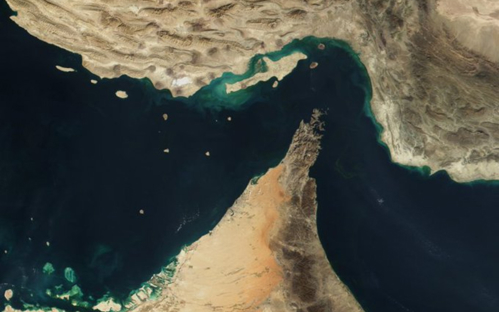
While the Strait of Hormuz is blocked, U.S. oil exports are surging with buyers from Asia, Europe and Africa.
The market-intelligence firm Kpler says U.S. crude exports are on pace for a record 5 million barrels a day this month. Kpler is tracking 70 supertankers, known as Very Large Crude Carriers, that are due to arrive in U.S. Gulf Coast ports in April and May, The Wall Street Journal reports. Last year, an average of 27 supertankers loaded up on U.S. crude each month. Each vessel can carry about 2 million barrels of oil.
“A little bit of a high price at the pumps is nothing compared to what every other country in the world is paying for this. Trump is willing to tolerate this for a little while, because in the end, it will solidify our position as the premier — far and away — energy exporter of the world,” Uehlinger said.
While Hormuz sits in conflict the U.S. is in good shape with the lesser known Strait of Malacca because of its good relationships with Singapore, Malaysia and Indonesia, Uehlinger said.
The Malacca Dilemma
Meanwhile, Malacca is a lot trickier for China. Eighty percent of China’s imported oil passes through Malacca, which is narrow, congested and easily disrupted.
In any sort of conflict with the U.S., China fears the possibility of a blockade of Malacca.
Former Chinese leader Hu Jintao called this China’s “Malacca Dilemma.”
“Trump is helping to sew up the Straits of Malacca, that is going to make China more vulnerable than it's ever been. When you combine Venezuela with what's going on in Hormuz and what is developing in Malacca, Trump is going to be going to a meeting with China, and he holds all of the cards,” Uehlinger said.