




A surprising fault line has opened inside the conservative movement — not over taxes, foreign policy, or immigration, but over artificial intelligence.
Last week, more than 60 self-described America First leaders, prominently including Steve Bannon and Humans First Chairwoman Amy Kremer, delivered an open letter to the White House urging mandatory government vetting of the most powerful AI systems before their public release.
Signed by more than thirty pastors alongside political operatives, it demands what Bannon told Axios plainly: “We must have mandatory testing and government approval.”
That demand matters far beyond politics. Americans increasingly fear two forms of concentrated power: artificial intelligence controlled by what I have previously called the new “robber barons” of Silicon Valley — unaccountable corporate elites accumulating digital power that rivals the monopolists of the Gilded Age — and artificial intelligence controlled by centralized government power, echoing the surveillance state Beijing has already constructed. Scripture and history both give us reason to take those fears seriously and to resist the false choice embedded in Washington’s debate.
Reasonable concerns
Over the past several months in these pages, I have written about citizen resistance to AI data centers, the expanding power of technology oligarchs, the dangers of machine-driven decision-making, and the quiet erosion of human judgment in schools, churches, and public life. The pattern is becoming difficult to ignore: the battle over AI is fundamentally a battle over authority — over who decides what information citizens may access and who governs the systems increasingly shaping employment, banking, healthcare, education, and warfare — questions being settled, right now, by the people who build and deploy them.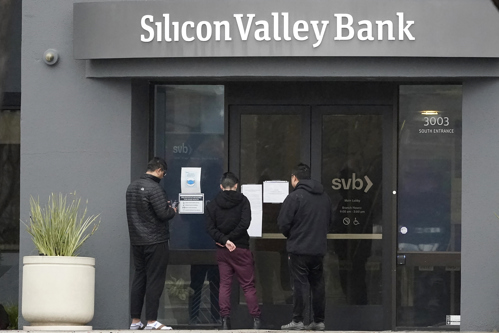
The concern many conservatives carry about Silicon Valley is not irrational. A small number of technology firms — OpenAI, Google, Meta, and Microsoft among them — now control enormous portions of America’s digital infrastructure, and many of their leaders often speak as though technical expertise alone qualifies them to reshape society. Americans have already watched social media corporations suppress news stories, throttle speech, and coordinate with government officials during moments of political controversy. A 2024 Pew Research Center survey found that 78 percent of Americans believe social media companies wield too much political power. Small wonder ordinary citizens are skeptical when those same institutions promise to guide humanity safely into an AI-driven future.
But transferring that power to Washington would compound the danger rather than resolve it. The MAGA proposals envision federal authorities vetting or approving advanced AI systems before public release. The stated aim is understandable — preventing catastrophic misuse involving bioweapons, cyberwarfare, or mass social disruption are genuine national security concerns. Christians and constitutional conservatives should nonetheless think carefully before handing any administration, Republican or Democrat, sweeping authority over what increasingly functions as society’s knowledge infrastructure.
History’s lessons here are concrete. The same federal apparatus now being asked to referee AI has a documented record of turning that authority against its own citizens. In 2013, a Treasury Inspector General report confirmed the IRS had systematically targeted 292 conservative and Tea Party organizations for ideological scrutiny, subjecting them to years of bureaucratic delay while their political opponents faced far lighter review. Six years later, the Department of Justice Inspector General documented at least seventeen significant errors in FBI surveillance applications used to monitor a Trump campaign associate.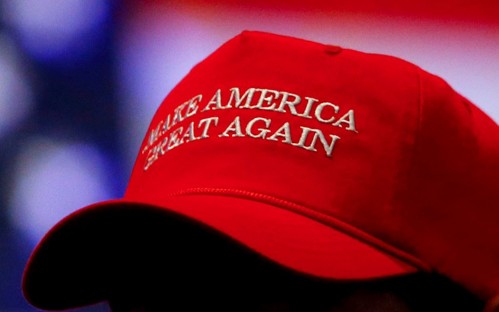
A government empowered to approve or deny advanced AI systems would possess extraordinary leverage over speech, information, economics, and political life — leverage that outlasts any single administration and accumulates with each transition of power. Isaiah 10:1 warned, “Woe to those who decree iniquitous decrees,” and Scripture’s consistent testimony is that fallen human nature operates wherever power concentrates — in legislatures, executive agencies, and corporate boardrooms alike.
China shows us where this path leads. Beijing has integrated facial recognition, predictive analytics, internet censorship, biometric surveillance, and social monitoring into the machinery of state control. Human Rights Watch has documented how the Chinese Communist Party deploys AI-enabled surveillance systems against ethnic and religious minorities, including Uyghur Muslims. In Chapter 1 of The New AI Cold War, I trace how Beijing has constructed this control apparatus — not as a theoretical warning but as an operational warfighting doctrine directed against China’s own population and exported to authoritarian partners worldwide. America cannot afford to lose the technological competition with Beijing, but it cannot afford to replicate Beijing’s institutional relationship between state power and digital systems.
Increasing trust issues
That tension is becoming harder to ignore. Many Americans no longer trust Big Tech, and a growing number distrust the institutions seeking to regulate it. The public is caught between two concentrations of power that neither party can fully account for — forcing many Americans to confront a difficult truth: the concentration of technological power itself may be the central problem, regardless of which elites hold it at any given moment.
 Christians should understand this instinctively. Scripture consistently warns against elevating human systems into ultimate authorities. In Daniel chapter 3, Nebuchadnezzar constructed an enormous golden image and demanded public submission before it. The issue was never merely the statue; it was compelled allegiance to centralized earthly authority. Today’s AI systems are obviously different, but the temptation underneath remains remarkably familiar — trust the system, defer to the experts, surrender judgment to structures claiming superior knowledge.
Paul’s warning in 1 Corinthians 8:1 — “knowledge puffs up, but love builds up” — carries its own precision here. Modern society increasingly conflates information processing with wisdom itself. Artificial intelligence can process astonishing amounts of information in seconds, but speed is not moral discernment, computation is not conscience, and predictive systems are not substitutes for human judgment formed under God’s authority.
Christians should therefore reject the false choice being pressed upon us in this debate. We do not have to choose between Silicon Valley oligarchy and federal management of artificial intelligence. In The New AI Cold War and AI for Mankind’s Future, I argue that AI is quickly becoming part of the infrastructure shaping how societies think, govern, worship, and even understand what it means to be human. The principles required to navigate this moment are not novel — they are biblical: transparency, accountability, constitutional restraint, parental authority, local influence, and the preservation of human moral agency over the decisions that matter most.
Machines can assist human beings, but they must never replace conscience, moral judgment, or the responsibilities entrusted to families, churches, and citizens. Psalm 146:3 says plainly: “Put not your trust in princes, in a son of man, in whom there is no salvation.” That warning applies just as much to billionaires, bureaucracies, and algorithms as it once did to kings and empires — which is why the deepest need in this debate is not for smarter machines but for wiser citizens and leaders courageous enough to govern technology before its architects govern them.
Notice: This column is printed with permission. Opinion pieces published by AFN.net are the sole responsibility of the article's author(s), or of the person(s) or organization(s) quoted therein, and do not necessarily represent those of the staff or management of, or advertisers who support the American Family News Network, AFN.net, our parent organization or its other affiliates.