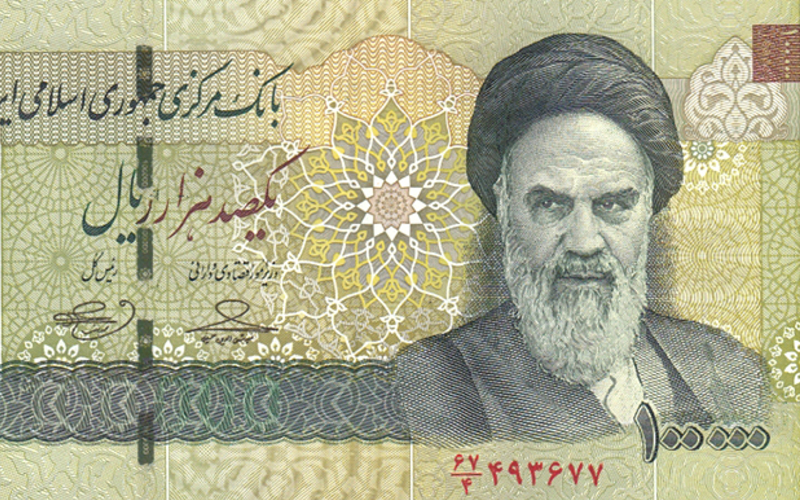


Since Treasury Secretary Scott Bessent announced the commencement of Operation Economic Outcast, there have been varying reports of severe economic hardships in Iran. The latest sanctions from the "Economic D-Day" have reportedly resulted in runaway food inflation, closed gasoline stations and a massive depreciation of the regime's currency.
In addition to making basic goods unattainable or unaffordable for ordinary Iranian citizens, household savings and real wages have been decimated, and the restrictions have cut off critical personal lifelines by suspending financial remittances from relatives living abroad.
Rebeccah Heinrichs, senior fellow and director of the Keystone Defense Initiative at the Hudson Institute, recently told the Fox News Channel that Central Command's Admiral Brad Cooper has reported that the blockade is working.

"The United States has ushered in, shepherded in millions and millions of [barrels of] oil through the Strait [of Hormuz], zero of that belonging to the Iranians, crushing the Iranian source of economic ability to fund the IRGC," she relayed.
When President Donald Trump says the strait is open and the U.S. Navy is effectively ushering ships through, "he is correct," she asserted.
"That was not hyperbole," Heinrichs told Mark Levin. "The Iranians are not as strong as their defenders and backers would lead Americans to believe. The United States has been winning this."
While Iran's leaders and government ministers strongly condemn the U.S. campaign as illegal economic terrorism, the Iranian people are focused on survival, and many citizens feel the new penalties change little about their daily struggles.
Heinrichs said they oppose the regime.
"There are those who would try to argue that the United States shouldn't do things that could effectively collapse the regime because then you would have chaos and all of these Iranians not having governance. But the Iranians know how to be self-governing," she pointed out.
"This is not the United States imposing democracy on a non-self-governing people," Heinrichs continued. "There are factions inside Iran that could certainly overthrow the regime. It could put in place something that would be more conducive to the stability and the prospering of the Iranian people."
The Hudson Institute is a public policy research organization and think tank based in Washington, D.C., that guides policymakers and global leaders in government and business on national security, foreign policy, and economics.