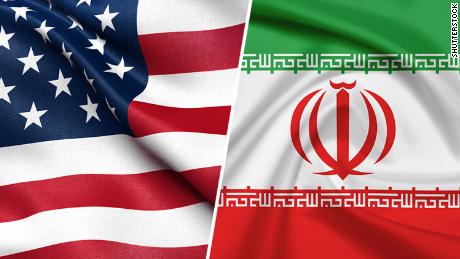



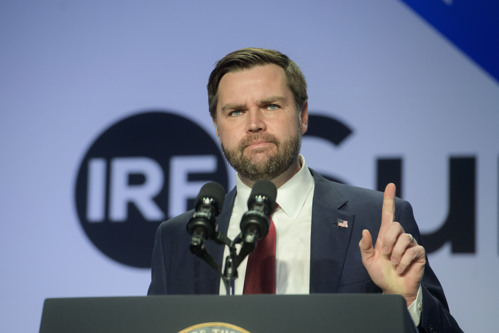
On Friday in Geneva, Switzerland, U.S. Vice President JD Vance is scheduled to sign the Memorandum of Understanding to end nearly four months of war, reports Geneva Solutions. Abbas Araghchi, Iran’s foreign minister, and Mohammad Bagher Ghalibaf, parliament speaker, will be there representing Iran.
According to Associated Press, it will mean the immediate reopening of the Strait of Hormuz and the lifting of the U.S. naval blockade.
Retired Army Lt. Colonel Sargis Sangari was born in Iran, and has a unique perspective on the region.
"This memorandum of understanding is what we have agreed upon, and we're trying to get to a negotiated peace. Iran has no choice but to have to come to the table,” Sangari states.
He says that Iran is losing about $500 million a day.

“It's not a small chunk of change, especially if you're looking at 92 million people in Iran and you're going to feed them at least three meals a day at a minimum. So that economy has no choice but to be able to sustain itself," Sangari says.
This has never been, he insists, about regime change.
"It is to get rid of their nuclear weapon capabilities, to get rid of their ballistic capabilities, to be able to limit them being able to support their proxies, and that's exactly what we're working for,” Sangari states.
In explaining it to others, he compares the concept of regime change to people who want to fire their favorite team's coach.
“Okay, who am I going to replace them with? You have 92 million Iranians. You're going to go find somebody from an older regime, bring them over there and say, 'Here, go manage 92 million people?' Reality needs to match what you have on the ground, and the fact is this: our intent was never regime change," Sangari says.