


AFN reported previously on how the Supreme Court’s decision to stand by states and their right to determine eligibility for female sports based on biological sex was a long time in the making.
When the high court made the decision to allow states to make laws against men in women's sports, some interpreted that as a nationwide ban on their participation. However, that is not the case.
 As of now, 27 states currently have legislation in place to prevent boys from competing in girls' sports. That leaves 23 who still have their "inclusive" policies that fail to protect the female athletes.
One of those states is California.
According to CalMatters, California Gov. Gavin Newsom (D) told now-deceased Charlie Kirk last year that transgender athletes competing in girls’ sports was “deeply unfair.” Now, OutKick reports that after the Supreme Court’s ruling, Newsom’s office declared that the ruling will have no effect on California as they continue with their current policy.
In 2013, the School Success and Opportunity Act was singed, which prohibits school districts from barring athletes based on sex.
These laws were brought to the forefront of Californian minds as AB Hernandez, a transgender track star, was granted a "pilot entry" into the California Interscholastic Federation track championships, which allowed him to take the top spot away from the girls competing.

Sophia Lorey is the outreach director of the California Family Council. She brought to light that despite the mainstream media not covering it, the girls who are in these situations often are the ones who suffer the most.
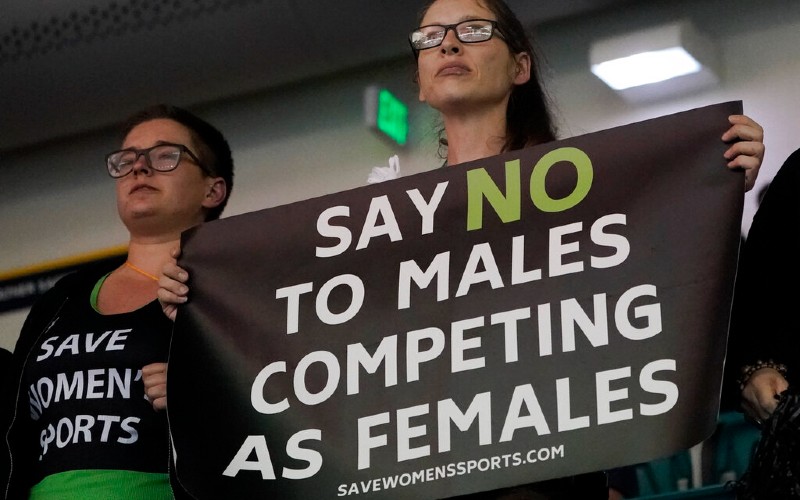
“We weren't hearing the stories of these girls in California that are tired of having to change in their cars because there's a boy in their locker room dressing out for track and field, tired of being called and compared to Nazis by their athletic directors because they wore "Save Girls Sports" shirts,” Lorey says.
However, she does share optimism that the laws that fail to protect the girls can one day can be overturned if enough action is taken.
“Keep the pressure on. We keep trying to fight it at the California capital, we keep showing up at CIS meetings, the girls keep speaking out, and we make sure that these adults recognize that the girls deserve protection,” Lorey says.