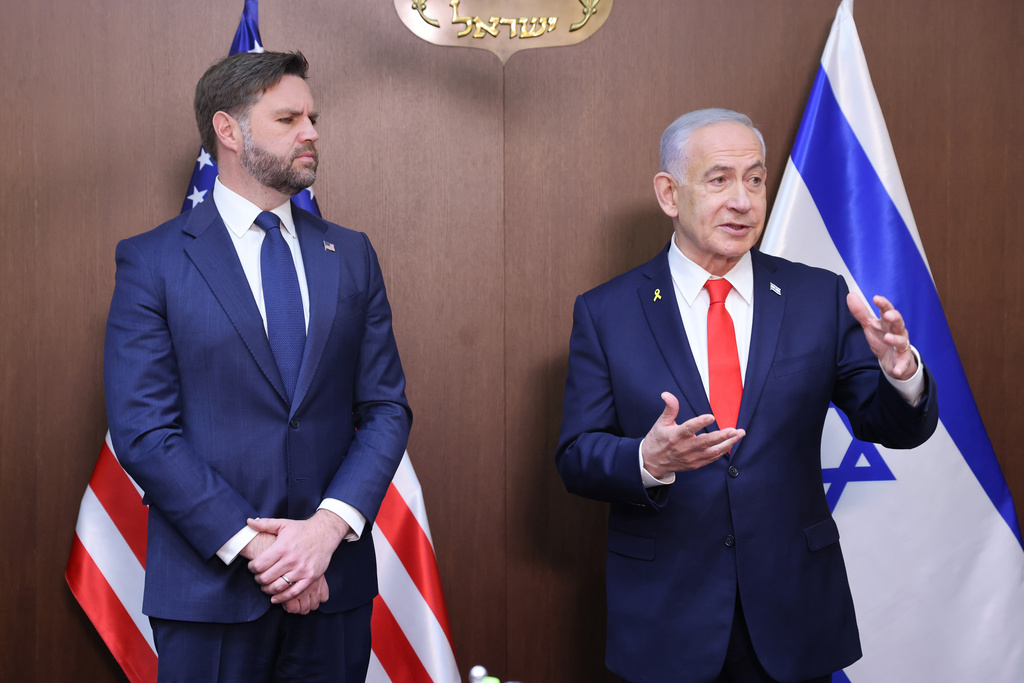



Unlike the U.S. system, which separates presidential elections from congressional midterm elections, Israel holds a single national election in which voters choose political parties to fill all 120 seats in the parliament, which subsequently determines who will serve as prime minister.
This year, Israel's Knesset election and the U.S. midterms are only a week apart, and Israeli Prime Minister Benjamin Netanyahu and U.S. President Donald Trump both face serious political challenges.
According to The Times of Israel's final election poll, the bloc of right-wing parties led by Netanyahu and the Zionist opposition parties headed by Gadi Eisenkot are in a deadlock, indicating that neither group will have enough seats for an outright majority.
American Values President Gary Bauer, who has been named among the top Christian allies of Israel by organizations such as the Israel Allies Foundation, is not too concerned about the polls.
"In recent elections, the prime minister has been in very tight races and often appeared to be slightly behind," he notes. "Israel has a multi-political party system and no one party gets over 50% of the vote. It always depends on coalitions."
Because no single party wins a majority of seats on its own, the largest party must team up with smaller parties to build a coalition government that controls at least 61 seats in the parliamentary democracy. The leader of this coalition becomes the prime minister.
By law, Israeli elections occur every four years, but they often happen much sooner because these fragile government coalitions frequently collapse when small parties quit.
Bauer recognizes that this will be another tough election for Netanyahu, who, having held the office of prime minister for a combined total of 19 years across three separate spans, is the country's longest-serving leader.

"We can't underestimate the fact that he's been a major figure on the Israeli political scene for … many years," Bauer says. "Over time, there's a certain amount of people just getting weary of seeing the same political figure over and over again."
The fragmented opposition bloc — led by prominent challengers such as former Israel Defense Forces Chief of Staff Gadi Eisenkot and former Prime Minister Naftali Bennett — is fighting to unseat Netanyahu.
Eisenkot, Bennett and other opposition leaders, including Yair Lapid, Avigdor Lieberman and Yair Golan, have united under a nonaggression pact to challenge Netanyahu, whom they collectively accuse of prioritizing personal political survival and corruption trials over national security. They argue that his reliance on far-right and ultra-Orthodox allies actively damages Israel's military readiness and social cohesion.
Rather than focusing on peace negotiations, their combined platform centers on security overhauls, government cleanup and social reform. It rests on four primary pillars: accountability for the Oct. 7, 2023, terror attacks; ending ultra-Orthodox draft exemptions; overturning Netanyahu's controversial judicial overhaul laws to protect the independence of Israel's Supreme Court; and taking an institutional, steady approach to regional defense that focuses on regional normalization, dismantling Hamas and rebuilding Israel's global standing.
Though Bauer is "hesitant to make a prediction because … it's so difficult to discern how they'll line up and how coalitions will be formed," he tells AFN, "If I were a betting man, I would not bet against the prime minister."
He says Netanyahu has "outperformed his critics for many, many decades."