


But they also won’t be the best defense to protect minors from online predators, a broadcast professional said on American Family Radio Tuesday.
Meta, the parent company for Facebook and Instagram, last week settled litigation that requires it to pay to various states a reported $17-18 billion.
Among the changes:
n Two-hour daily usage limit for minors, with parents able to impose a stricter limit.
n Midnight-to-6 a.m. restrictions on use.
n Notifications shut off during school hours.
n  Teen accounts get stronger protections by default, rather than requiring teenagers or parents to find and activate them.
n Like counts will be hidden for minors.
n Certain appearance-altering/cosmetic filters will be prohibited.
n Teens will have the ability to use a non-personalized/chronological feed, reducing reliance on the recommendation algorithm.
n Greater parental controls and monitoring, including information about usage and certain interactions.
n Stronger measures to identify and remove children under 13.
n Meta must improve its age-assurance technology, including AI techniques for identifying people who have falsely claimed to be older.
Other social media companies are following suit. Meta's settlement has encouraged TikTok and YouTube to take similar steps for minors.
Some safeguards had been in place already, but enforcement was erratic.
The central accusation from the states was that Meta designed Instagram and Facebook to maximize engagement among children and teens even though it knew certain features could cause psychological and other harms. Meta denied the allegations and did not admit liability in the settlement.

If parents are breathing a sigh of relief, if they’ve relaxed with a feeling that the work of protecting their children is done with this settlement, they’re wrong, Troy Miller, president and CEO of the National Religious Broadcasters (NRB), told show host Jenna Ellis.
“This is a problem with the heart. It starts in the heart. It starts with the sinful nature that we've had from the fall in the garden, and it’s something that only God can change within us,” Miller said.
Parents should neither outsource protection of their children nor give up because the heart problem is always around.
They must lead in raising children to recognize and, when possible, avoid danger, Miller said.
“The biggest responsibility starts at home. It starts in the family, first of all, (against) the culture, the bigger culture around us,” he said.
The growing elephant in the culture room is artificial intelligence.
 AI is increasingly embedded in search engines, games, school software, social media, toys and phones, so parents may have to deal with it even when they don't knowingly give a child an AI chatbot.
The American Academy of Pediatrics' 2026 review says generative AI is already becoming part of children's learning, play and daily life. Identifying misinformation, privacy threats and children's tendency to perceive AI as a friend or caregiver are significant concerns.
Children hoping to avoid the word “no” from parents may be less likely to find it in the supportive, comforting interactions with an AI chatbot.
Young children may not fully understand that what’s talking to them isn’t a person.
“AI has a number of great potentials for productivity, to help with medical things, all kinds of stuff. But it also has great potential for evil and harm, mainly because the people behind it are sinful, broken people,” Miller said.
Not just a problem for young people
The Meta settlement focuses on minors, but there are plenty of reports of not only minors but adults using AI for companionship.
A new 2026 Canadian study is even more striking: among nearly 40,000 students in grades 4–12, more than 21% said they used generative AI for emotional support or advice. Those students had substantially higher rates of clinically significant emotional distress.
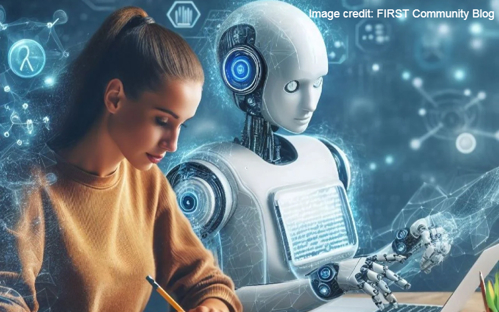 A recent survey of 1,000 U.S. adults specifically examining people who use AI for social, emotional and personal purposes found a substantial population of "AI companion users."
Parents and all users need to resist what Miller calls “artificial humanity” and remember the battle cry for so many executives across various industries: “It’s not personal, it’s business.”
“There’s a business model behind all of this AI, behind all of this social media. And that business model is to keep people connected as much as possible. Sometimes that business model really comes into conflict with the ethical and moral kind of underpinnings behind AI,” he said.