

The agreement would also open the Strait of Hormuz toll-free for two months and affirm a commitment to Lebanon’s territorial integrity in the face of Israel’s invasion against the Hezbollah terrorist group.
U.S. officials dictated the language to journalists Wednesday after days of secrecy. They spoke on condition of anonymity to share the memorandum, which Iran has not yet released.
Meanwhile, Iran suggested the document could be signed by Presidents Donald Trump and Masoud Pezeshkian. Such a signing ceremony would represent a major step for the two countries, which saw diplomatic relations break off in 1980 over the U.S. Embassy hostage crisis in Tehran.
According to the officials, the draft agreement includes language on handling Tehran’s highly enriched Iranian uranium, requiring that it at “minimum” be downgraded on site. The draft also has provisions to ensure the “territorial integrity” of Lebanon after Israel’s latest attacks against Hezbollah in Lebanese territory.
In return, the U.S. will move to waive, but not eliminate, some wide-ranging sanctions against Iran once the deal is signed.
The U.S. draft of the agreement also secures toll-free passage of the strait for only 60 days, and it does not preclude fees in future, the officials said.
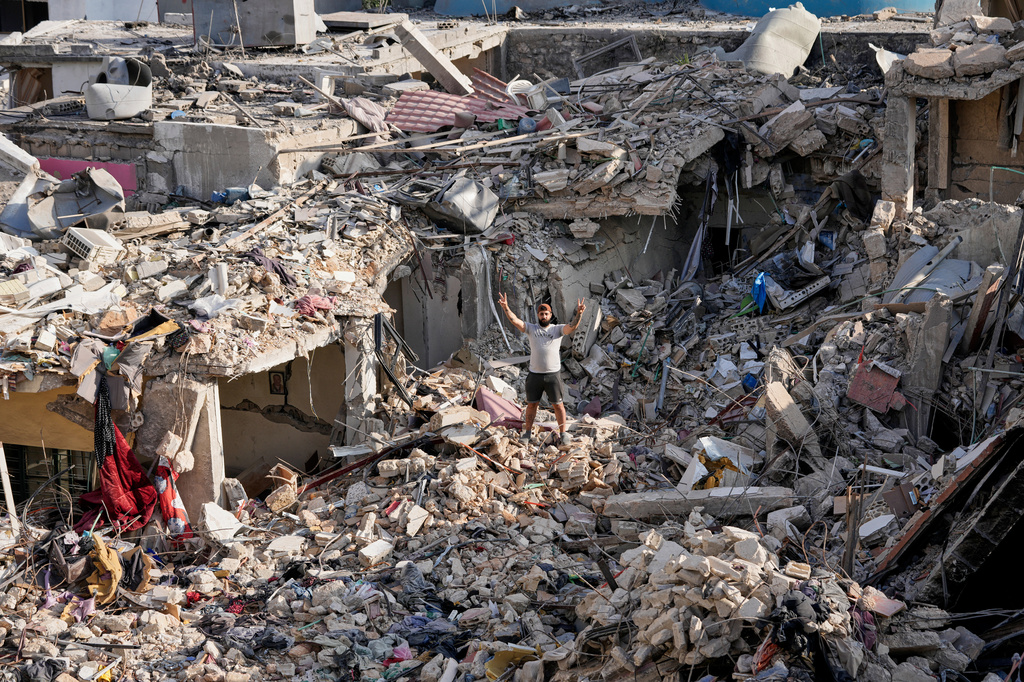
It also has provisions to ensure the territorial integrity of Lebanon after Israel’s latest attacks against Hezbollah in Lebanese territory. Israel has rejected the prospect of withdrawing from Lebanon, but the first point the agreement expressly states is that with the signing of the memorandum, military operations in Lebanon must stop.
The accord would also provide Iran with at least $300 billion to rebuild after an intense U.S. and Israeli bombing campaign — an extraordinary figure and another major benefit for Iran. The money also appears dependent on the progress of further negotiations.
U.S. Vice President JD Vance has said Gulf Arab nations would invest that amount. But Gulf countries would likely be reluctant to help Iran after Iranian attacks in the war destroyed oil facilities and other sites in their territory.
Trump reiterated Wednesday that the U.S. would not contribute and said it was up to other countries if they wanted to invest.
Meanwhile in Iran, Foreign Ministry spokesperson Esmail Baghaei was quoted by Iranian state television talking about the potential for the two presidents to sign the pact.
Pezeshkian became president on a promise of seeking better relations with the West. However, he’s been sidelined for months after Iran’s mass killing of protesters in January and in the war as hard-liners have taken over the levers of the country’s theocracy.
Trump casts uncertainty on signing plans
Trump cast some uncertainty on whether the signing would happen as planned. Asked how confident he was that the ceremony would take place, Trump remarked on the unpredictability of deals.
“You never know with deals, do you? But you’re going to find out pretty soon,” he said.