



Commissioners' courts and boards of supervisors typically vote on enacting burn bans, and some states have rules regarding burning.

Chad Hogue, a fire marshal in Smith County in East Texas, monitors the weather and the Keech-Byrum Drought Index (KBDI), which determines forest fire potential.
The drought index looks at the daily water balance, considering factors such as precipitation and soil moisture. The KBDI ranges from zero to 800, with the former representing no moisture depletion and the latter representing absolutely dry conditions.
"That's (KBDI) a good indicator, but it's not everything. When drought conditions exist, which is around 575 on that scale, we can enact a burn ban as a county," Hogue explains. "That does take the commissioners court's approval. I advise them, and they make a decision from that."
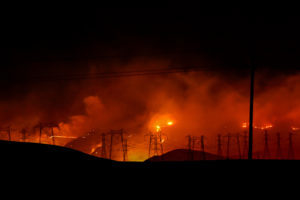
He said it's a judgment call, taking into consideration many other things like wind, temperature and relative humidity along with how many fire calls local departments are responding to, size and the difficulty in putting out the fires.
"I think people should burn a little bit smaller than what they actually think that they can handle. They definitely need to have a water source or a way to extinguish the fire. On the bigger operations, we have some land clearing stuff, that can be a bulldozer, track hoe or something like that. The topography of the land and uphill, the fire wants to go uphill. You should always check the wind and the wind direction."
Even when there is not a ban, he said that there are times one should not burn and that in Texas, the Texas Commission on Environmental Quality (TCEQ) has rules for outdoor burning.
Also, be sure to check with local jurisdictions regarding burn bans.
The Texas Commission on Environmental Quality has a pamphlet titled "Answer to Some Burning Questions," which provides fire safety tips and resources for more information.