



Tires on new vehicles are typically designed to provide better fuel mileages than replacement tires, which are normally less efficient, costing consumers.
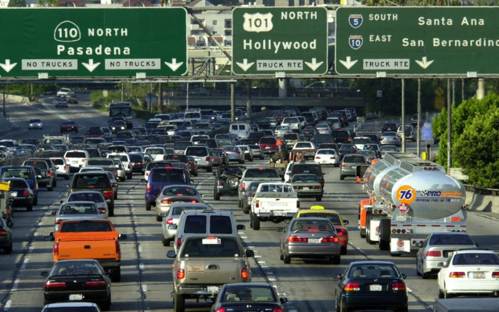 The California Energy Commission (CEC) unanimously approved rules, known as the Replacement Tire Efficiency Program, requiring replacement tires for passenger cars and light-duty trucks to match the energy efficiency of original factory tires.
Officials claim the standards will save drivers nearly $1 billion a year at the pump and cut carbon emissions by two million metric tons annually.
Some are praising California’s new cost-saving energy-efficient standards.
A director at Michelin North America says that this is consistent with their own “all-sustainable and holistic approach for reducing the impact of tires at every stage of the life cycle without compromising safety and other performances that are important to consumers.”
According to a director at Consumer Federation of America, “[The state] is at the cusp of adopting a program that will deliver real cost savings and environmental benefits to the people of California, allowing you to drive forward energy and climate benefits.”

However, policy analysts say those claims are blown out of proportion. Dr. Kevin Dayaratna, vice president of statistical policy analysis at Advancing American Freedom (AAF), says the environmental payoff is negligible.
“In one word, this is inane. This is going to have no impact on the climate. They are diluting people by talking about millions of metric tons of CO2 reductions. If you actually run the numbers... it's clear that these will have next to no impact on the climate, and it's just a ruse for government control,” Dayaratna states.
He adds that, according to AAF's statistical modeling, even if California completely eliminated all carbon emissions, it would impact global temperatures by less than two-hundredths of a degree Celsius — calling the tire mandate's direct effect functionally microscopic.
The new California policy will be phased in over time beginning in 2029.