



In the movie “Star Trek: First Contact,” the Starship Enterprise goes back in time, and Captain Jean-Luc Picard has to explain some things to a resident of the past.
Picard: “The economics of the future is somewhat different. Money doesn't exist in the 24th century.
Resident: “No money? You mean you don't get paid?”
Picard: “The acquisition of wealth is no longer the driving force in our lives.”
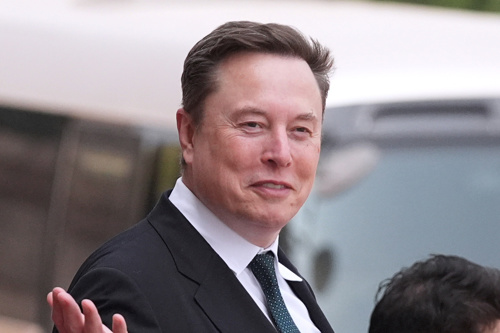 In a recent interview with The Economist, Elon Musk claimed that money won’t matter in 2036. According to him, if money is need for goods and serviced, and robots and AI will provide more goods and services than needed, money won’t be necessary.
He’s held this belief that robots and AI will do and provide everything for several years as seen in a conversation with Rishi Sunak in 2023.
“We won't have universal basic income. We'll have universal high income,” said Musk. “If you wish for a magic genie that gives you any wishes you want and there's no limit — you don't have those three limits, three wish limits, nonsense — you just have as many wishes as you want.”
In April 2026, he said in an X post that “AI/robotics will produce goods & services far in excess of the increase in the money supply, so there will not be inflation.”

Robert Maginnis, author of “AI for Mankind’s Future,” says the world's best capitalist is surprisingly ignoring a basic principle of capitalism: if everyone is rich, no one is rich. Putting a lot of money into the system creates inflation.
“Yeah, he is an optimist, but I think he's going much too far if you understand human nature,” Maginnis states.
But there is something, he says, Musk is missing that is infinitely more important.
“If you believe in biblical prophecy, this is creating the infrastructure for, certainly, the mark of the beast,” says Maginnis. “Beware of machines, do not surrender your mind, your conscience or your worship to anything that take the place of God.”