

If it gets any worse, the whole country could suffer from the fallout.
After being recently measured, it was found that the lake was 34 feet above the 3,490-foot “minimum power pool.” Should it fall below, hydropower can no longer be generated, according to the U.S. Bureau of Reclamation (USBR). Because it is severely low and without an influx of water, it could effectively run dry by August.
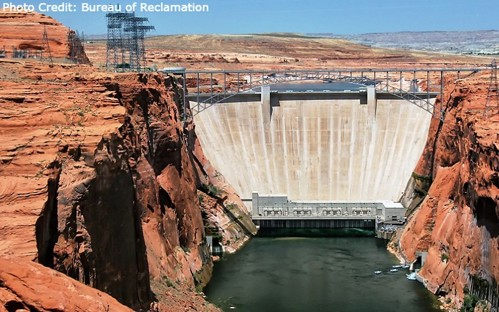 David Legates, director of research and education at the Cornwall Alliance, says Arizona, New Mexico, California and parts of Utah depend on Lake Powell and its Glen Canyon Dam.
“There's not enough hydroelectric power, there's not enough water, eventually, to drink, not enough water for agricultural purposes, and we run into serious issues in the Southwest,” Legates states.
The sudden growth of AI data centers, he says, only adds to the problem.

“With data centers going in that have water demands as well, there's just going to be no more water coming down the Colorado River to fill the need,” Legates says.
The Colorado generates hydroelectric power for 40 million people and sustains five and a half million acres of farmland. Firing up shuttered coal plants would help a little, but Legates says the country should have been working on nuclear power for the last decade.
“Wind and solar are not dispatchable, and they're not going to be available when the sun doesn't shine and the wind's not blowing,” Legates states.
The fallout from the crisis, he says, will come at exactly the wrong time — with woke Democrats chomping at the bit to reinstate the Green New Deal and their evil Democratic Socialists of America twins rooting for the destruction of the U.S. economy.
“If people are having trouble making ends meet every day at expenses, if that goes up, they tend to blame the administration that's currently in power,” Legates says.
Whatever happens, Lake Powell is not a statement on the climate, says Jason Hayes, Senior Research Fellow for Energy and Environment at The Heritage Foundation.

“Lake Powell's declining water levels are a warning about overallocation and overconsumption, not proof of a climate apocalypse. Water demand in the American Southwest has consistently outpaced reliable supply for decades."
There reasons for this.
"Rapid population growth, expanding urban use, and historical allocation practices all place enormous pressure on the Colorado River system. As the basin’s largest water user and holder of the most senior water rights in the Lower Basin, California will have to be a part of any solution," Hayes said.
The only solution is for policymakers to address the imbalance between supply and demand.
Until then "climate change will remain the go-to excuse and a convenient distraction from the extremely hard work of addressing water rights," Hayes said.