



Both the Trump administration and Congress have taken steps this month to regulate artificial intelligence in the U.S.
That’s a good thing as long as government plays a clearly defined role and shows the restraint to stay within that role, Patrick Hedger, the policy director for NetChoice, a nonprofit that works for free enterprise and free expression on the Internet, said on American Family Radio on Tuesday.
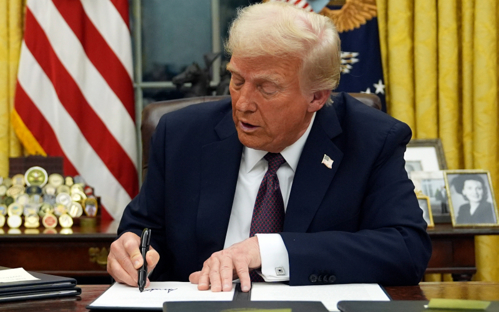 President Donald Trump last week signed an executive order entitled “Promoting Advanced Artificial Intelligence Innovation and Security.”
The order establishes a voluntary framework for developers of "covered frontier models" to provide the federal government with secure access to AI systems up to 30 days before releasing them to other trusted partners. This review period, reduced from a proposed 90 days, aims to assess advanced cyber capabilities without creating a mandatory licensing or preclearance regime.
The National Security Agency (NSA) is tasked with developing a classified benchmarking process to determine which models meet the "covered frontier" threshold based on their cyber offense and defense capabilities.
Congress last Thursday released a bipartisan discussion draft of “The Great American Artificial Intelligence Act of 2026.”
The bill targets "large frontier developers" (those with over $500 million in annual revenue), requiring them to publish safety frameworks, undergo semi-annual independent audits and report catastrophic risks — defined as foreseeable events causing death or serious injury to more than 50 people or over $1 billion in damages.
Key provisions include the formal establishment of the Center for AI Standards and Innovation (CAISI) within the Department of Commerce with $300 million in funding over three years, whistleblower protections for AI employees and the creation of an AI Workforce Research Hub to track labor market impacts.
Violations of safety requirements could incur civil penalties up to $1 million per day.
The draft was released by Reps. Jay Obernolte (R-California) and Lori Trahan (D-Massachusetts).
The question is whether nationwide policy is better than existing state laws addressing AI in a more local context.

“That’s a great question, and there's a lot of confusion out there about what is best for AI innovation and innovation broadly,” Hedger tells show host Jenna Ellis.
The best thing, he said, is to avoid government overreach.
“The best thing is really to make sure that bureaucrats are not inserting themselves into the innovation and design process,” he says.
The Brookings Institution argued that the 2025 AI Diffusion Rule could "undermine U.S. AI leadership" by reducing demand for U.S. chips and encouraging foreign countries to develop alternative AI ecosystems.
The AI Diffusion Rule was a Biden administration export-control regulation issued by the U.S. Department of Commerce in January 2025. It was designed to control the global spread ("diffusion") of the most advanced AI capabilities by limiting access to cutting-edge American AI chips and, for the first time, certain advanced AI model weights. The rule was aimed primarily at preventing rivals such as China from obtaining advanced AI capabilities through third countries rather than directly from the United States.
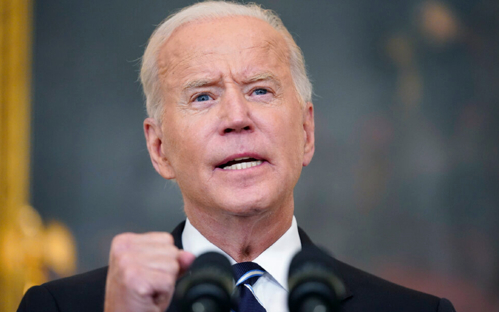
The Biden administration got involved with AI design also.
His 2023 executive order required developers of certain powerful AI systems to share safety-testing results and other information with the federal government before public deployment under authorities derived from the Defense Production Act. It also directed federal agencies to develop standards for AI safety, security, watermarking, cybersecurity and risk management.
Critics argued this could influence model design because companies might alter systems to satisfy government safety expectations.
“Where regulation is applied, it should be applied sort of in the post-design and innovation process, targeting specific known harms versus trying to speculate and predict the future and then inserting bureaucrats and new rules and regulations into how this product or service itself is created,” Hedger says.
Trump’s approach to AI
In Trump’s first term, the 2019 American AI Initiative did not tell companies how to design models, choose algorithms or structure neural networks. Instead, it emphasized research, workforce development and maintaining U.S. leadership in AI.
“That’s really important when it comes to something like AI because AI is going to be a major information channel going forward, and you don't want the government putting their thumbs on the scale of what is and what is not factual information,” Hedger says.
In his second term, Trump has pursued policies aimed at limiting what officials view as ideological bias in AI systems used by the federal government.
The best approach for the federal government, Hedger said, is to enhance existing laws to apply to AI rather than create a new bureaucracy tasked with overseeing AI.
“Any new potential AI regulatory body that has the ability to stop innovation in its tracks has a tremendous amount of power to then leverage how a system works and how large chunks of the economy will work,” Hedger says.