



Justices Neil Gorsuch, Brett Kavanaugh and Amy Coney Barrett — all Trump appointees during his first presidential term — voted with the majority in a 6-3 decision.
However, that monumental win for pro-life advocates has been tarnished by abortion work-arounds, primarily the growing popularity of abortion-by-mail with the popular drug mifepristone.
 Trump has allowed the practice to continue by his failure to eliminate measures put in place during Joe Biden’s administration that allowed the drug to be mailed — even to red states with abortion restrictions.
The mailing of abortion drugs isn’t only about mifepristone. The practice also violates federal law, The Comstock Act, which was enacted in 1873. Many of its original provisions have been repealed or limited over time, but the law remains on the books and prohibits using the U.S. Mail to send articles or drugs “designed, adapted or intended for producing abortion.”
Abortion-by-mail became a big topic Wednesday in the confirmation hearing before the Senate Judiciary Committee for permanent status of interim Attorney Gen. Todd Blanche.
Prior to the hearing, Sen. John Cornyn (R-Texas) sent a letter to Blanche regarding the access of mail-order abortion drugs in red states.
Texas is one of the most restricted states when it comes to abortion, enforcing a near-total ban from the moment of inception.
Exceptions are allowed for risk of the mother’s life or substantial bodily impairment.
There are no exceptions for rape or incest.
“If President Trump is the most pro-life president, (reversing the Biden administration’s decision) ought to be a pretty easy call because women are hurt as a result of side effects, heavy prolonged bleeding, potential infection or sepsis, incomplete abortion other complications when this is being sold through the mail or online,” Cornyn told Blanche.
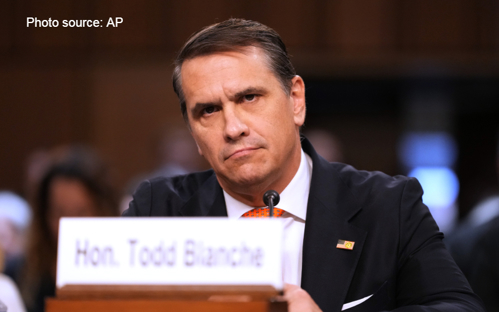 Cornyn set the table for the exchange by sending a letter to Blanche prior to the hearing when he mentioned ongoing litigation from states where abortion is most restricted.
Mifepristone is “sold as if it’s some innocuous drug that doesn’t have any side effects,” Cornyn said in an appearance on “Washington Watch” Wednesday.
The key change in the regulation of mifepristone, which must be prescribed, occurred in April of 2021, fourth months into the Biden White House. That’s when the requirement that the drug be available only after an in-person physician visit was removed.
Acting Food and Drug Administration (FDA) Commissioner Janet Woodcock originally stated the change would be temporary in response to the ongoing COVID-19 public health emergency.
In December 2021, however, the change was made permanent.
The in-person requirement was put in place during Trump’s first term.

“I think a lot of people feel like this is something they can take and can do it without a doctor’s supervision, and there really aren't any downsides to it,” Cornyn told show host Tony Perkins.
Common side effects include bleeding, cramping, nausea, vomiting, diarrhea, chills, fever, headache and fatigue.
Sepsis and death are less common but possible. In 2024 there were 36 known reports of deaths associated with mifepristone, according to the FDA.
Mifepristone is currently under review by the FDA. Mailing it is a matter of ongoing litigation.
The case of Louisiana v. FDA is currently pending in the 5th Circuit Court of Appeals.
Louisiana argues that the FDA’s revisions undermine its law by making it easier for abortion pills to be mailed into states that prohibit most abortions. The state also contends the FDA inadequately studied the safety of eliminating the in-person dispensing requirement.
“What we're asking for is a restoration of the Trump Era rule and eliminating the Biden Era rule,” Cornyn said. “On this issue, they seem to be somewhat ambivalent. The Biden-Era modification, I believe, is a danger to the health of pregnant women who take this drug not knowing the potential for serious side effects.”