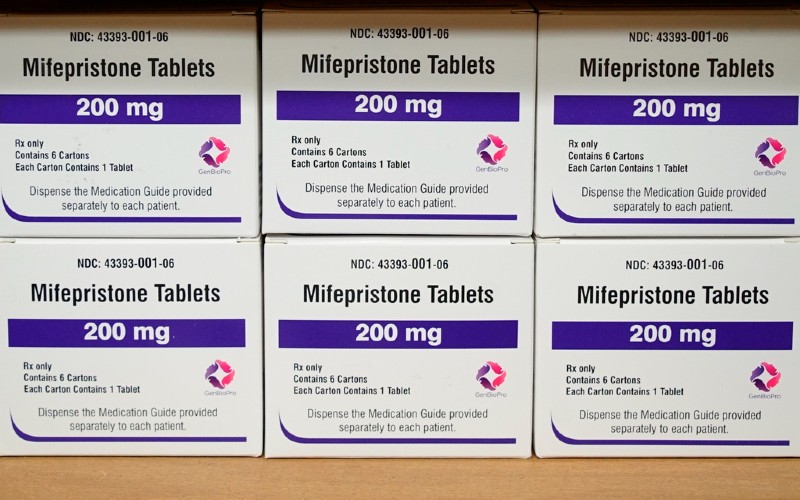


Rep. Mary Miller (R-Illinois) introduced the Clean Water for All Life Act on March 18. Fourteen other House representatives co-sponsored the bill, and it has the support of several organizations, such as Student for Life Action, Family Research Council and Concerned Women for America.
According to the press release, it seeks to address the “dangerous and unethical practices associated with chemical abortion pills and to protect both human dignity and America’s water systems.”
 Chair of the Congressional Family Caucus and member of the Pro-Life Caucus, Miller spoke with Jody Hice on the “Washington Watch” program. She warns that the FDA dismantled basic safety standards under President Joe Biden, and her bill intends to rectify that.
“These reckless practices harm women. It's degrading human dignity and contaminating our environment. This is like a crisis for the environment and for just human health,” Miller states.
People have drawn their attention, she says, to water treatment facilities.
“Wondering why they're seeing so many tiny babies in the water, because these do-it-yourself-at-home chemical abortion pills are allowing women to expel the baby into the toilet, and it's going into our wastewater,” Miller states.
Students for Life has conducted studies to find out how much chemically tainted waste is being flushed into the water system — that waste being blood, placental tissue, and human remains.

“They've proven that over 50 tons of abortion related waste are being flushed into our water every year, and obviously, our water treatment systems were never designed to handle this,” Miller reveals.
The legislation would amend Title 18 of the U.S. Code, making it a federal criminal law to conduct an abortion without the physical presence of the healthcare provider. It also adds safeguards for proper medical oversight and disposal of abortion-related medical waste.
The bill prohibits chemical abortion unless three criteria are met:
1. a healthcare provider has to be physically present.
2. the patient has a medical examination.
3. a medical waste “catch kit” and red bag disposal system are provided along with instructions for returning the waste to a healthcare provider for proper handling.
Critics ask how this will be enforced and how does it actually addresses medical waste.

“I think the biggest thing is that we cannot allow the chemical abortion pills to be mailed out willy nilly. That's what's been happening, even at college campuses. They have to be given out by a medical professional, a healthcare provider that is in physical presence while the woman takes the pill,” Miller answers. “There has to be a medical examination and physical presence of a healthcare provider, and then a medical waste catch kit will be provided.”
As it stands, it’s relatively easy for people to get their hands on these abortion drugs. According to Miller, 13-years-old girls can call and order the pills if they have a cellphone and never have a physical exam.
Another problem is that without a physical exam these women and girls do not know how far along they are, she says.
“It's one in 10 girls and women that take these pills are getting some kind of medical care afterward, either end up in the emergency room or some kind of medical attention. We know that because they have used their insurance to pay for that, and that is how we've come up with those numbers,” Miller says.