

But on the subject of life, multiple events in the last four days have shown how cheap it has become for those prone to violence.
 One example is the the stabbing of a tourist in the bathroom of a Macy’s department store in New York City. Other examples are:
- The murder of Hollywood producer Rob Reiner and his wife.
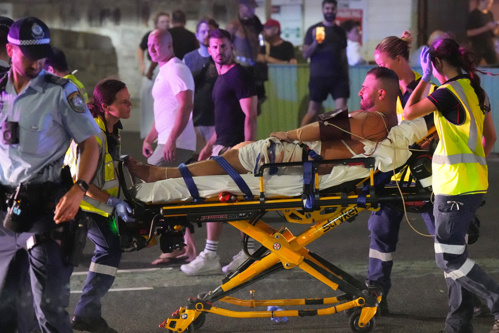
- The deaths of 15 Jews at a Hanukkah party in Australia. At least 40 were injured.
- The deaths of three Americans in Syria, two National Guard members, one translator.
- The deaths of two in the shooting at Brown University. Nine more were injured.
In addition, five Muslims were arrested for plotting a massacre at a Christmas market in Germany.
 The traditional New Year’s Eve concert on the Champs-Elysees in Paris has been cancelled amid security risks in a growing climate of concern across Europe.
In terms of respect for live, “we’re living at a time where we’re stepping on the gas and brakes at the same time,” Frank Pavone, founder of Priests for Life, said on American Family Radio Monday.
There is a connection between a rising tide of violence and the lack of protection for lives of the unborn, he told show host Jenna Ellis.
Break it once, break it for everyone
“The sanctity of life is a principle that if you break it at any point, it's broken everywhere. We cannot take away protection from any group of people and pretend and expect to keep it for ourselves,” Pavone said.
Since the Supreme Court overturned Roe v. Wade in 2022, returning control of abortion to the states, 11 states have enshrined abortion rights in their constitutions: California, Michigan and Vermont in 2022, Ohio in 2023 and seven more in 2024.
 The Big Beautiful Bill included a new restriction in Medicaid that prohibits Medicaid reimbursement to certain health care providers that also provide abortions.
Specifically, the law bans Medicaid funds for nonprofit clinics that provide abortions (beyond exceptions already in federal law) and received more than $800,000 in Medicaid reimbursements in FY 2023 -- a definition that applies to Planned Parenthood affiliates nationwide.
“I was happy to see this decision out of the 1st Circuit. I was expecting a victory like this, and I think we'll see more victories on this because the bottom line is that people in America don't want to pay for somebody else's abortion, even if they think it’s a right,” Pavone said.
The paradox is that by law we expect adults not to kill one another, but we’ve taken the words “thou shalt not kill” from our classrooms, Pavone said.

“All we're aiming at when you look at the teachings of the Bible is hey, we should be able to walk down the streets of our community without getting stabbed, shot, run over by a car or bombed. What is so radical about this?” he asked.
Abortion is the underlying problem to the violence society is experience, Pavone said.
Returning respect for life in adults begins with returning God’s word to the classrooms, and the time is now to make that push, Pavone said.
The time to push back
Three notable Supreme Court decisions in the last three years have sided with religious liberty.
In 2023, in Groff v. DeJoy, the Supreme Court unanimously ruled that employers must provide reasonable religious accommodations unless they can show that the burden of granting the accommodation would result in substantial increased costs -- a higher standard than had existed for decades under a relaxed “undue hardship” rule.
 Earlier this year in Catholic Charities Bureau Inc. v. Wisconsin, the Court unanimously ruled that Wisconsin violated the First Amendment when it denied a religious nonprofit the same tax exemption available to other religious entities.
Also this year, the Court ruled for parents’ rights in public schools in Mahmoud v. Taylor when it said that a public school district burdened parents’ religious exercise by refusing to allow opt-outs from classroom material (e.g., LGBTQ-inclusive books) that parents claimed conflicted with their faith, requiring heightened constitutional review.
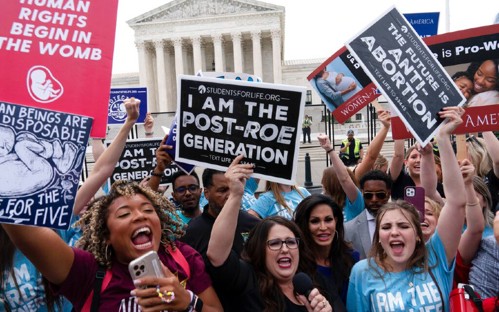 “The increase of religious freedom, both by the actions of our president and his administration, by decisions of the Supreme Court over recent years, that have really, really loosened the stranglehold that has been on religious freedom for decades. We’re in a new era,” Pavone said.
Lawmakers in Louisiana, Arkansas and Texas have voted to require the display of the Ten Commandments in public school classrooms.
All three quickly faced legal challenges with state appeals to those challenges pending in Louisiana and Texas.
“It’s time to push back. Some states are doing this, and it’s time to push back,” Pavone said.