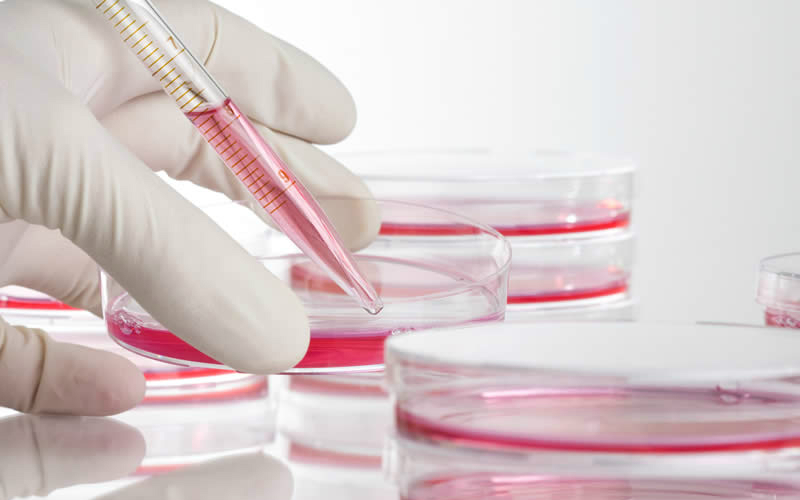


President Donald Trump recently announced a new system that will include fertility benefits right next to dental or vision benefits in certain plans for employee insurance coverage, reports the National Review. This is all as a part of the president’s efforts to make IVF more accessible and affordable. The White House published a fact sheet for how this will be accomplished.
Some Christians see IVF is a good alternative for couples struggling to conceive naturally. Others have serious reservations for embryos abandoned through the process.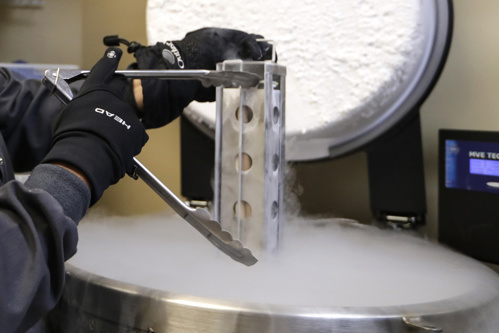
Dr. Lauren Rubal, a reproductive endocrinologist and infertility physician, spoke with Tony Perkins during a panel at the Pray Vote Stand Summit. She spoke about her experiences working with IVF during her career in light of Trump’s announcement.
“I absolutely believed that what I was doing was the best way forward to help those couples. That IVF is pro-life because it helps create life, right? That's how I started,” says Rubal.
However, the longer that Rubal did this, the more she felt the weight of her actions pressing down on her.
“I was seeing all these couples, almost a third of the time per the national data, who do IVF due to unexplained reasons that they (weren’t getting) a true diagnosis. I felt it every day because I said, ‘we just have to kind of move forward and this should be the fix,’ but it truly is a band-aid. I could sense that I wasn't healing when I wasn't addressing those root causes,” explains Rubal.
Rubal explains that she realized IVF creates humans in their earliest stages of development and that she was making decisions for the life and death of these embryos. Not only was she intimately involved, but she felt like she was playing God.
An estimated seven to 11 embryos are created per IVF cycle.

“With that being said, when we look at data from Europe or from the U.K., they have about 20 years of data showing that there are about 300,000 embryos that have become live-born babies, but this is 5% of embryos that are created based on that same data,” reveals Rubal.
This means 95% of embryos – human life -- are destroyed or frozen indefinitely in their earliest stages of life. Furthermore, according to Rubal, millions of embryos are suspended in a cryobank without the possibility of having a true life.
“So, because of this and because of my realization morally and ethically, I realized I couldn't do what I was doing and that my soul was truly at stake,” says Rubal.
Rubal goes on to pint out the downside to IVF. She says there is less than a 50% chance of a live birth per treatment cycle, and it costs $61,000 on average to achieve a live birth.
There is also minimal oversight and regulation.
She points to technologies like pre-implantation genetic screening, and a biopsy to see the chromosomes within an embryo. Studies are finally being done to see how it impacts live births even though technology similar to this has been around for decades.
“The thought is if you screen the embryos and select the best chromosomally normal embryo. They actually find, when they finally do the studies, that it doesn't significantly improve live births and that there are errors with this technology. There are babies born after being deemed chromosomally abnormal by this technique that are perfectly normal chromosomally, no defects, no issues, live born babies,” says Rubal.
A healthy alternative
However, Rubal says there is another way.
“Just in general, children are always a gift, no matter how they come or how they're conceived. But restorative reproductive medicine (RMM) is an ethical, affordable, and effective alternative to IVF,” states Rubal.
Rubal explains this is a process that looks at the root cause of why people are dealing with infertility or losses. As an example, she says the 30% of unexplained infertility diagnosis drops down to 1% using RRM or restorative methods.
“Like I said, it's incredibly effective. If we think of a 37% chance of live birth per IVF cycle for everyone in the US, according to recent data with restorative reproductive medicine, there are studies showing a 30% to 66% chance of live birth over a period of two years using, again, techniques that help and restore your own health, your wellness, and decrease risks to moms and babies too,” informs Rubal.