


The Court last week temporarily cleared the way for the Trump administration to resume using an expanded federal database to help states verify the citizenship of people on their voter registration rolls.
Justices, in a 6-3 vote, put on hold a lower-court injunction that had prevented the administration from using the data from SAVE — Systematic Alien Verification for Entitlements — to identify illegal aliens on voting rolls.
SAVE has existed since 1986, the latter years of the Regan administration, to allow government agencies to verify citizenship and immigration status in connection with public benefits.
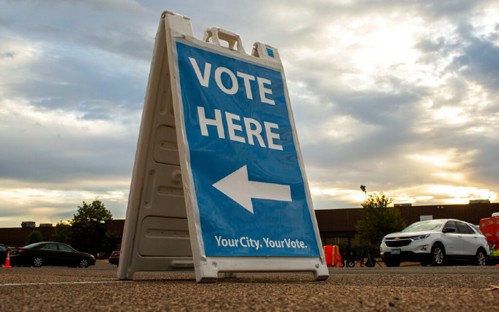 The Trump administration expanded SAVE last year so state and local election officials could use it to check voter-registration information.
However, the National Voter Registration Act's 90-day "quiet period" prevents states from conducting a systematic program to remove voters from their rolls within 90 days of a federal election.
The Justice Department says that prohibition also covers systematic challenges generated by large computerized data-matching programs.
The end result is states can use SAVE to identify problem voters then, after the midterm elections, they can investigate and take action if warranted.
That allowance will be triggered only if states choose to use the added benefit of SAVE data to identify illegals on their rolls. They are not required to so, and California, Hawaii, Maine, Minnesota and Oregon have announced they will not use SAVE.
California, the most populous state, has the highest number of illegals among its population. In some states, including California, illegals are allowed to vote in municipal elections.
Use of SAVE called big progress
Even a weakened asset, such as SAVE, is still important, Hogan Gidley, an elections policy analyst for America First Policy Institute, said on “Washington Watch” Monday.
“This is a huge step forward, and I'm so glad the Supreme Court sided with them in this case,” he told show host Jody Hice.
Voices on the Left have long downplayed the amount and significance of illegals voting.
“Only citizens can vote for the United States Senate. Only citizens can vote for the presidency of the United States. This extreme MAGA Republican voter suppression bill is not designed to solve any problem,” Rep. Hakeem Jeffries said from the House floor in 2024 in opposition to the GOP bill the Safeguard American Voter Eligibility (SAVE) Act.
President Joe Biden’s White House sang from the same hymnal.
 “The evidence is clear that the current laws to prevent noncitizen voting are working as intended — it is extraordinarily rare for noncitizens to break the law by voting in federal elections.”
Translation: Illegals voting is not that big a deal, so move on, there’s nothing to see here.
Studies show it’s a very big deal.
A 2014 study by three scholars, based on a national voter survey and a database of registered voters, estimated that about one quarter of aliens in the U.S. are registered to vote.
The study estimated that 6.4% of aliens present in the U.S. voted in the 2008 presidential election and 2.2% voted in the 2010 congressional election.
The study was produced by political scientists Jesse T. Richman and David C Earnest of Old Dominion University and by Gulshan A Chattha of George Mason University.
A more recent study, released May 13, 2024, was performed by James D. Agresti, a public policy researcher and co-founder of “Just Facts,” which publishes his findings. That study affirmed the conclusions of the 2014 report.
Agresti estimates that 10%-27% of all illegals were registered to vote and predicted 5%-13% would vote in the 2024 election.
Ironically, it was the Biden administration that placed the issue of illegals voting front and center in the minds of the American public.
Before Biden’s open borders, AFPI research found that illegals on the voting rolls mattered to only around 60% of Americans.

“I asked the pollster, ‘How is that even possible,’ and they said, ‘Well, remember, 40% of this country wants open borders,’” he said.
Conflict arose within the 60% when many blue states began to see the effects of open borders, as red state governors took matters into their own hands.
“Remember there was a mass move to bus, to fly, all of these people in this country illegally into these blue states, into these sanctuary cities," Gidley recalled.
"Who said they wanted them so badly only to find out they really didn't want them," he continued. "Because as everyone knows, this is such a drain on our education system, on our healthcare system, on our first responder system."
Now, the issue of election integrity polls as a 90-10 or 80-20 issue with voters, Gidley said.
“It’s extremely popular," he stressed.