


The Congressional Budget Office released their monthly budget review for June 2026. Within the first nine months of the 2026 fiscal year, the federal budget deficit has reached $1.4 trillion, which is $35 billion more than recorded at this same time last year.
The U.S. will most likely borrow $2 trillion or more for this fiscal year, says the Committee for a Responsible Federal Budget. They predict that borrowing will skyrocket if policymakers “ignore the need to cut spending and increase revenues.”
Currently, the national debt is $39.8 trillion.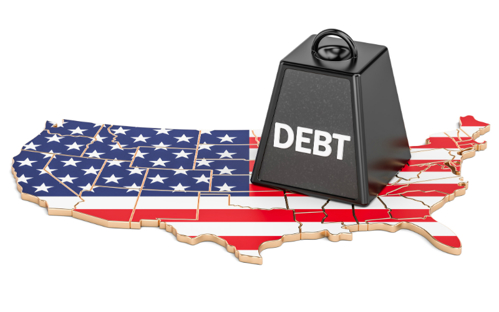
Joel Griffith is a senior fellow at Advancing American Freedom with an emphasis in fiscal regulations. He spoke on “Washington Watch” about how staggering the numbers are, relating these billions and trillions of dollars to the cost per family.
“We're talking about the possibility of $2 trillion in borrowed money for the federal government this year. That means for each and every family, that's another $20,000 to your family share of that national debt,” Griffith says.
The U.S. will likely pay, he says, about $1.2 trillion in interest payments on the debt this year, which is equivalent to $15,000 per family.
The federal government borrows capital to operate daily, Griffith explains. The result: interest rates are almost 1% higher because of how much money the government borrows.
“Think about what that extra interest rate costs you when you're looking to buy a house or to purchase a vehicle. That can add up to hundreds of dollars of extra per month in interest costs that you're having to pay because interest rates are higher than they otherwise would have been because the government is competing with you to obtain capital to run your life,” Griffith states.

Critics note that when the government borrows more money and interest rates go up, then the government has to pay more on interest, creating a vicious cycle.
Griffith agrees, saying part of the problem comes from long-term estimates made a few years ago.
“We're projecting long-term interest rates on government debt being much lower than where they're already at today,” Griffith says. “We see rates on the 10-, 20-and 30-year government bonds much higher than anticipated. We're nearing 5% on that long-term government debt. This notion of us just being able to refinance this nearly $40-trillion debt at a lower rate … it simply can't happen.”
Interest rates, he states, are much higher today than in the last few years, even in the last 10-15 years, which is not sustainable.
Painful cuts now or pain later
Griffith was in favor of the Department of Government Efficiency (DOGE). However, he admits that it made no long-term impact on government spending as it only reduced a $7 trillion budget by $5 billion.
“The difficult choices are the ones that politicians, whether Democrat or Republican, are trying to kick down the road, on entitlements, on other types of spending. Those concerns have to be addressed. We can't just cut out waste, fraud and abuse. That is not sufficient to get our fiscal house in order,” Griffith states.
These political decisions need to be made now, he says, or Americans will face more pain later.
Griffith makes it clear that raising taxes will not get the nation out of this problem, even if it’s a 100% wealth tax. Part of solution, he says, is stopping the administration from branching into the private sector, such as nationalizing companies and imposing tariffs that impede businesses and financially strain families.
“The way out of this is to allow our economy to grow, number one,” says Griffith. “We need to get government out of the way on the regulatory front, diminish spending and actually pursue even more pro-growth tax reform, meaning tax cuts to allow us to grow our way out of this.”