



About a month ago, Graham Platner's campaign was riding high after a sweeping victory in Maine’s Democratic primaries. Things changed fast.
“We're suspending campaign operations. This is incredibly difficult because I know that some will think this is an admission of guilt, and it most certainly is not. We're not doing it because of the allegations, we're doing it because of the structures that are being taken away from us by those in power,” Platner said in a clip of his announcement.
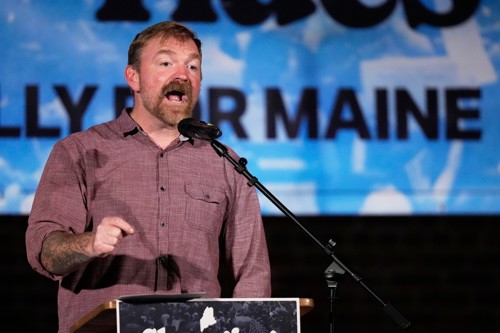 Platner dropped out of the race shortly after a former girlfriend claimed he sexually assaulted her in late 2021. Controversy has surrounded his platform for a while, from revelations that he has a Nazi tattoo to old Reddit posts involving sexual assault. Other news outlets, such as The New York Times, reported this summer that Platner was abusive and mean towards women.
But now, what happens to the millions of dollars, much of it from sources outside of Maine, that the Platner campaign raised?
Campus Reform reports that political contributions from donors totaled over $100,000 from employees listed from colleges, universities and higher-education affiliates.
One of bigger spenders across the country was from people at the City University of New York (CUNY), totaling $14,700. Different findings cite a total of $16,280 from CUNY.
Other large donations came from Stanford University at $6,750 and St Joseph's University Philadelphia at $5,000. Over $13,500 was given in total out of university employees from the state of Maine, with the University of Maine giving him $4,587 by themselves.
Those donations are only part of the over $16 million Platner raised in total.
Ronald Schmidt, professor of political science at the University of Southern Maine, weighed in on the confusing situation while speaking with CBS 13 News.
“I don't know. In an ordinary circumstance, the losing campaign has control over that funding going forward,” Schmidt said.
According to the Federal Election Commission (FEC), the campaign can either return money to donors, transfer up to $2,000 to other candidates, donate to a charitable organization or use to pay staff. None of the money can be used for personal expenses.