

And the president may have a closing window of time to get things done, whatever his priorities may be, since Republican majorities in both the House and Senate are at risk in November.
Democrats have an 85% chance of gaining control of the House of Representatives, a 51% chance of winning the Senate, according to Polymarket, which interprets feedback from thousands of participants and updates in real time.
Fifty-three percent of registered voters oppose U.S. military action in Iran, according to a Quinnipiac University poll from earlier this month.
 Fifty-five percent of voters do not believe Iran posed an imminent threat before the strikes.
“There is growing political pressure on President Trump. There is a growing debate within some of the Republican Party, even on the advantages or disadvantages of action in Iran,” Gerard Filitti, an attorney with the Lawfare Project, said on American Family Radio Tuesday.
The growing uncertainty around Trump’s foreign policy — which could soon include a response to unrest in Cuba — leaves the president in need of a win.
The SAVE America Act could be the ticket.
Filed originally by Rep. Chip Roy (R-Texas) and Sen. Mike Lee (R-Utah) as the Safeguard American Voter Eligibility (SAVE) Act, the bill passed the House but stalled in the Senate in 2025.
Revived, tweaked and renamed, it is sitting in the Senate again.
The bill requires individuals to provide documentary proof of U.S. citizenship — such as a passport or birth certificate — when registering to vote in federal elections.
It also imposes strict photo ID requirements for voting, excludes student IDs, and mandates that mail-in voters submit photocopies of their ID with both their ballot application and ballot.
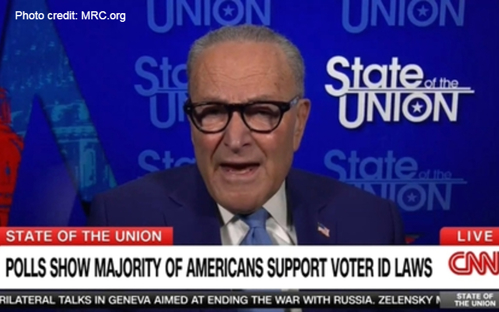 Democrats, who historically have opposed voter ID, claim the increased scrutiny would disenfranchise millions of eligible voters.
Republicans were set to begin on Tuesday an unprecedented effort to hold the Senate floor and talk for days about the legislation.
The talkathon could last a week or longer, potentially through the weekend, as Senate Majority Leader John Thune tries to navigate Trump's insistence on the issue and Democrats’ united opposition.
“When you have a SAVE America Act, which is so crucial to our voting security, but we're not able to get that passed, that sends the message that maybe we need to be focusing more on these domestic issues and really getting legislation that we need passed while we still have control of Congress,” Filitti told show host Jenna Ellis.
Democrats have effectively stifled the SAVE America Act through their only possible means, the Senate filibuster.
There have been multiple calls from conservative political analysts, and from Trump, to do away with the filibuster, but Senate Majority Leader John Thune resists.
The Republican quandry
Proponents of the change argue that modern Democrats, when again in control of the Senate, will waste no time scrapping centuries of protocol by ditching the filibuster when it meets their needs.
It’s not only Thune, but even some Democrats who have misgivings about removing the filibuster.
“The Senate for decades now has resisted calls to do away with the filibuster. They do see themselves as one of the guardians of an older way of doing things where you try to deliberate and reach consensus rather than doing things without that a broader mandate,” Filitti said.
 Thune says he doesn’t have the required 60 votes to push the bill through the filibuster. He’s promised to bring the bill to a vote anyway.
That could remove some of the pressure from Trump and would force all senators to take a stand on the record.
Simply removing the filibuster is not in Republicans’ best interest, Filitti contends, though saving it assumes Democrats will play nice in the sandbox when the time comes.
“Anything that’s now enacted into law can be easily undone in two years or four years. It will make it much harder to oppose that,” he said.