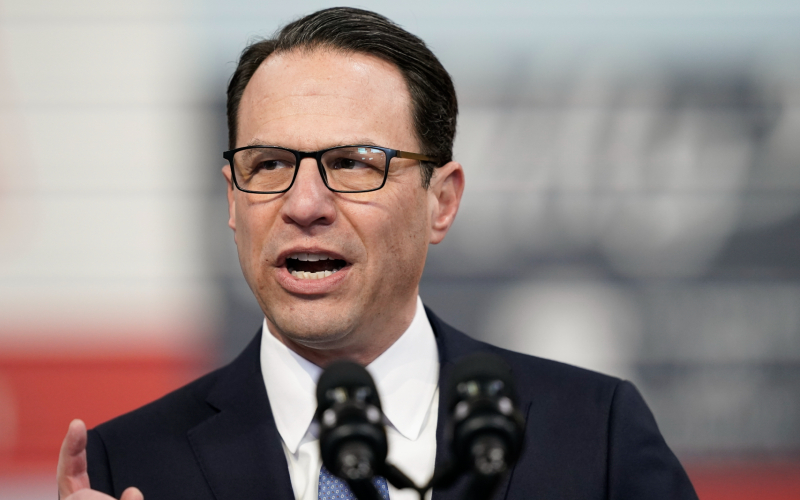


Trump signed the $1.2 trillion funding package, which is the number 1 with 12 zeroes, that ended a brief government shutdown.
The agreement funds most of the government until the end of the current fiscal year on Sept. 30. It provides only temporary funding – two weeks – for the Department of Homeland Security (DHS) as Republicans and Democrats continue to tangle over Immigration Customs Enforcement, or ICE.
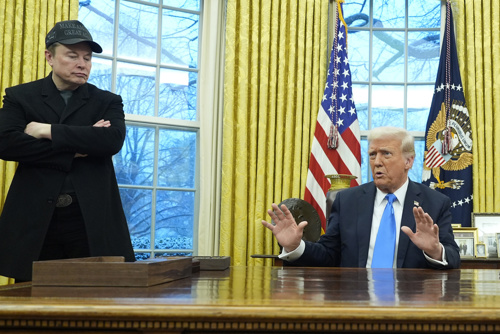 A year ago, there was outrage from Democrats when the Department of Government Efficiency identified $115 billion, which is 9 zeros, in what Elon Musk and his team called waste, fraud, and abuse.
The new deal accomplishes the short-term goal of opening the government. What it doesn't do is address spending concerns beyond that, conservative filmmaker and podcast host Dinesh D’Souza said on American Family Radio Wednesday.
“So there is a lot of inefficiency, and I think that's what DOGE was aimed at,” he told show host Jenna Ellis.
The bill passed the House by a thin 217-214 margin.
Some Democrats supported the bill because funding for DHS was only temporary while keeping the government open.
Some Republicans voted against the bill saying it should have included amendments aimed at conservative legislative efforts, such as the Safeguard American Voter Eligibility (SAVE) Act.
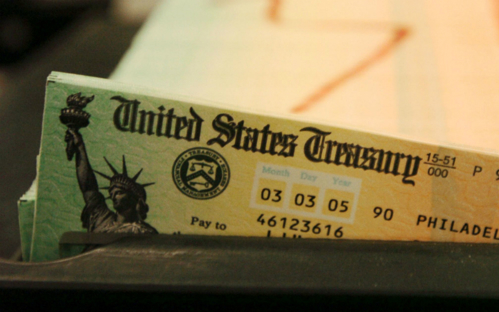 “Essentially, what's happened is that the priorities of the government have gone completely out of whack. Originally, entitlements were a safety net to provide people with temporary funding, often quite minimal, while you found another job or for widows and orphans who couldn't look out for themselves,” D’Souza said.
Social Security and Medicare alone make up nearly half of all federal spending. Their combined costs represent about 40% of total federal outlays.
Total entitlement spending was 51% for fiscal year 2024, and that was down from 66% at the height over COVID-19 pandemic.
“Government spending went out of line under COVID. It was presented as a kind of a one-time emergency, but amazingly, or maybe not so amazingly, we have stayed in those kind of larger brackets,” D’Souza said.
Through DOGE the Trump administration railed against government spending – much of it channeled through the now-defunct U.S. Agency for International Development (USAID) – that supported Diversity, Equity, Inclusion and LGBTQ preferences like: DEI advances in Serbia, a transgender opera in Colombia, a transgender comic book in Peru, LGBTQ activism in Guatemala, a grand to teach transgender and queer urban farmers about "food justice."
USAID was officially shuttered in July. But spending isn't limited to far-left social initiatives.“The country is moving toward a sort of precipice because even a rich country cannot afford to outspend its means again and again and again. And unfortunately, I think there is not enough appetite, even among the Republicans, to make any kind of significant shifts in spending that bring the spending under control,” D’Souza said.
 He sees two main problems with government spending.
“One of them is that government is scandalously inefficient and wasteful. It's because they have no incentive to meet any kind of bottom line. The government, unlike a business, can just keep spending.”
And at times when a committee or agency has not spent the entirety of its budget, it will just keep spending for fear that next year’s budget will be less, D’Souza said. “The other problem is not inefficiency, but entitlement.”
The reluctance by either party to reduce massive commitments to social programs has gotten all spending out of whack, he said.
When a scandal isn’t a scandal
While the Trump administration took on wasteful spending authorized by the government a year ago, now it’s targeting the abuse of government dollars that have been spent on seemingly helpful projects – such as daycares in Minnesota.

Federal and congressional investigations found that criminal schemes in Minnesota have stolen billions in taxpayer dollars from federally funded social services programs — including food assistance, childcare subsidies, Medicaid, and other supports intended for vulnerable populations. Some lawmakers and witnesses testified that as much as $9 billion may have been stolen in fraudulent claims and misuse of funds.
The Feeding Our Future nonprofit became one of the largest pandemic-era fraud schemes in U.S. history. Prosecutors say the group allegedly stole hundreds of millions of dollars meant for school meals, with defendants convicted in connection with that scheme.
“It's run completely out of control, and you have huge swaths of the population that now live off the taxpayer. People collect disability benefits who are not disabled. You've got people who keep clamoring for more benefits. People are shocked if their benefits are reduced. They act as if it's a scandal,” D’Souza said.