

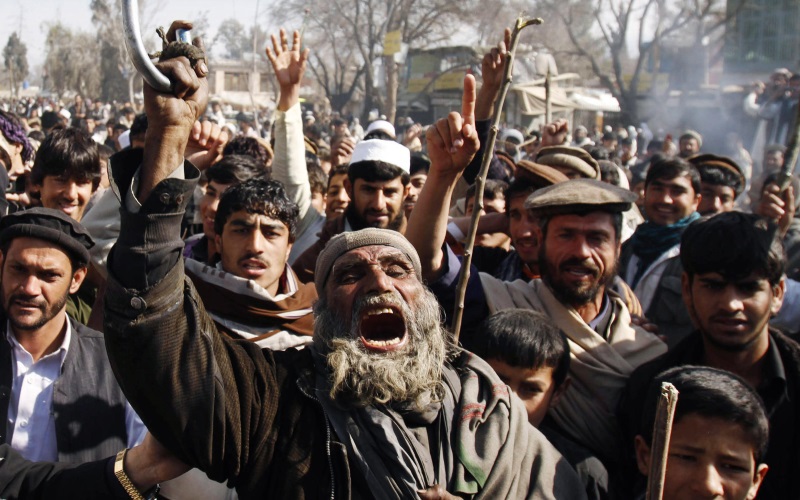
"My wife hates me, my father disowned me, and I have spent time in jail. When I trusted Christ, when I left Islam, that is what happened."
That testimony is from a resource Voice of the Martyrs (VOM) is offering to churches.
In many countries around the world, that is the rule, not the exception. Sunday, November 1 is the International Day of Prayer for Persecuted Christians.

Todd Nettleton is VOM's vice president of message and hose of VOM Radio.
"If you've already planned that Sunday, pick the second Sunday, pick the third Sunday. Just make sure that there's a Sunday in November when your church is going to pray for our persecuted brothers and sisters," Nettleton states.
As for how to pray for the persecuted church, it's not what one might think.
"They're not asking us to pray that they won't suffer. Instead, they're asking us to pray that they'll be faithful in spite of suffering," Nettleton says.
Suffering for Christ, he says, is like oxygen to the persecuted church.
"They see persecution as just part of the package. It's like, 'Oh yeah, when you follow Jesus, you get persecuted. It's just, it's normal,'" Nettleton states.
As said in the video, "Pray for those of us who leave Islam to follow Christ. Pray that we endure persecution with joy. Pray that our ability to forgive our family will lead them to faith in Christ," Nettleton says.
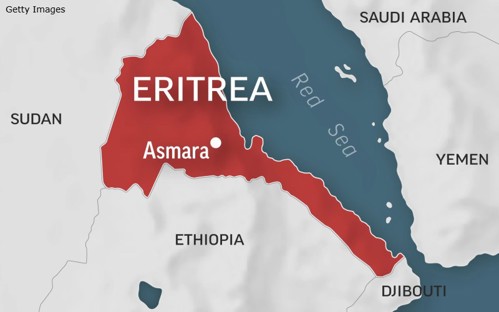 One example of a persecuted area in need of prayer is tucked into the eastern coast of Africa between the Muslim strongholds of Sudan and Ethiopia. In 2002, the government of the communist-influenced country of Eritrea clamped down on religion in the country, driving the Christian church underground.
Nettleton says it was a sudden shock to believers.
"Literally from one Sunday to the next, they went from openly meeting in their church buildings to being an underground church. In seven days, they had to make that transition," Nettleton states.
That's when the persecution began, he says.
"Today, you have multiple Eritrean, dozens of Eritrean Christians, in prison. Some of them have been in prison for 20 years. They've been in prison almost since the churches were closed," Nettleton says.
VOM Radio recently spoke with an Eritrean exile who said conditions are less than ideal.
"He said I was in a cell with 30 plus other guys in a little tiny cell. There was no room to lay down and sleep. You're always constantly touching someone. There's no space,'" Nettleton recounts.
If he was in that position, Nettleton said it would only takes days for him to devise a plan to get thrown into solitary confinement.
"In that environment, I would pray for solitary confinement. I would do anything to get thrown in solitary confinement," Nettleton admitted.
However, Eritrean believers saw prison as an opportunity.
"He said we hated solitary confinement because there's nobody to share Christ with. If we had other prisoners around us and we had opportunities to witness and opportunities to lead people to Christ, it gave meaning to our suffering," Nettleton states.