




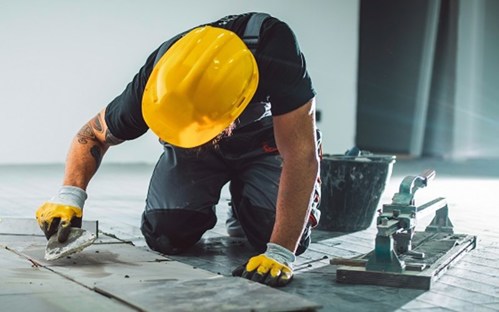
Society has spent decades telling boys that masculinity is toxic, and now there's a shortage of skilled tradesmen. The connection should be obvious.
Through his on-again, off-again tariff dance, President Donald Trump has made one thing clear. He wants more things built in America. He's bragged about already securing more investment dollar commitments than former President Joe Biden did during his entire term. And he wants more.
Trump has long championed the rural communities devastated by factory shutdowns. It's one reason that he has enjoyed such strong support in Middle America. In his speech at the Republican National Convention last year, now-Vice President J.D. Vance detailed the importance of remembering that America is both a "nation" and "our homeland."
The hardworking people I grew up with "love this country, not only because it's a good idea, but because in their bones they know that this is their home," he said. He continued, "This is the source of America's greatness."
This is why Trump and Vance are so determined to rejuvenate American industry. But there's a major obstacle to accomplishing this -- a shortage of skilled workers.
"For every five tradespeople that retire, two enter the workforce," Mike Rowe, host of Dirty Jobs, wrote in 2024. "That's a 5:2 ratio, and the math is simply not sustainable."
It's not for lack of opportunity. For instance, the Navy Industrial Submarine Base needs to hire 100,000 skilled tradesmen within the next decade. But the companies working there are struggling to find enough qualified employees.
One reason is that society has relentlessly pushed students toward college. Former President Ronald Reagan once said, "If you want more of something, subsidize it." And the government has, dumping trillions of dollars into higher education over the decades.
 Sure enough. College enrollment more than doubled from 1972 to 2022, growing from 9.2 million to 18.6 million. In 1972, around a quarter of 18- to 24-year-olds were enrolled in college. In 2022, it was 39%.
This hasn't just limited the potential pool of future welders and plumbers. It's sent the message that those careers are second-rate. That they're only for people who aren't smart enough for college.
It's a terrible and false message. It may not earn you a high SAT score, but understanding how wiring, pipes and parts work in the real world is a much-needed type of intelligence. Men working with their hands literally built the country.
There's a more fundamental issue here, too. The skilled trades continue to be dominated by men. This isn't the result of a patriarchal society but innate differences between men and women. Men are stronger than women. They're more mechanically minded. They're more interested in working with their hands. They're more willing to do dangerous and dirty jobs, like building the Hoover Dam.
This doesn't make men superior to women. It makes men and women different. Women have their own set of strengths, including better language and social skills. Modern feminists rarely praise pregnancy, but growing a baby inside of you is the closest thing human beings have to a superpower.
But society doesn't nurture the unique strengths of boys. Most schools want little boys to act like little girls. Doctors prescribe Ritalin to boys who can't sit still. Male students see their success in areas like mathematics and engineering dismissed as the result of systemic sexism, not their achievements. Compounding this problem is the growing number of boys living in homes without their fathers.
Little wonder so many men -- and potential skilled tradesmen -- have disengaged. The labor force participation rate for men 25-54 hit 98% in 1954. In November, it was under 90%.
Masculinity isn't toxic. It's what built this country. And rebuilding American industry requires celebrating masculinity, not attacking it.
COPYRIGHT 2026 CREATORS.COM
Notice: This column is printed with permission. Opinion pieces published by AFN.net are the sole responsibility of the article's author(s), or of the person(s) or organization(s) quoted therein, and do not necessarily represent those of the staff or management of, or advertisers who support the American Family News Network, AFN.net, our parent organization or its other affiliates.