



Truth matters. Especially when a nation is at war.
I know this landscape. I watched from inside the Pentagon the months leading up to the March 2003 invasion of Iraq. A narrative hardened — Saddam Hussein possessed weapons of mass destruction and posed an urgent, immediate threat. That narrative was false. The war it justified cost 4,418 American lives, another 31,994 wounded and trillions of dollars, and reshaped U.S. foreign policy for a generation.
That is not ancient history. That is institutional memory the United States is obligated to apply.
 That warning is now coming from inside the administration itself.
Joe Kent resigned last week as director of the National Counterterrorism Center. He didn't leave quietly. He published his letter on X, addressed directly to the president, and said what he believed: “Iran posed no imminent threat to our nation, and it is clear that we started this war due to pressure from Israel and its powerful American lobby.”
Kent has his baggage — past associations with far-right figures drew legitimate scrutiny during his Senate confirmation. But on the central question — whether the justification for this war was truthful — his resignation is not the complaint of a disgruntled bureaucrat. It is the public dissent of a combat veteran, former CIA officer, and Trump loyalist who concluded the costs of silence outweighed the consequences of speaking.
Let me be clear: Iran is not an innocent actor. For decades, Tehran has functioned as the world’s leading state sponsor of terrorism, funding Hezbollah, Hamas, and the Houthis. I saw firsthand in Iraq how Iranian-backed forces killed hundreds of American service members. The regime is dangerous. I argued as much in Fox News Digital after Israel’s June 2025 strikes on Natanz, Fordow, and Isfahan.
Recognizing a threat is not the same as justifying a war.
That is where the question of truth becomes central.
Iran and 'imminent nuclear threat'
The Trump administration’s core case for attacking rested on the claim that Iran was racing toward a deployable nuclear weapon. The intelligence record is inconsistent with that claim. DNI Tulsi Gabbard testified before the Senate Intelligence Committee on March 18, 2026, and when Senator Jon Ossoff asked directly whether the intelligence community assessed Iran as posing an “imminent nuclear threat.” Director Gabbard deflected: “The only person who can determine what is and is not an imminent threat is the president.” More striking: Gabbard’s written testimony stated Iran’s nuclear enrichment program had been “obliterated” after last year’s strikes and that there had been “no efforts” to rebuild it. She omitted that passage from her spoken remarks. When Senator Mark Warner asked why, she cited time constraints. He said she chose to skip the section that contradicted the president.
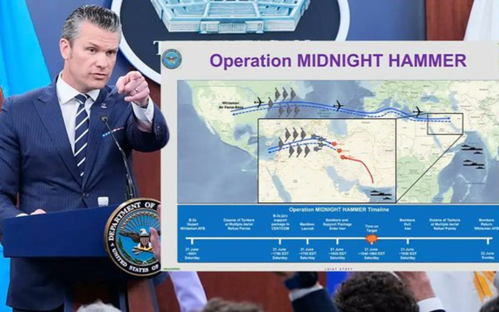 The intelligence community’s 2025 annual threat assessment said plainly that Iran was “not building a nuclear weapon.” Trump envoy Steve Witkoff told Fox News in February 2026 that Iran was “probably a week away from having industrial-grade bomb-making material.” Those two positions cannot both be correct. The American people deserve to know which one their government believed before launching this war.
In Fox News Digital pages last summer, I argued that while the June 2025 strikes inflicted significant damage on Tehran’s nuclear infrastructure, the program was not eliminated. That assessment has held. IAEA Director General Rafael Grossi confirmed this past week that Iran retains the knowledge, the material, and the industrial capability to rebuild. Strikes can delay a program. They cannot erase the scientists, the expertise, or the dispersed uranium stockpile — much of it buried beyond the reach of any bomb in the American arsenal.
The role of allied intelligence in shaping this conflict also deserves honest examination. Israel is a close partner and, as I have argued before, a vital ally. But shared interests are not identical interests. Intelligence assessments from allied services have been wrong before — the lead-up to the Iraq War demonstrated that conclusively. Israeli concern about Iran’s nuclear trajectory clearly drove pressure for military action. Acknowledging that is not anti-Israel. It is pro-American. Our responsibility is to make decisions based on American national interests, independently evaluated.
Marines, paratroopers are boots on the ground
The war itself is expanding in ways the administration’s opening statements did not anticipate. As I wrote in these pages last week, the U.S.-Israeli air campaign has struck more than 15,000 targets, wrecked Iran’s navy, and reduced Tehran’s ballistic missile launches by 90 percent. Those are real battlefield achievements. But the Strait of Hormuz — the chokepoint through which roughly one-fifth of the world’s daily oil supply moves — is effectively closed, and oil has surged above $100 a barrel. The precision munitions being consumed in this campaign will take years to replace. Every Tomahawk fired over Tehran is one less available for the Taiwan Strait.
Now the Pentagon is deploying two Marine Expeditionary Units and approximately 2,000 paratroopers from the 82nd Airborne Division. The president says he is not putting troops on the ground. That may be true today. But the deployment of amphibious assault forces capable of seizing key terrain is not a symbolic move. It introduces exactly the contingency the president has repeatedly said he intends to avoid.
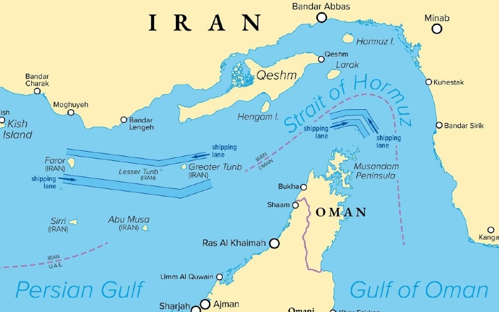 The war has been ongoing for nearly a month. The battlefield results are real. The strategy is not. Is the objective to degrade Iran’s military capability? Neutralize its nuclear program? Open the Strait? Force regime change? Each of those goals carries a different cost, a different timeline, and a different measure of success. The administration has not answered those questions publicly. Calling that “messaging” is too generous. It is opacity dressed in press briefings.
Military force can weaken a regime. It cannot govern the vacuum that follows. Strikes can destroy facilities. They cannot engineer political succession, resolve factional competition inside a fractured regime, or guarantee that what replaces the Islamic Republic serves American interests. I made that argument in these pages last summer. Nothing in the past three weeks has changed it.
The American people are not getting a clear, honest account of what this war is for, what it will cost, or how it ends. They were not given that account in 2003, either. We have been down this road before. The obligation is not to walk it blindly again.
Notice: This column is printed with permission. Opinion pieces published by AFN.net are the sole responsibility of the article's author(s), or of the person(s) or organization(s) quoted therein, and do not necessarily represent those of the staff or management of, or advertisers who support the American Family News Network, AFN.net, our parent organization or its other affiliates.