


Looking at the media’s coverage of the Iran war, I can’t recall when the press has been more dishonest or has more openly sided with America’s enemies.
In fact, Tokyo Rose, the World War II Japanese broadcaster whose job was to taunt and demoralize allied forces in the Pacific, would marvel at the American media’s dedication to sowing discouragement.
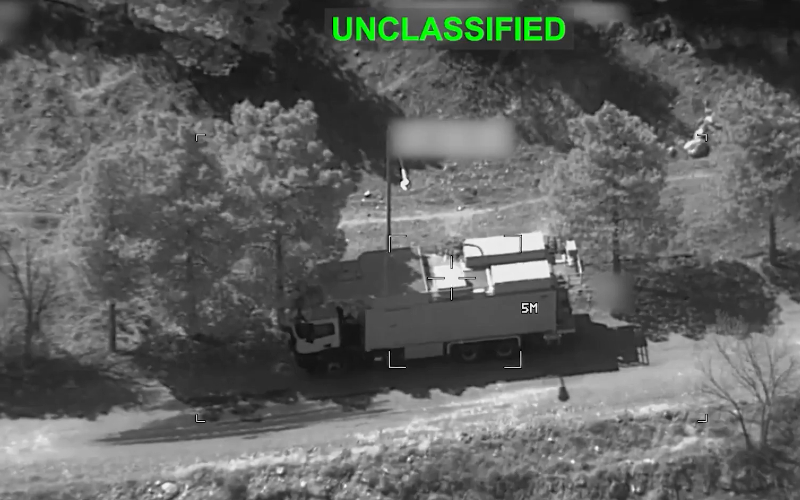
Over the last three weeks, U.S. and Israeli forces have decimated Iran’s leadership, destroyed most of its military forces and halted its nuclear program.
The U.S. has flown more than 8,000 combat flights and struck more than 7,800 targets in Iran. More than 120 Iranian ships have been sunk, including most of that nation’s submarines.
U.S. Central Command (CENTCOM) Commander Adm. Brad Cooper posted a 7-minute update on X last Tuesday, summarizing the extent of the operation, including before and after photos of bombed Iranian drone and missile factories.
The Iranian regime, the world’s leading sponsor of Islamist terrorism, is reeling and may fall in a few weeks. But you’d never know it from media coverage. It’s nonstop doom and gloom.
The New York Times on March 1 declared that there was “no realistic path to success.”
The Washington Post warned of another “endless war.”
Here’s a summary from Xi’s Grok: “Major outlets, particularly left-leaning and international ones, have emphasized civilian casualties, escalation risks, lack of clear objectives, constitutional concerns, and potential long-term failure — often framing the conflict as a ‘war of choice’ or ‘regime change adventure’ initiated by President Trump.”
If today’s media were around in June 1944, they would have been whining that it took more than a month for allied troops to go 20 to 30 miles inland after hitting the beaches of Normandy on D-Day in an “ill-designed, regime change adventure.”
The negative coverage has matched the rhetoric from Democrats such as House Minority Leader Hakeem Jeffries, who issued a statement on March 3, only four days after the conflict commenced.
“There certainly is no justification for a regime change war,” he declared, adding that Americans don’t want “another endless war in the Middle East that is going to end in failure.”
No, we don’t, but we don’t want a nuclear-armed Iran that coldly kills thousands of protesters, funds Hamas, Hezbollah, the Houthis, and other Islamic terrorists, and has pledged to destroy America and Israel.
 Iran has been officially at war with the United States since 1979. The regime was rushing to rebuild its nuclear weapons capacity after the U.S. and Israeli raids in late February and early March and was making thousands of ballistic missiles and drones.
The regime has also been supplying Russia, which has been inflicting horror on Ukrainian civilians with attacks on hospitals, shopping centers, and power plants.
Eighty percent of Iran’s oil was being shipped to communist China, which has been assembling its forces and threatening to invade Taiwan. There are many pieces moving on the world’s chessboard right now.
Democrats, who also condemned Mr. Trump’s taking out Venezuelan dictator Nicolas Maduro, seem thrilled that gas prices have soared since Iranian attacks closed off the Strait of Hormuz, where 20 percent of the world’s oil flows.
In California, gas is back over $5 a gallon in most places, and as high as $6 in some locations, with Democrats placing full blame on Mr. Trump.
Iran has been attacking other nations in the Gulf, trying to drive the price of oil so high that many Americans, who have a short attention span and have soured on foreign wars, will give up and pressure Mr. Trump to stop before the regime falls.
With midterm elections in November, the Dems are undoubtedly hoping the high gas prices will last until then, but they may be disappointed. European nations and Japan just agreed this week to help the U.S. re-open the Strait of Hormuz.
When the oil starts flowing again, prices will likely return to under $3 a gallon in most places not called California.
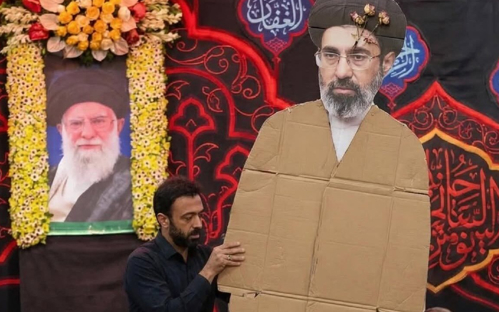
It’s important to recognize that Iran’s belligerence toward the Western world is firmly rooted in its Shia theology. That strain of Islam believes that a “hidden Imam,” born in the 9th century, is still miraculously alive and will make his presence known as the Mahdi, bringing order and peace to the world. Before that happens, however, wars, chaos, tyranny, and upheavals must happen.
When the Ayatollah Khomeini overthrew the Shah of Iran in 1979 and militants occupied the embassy of the United States (the Great Satan) for nearly a year, it was widely believed in Iran that the new regime was paving the way for the emergence of the Mahdi.
The mullahs have been sowing chaos ever since in pursuit of that end, confident that even if they died in a conventional or nuclear war, they’d go to heaven as martyrs and get their 72 virgins.
Not the kind of outfit you want having nukes.
While Mr. Trump makes long overdue moves to weaken our enemies and free captive peoples, America’s fifth column is painting a false picture of reality, as they do with so many things.
It comes down to this: They want Mr. Trump to lose, regardless of what it would mean for America and the free world.
Notice: This column is printed with permission. Opinion pieces published by AFN.net are the sole responsibility of the article's author(s), or of the person(s) or organization(s) quoted therein, and do not necessarily represent those of the staff or management of, or advertisers who support the American Family News Network, AFN.net, our parent organization or its other affiliates.