



Books advancing gender ideology may no longer stay in the children’s or teen sections of Alabama Public Library Services (APLS), according to a new rule the state Board of Directors passed last week.
The rule limits minors’ exposure to transgender propaganda and empowers parents to control what titles their children may read. The innovative policy also undercuts the arguments gender ideologues raise against protective library policies.
The rule amends existing guidelines that exclude harmful content from youth sections, including sexually explicit and otherwise inappropriate materials. It clarifies that books promoting gender ideology — whether through positive role models or, worse, catechism — qualify as inappropriate materials. Accordingly, libraries must either remove the titles from the library or relocate them to a shelf in the adult section.
The rule may take effect only after a mandatory publication period, which means it will not be implemented until spring 2026, at the earliest.
The Alabama rule follows years of debate over which titles libraries offer to minors, in response to a left-wing cottage industry that creates LGBT books aimed explicitly at children. Many of the books seek to persuade impressionable young minds — who shouldn’t be thinking about sexual activity in any form — that homosexuality and transgender identities are normal and good, while some of the books are downright obscene. Conservatives have fought to remove the books promoting LGBT ideology, a policy that LGBT ideologues have smeared as “book-banning.”
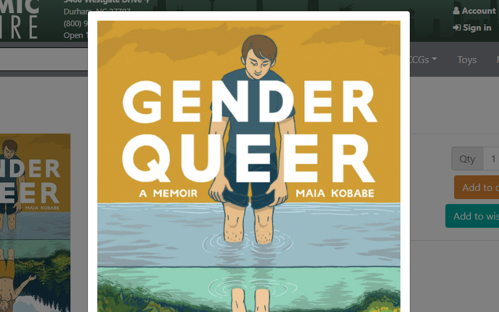 The Alabama rule evades this critique because the books aren’t actually banned but merely removed from the children’s section to the adult section, where they belong.
This benefit can be shown by consulting the arguments presented by an opponent of the Alabama rule. In the weeks before the policy was formally voted on, a group calling itself “Read Freely Alabama” (note the book-banning insinuation) solicited signatures for a petition against the measure. That letter advanced four arguments against the policy:
- “This is censorship: The amendment would force libraries to remove entire categories of books based on politics, not community need.
- “It undermines local control: Decisions about library collections should be made by local boards and families, not state-level politicians.
- “It is politically motivated: Board members advancing this amendment are also seeking higher office, using libraries as a stage for political campaigns.
- “It violates basic rights: Every Alabama family deserves the freedom to make its own choices about reading, without government overreach.”
Let us consider each objection in turn.
First, Read Freely Alabama charges the policy with censorship. However, their characterization is simply inaccurate. The rule does not, in fact, “force libraries to remove entire categories of books.” It simply directs how certain books may be categorized.
The central issue is whether the content should be censored from the perusal of children. Alabama library policy already recognizes this as a legitimate aim for certain inappropriate content. The rule change amends the pre-existing policy to add gender identity as an inappropriate category.
“The goal here is that we don’t want innocent children to accidentally stumble upon sexually explicit content or sexual content that the parent may want to have input [on] when they’re reading about it,” said APLS Board Chairman John Wahl.
Second, Read Freely Alabama contends that the rule undermines local control. This argument carries more weight in controversies between the state and national governments, where issues of federalism and state sovereignty come into play. Local governments, by contrast, are not sovereign entities, but entirely the creation of the state government.
A recent example demonstrates the real issue at stake. Earlier this month, the APLS board permanently cut $22,000 in state funding to Fairhope Public Library over inappropriate titles in the teen section, including a human trafficking novel that contained a rape scene. The library failed to comply with state regulations by a June 30 deadline.
Notably, the board did not close the Fairhope library but simply withdrew state funding. Local public libraries may pursue whatever policies they wish, but if they expect lucrative funds from state cooperation, they must also cooperate with state policy. What Read Freely Alabama is for state officials to open their pocketbook and then never ask how the money is spent. What they cast as an issue of local control is really a question of whether the state can decide where state dollars go.
Third, Read Freely Alabama complains that the policy is “politically motivated.” This slippery phrase has many definitions that could apply to almost anything. The decision by activists to author so-called “children’s books” advancing their ideology was also politically motivated, as was the decision to stock these titles in public libraries.
In this case, however, the activist group clarifies that some board members are using the policy as a platform to climb to higher office. Board member Amy Minton is running for state Senate.
This argument backfires spectacularly. Politicians, at least successful ones, don’t climb to higher office by leaning into unpopular policies. Thus, Read Freely Alabama is hinting darkly at the fact that many Alabamans don’t actually want their children exposed to gender ideology at the public library.
“This is what the majority of people of Alabama want,” argued Minton, explaining that the board has received mostly positive feedback regarding the change. Political ambition is inevitable; electoral politics merely harnesses it for the public good. After urging for greater “local control,” the activist group is now suggesting that following the people’s will is a bad thing.
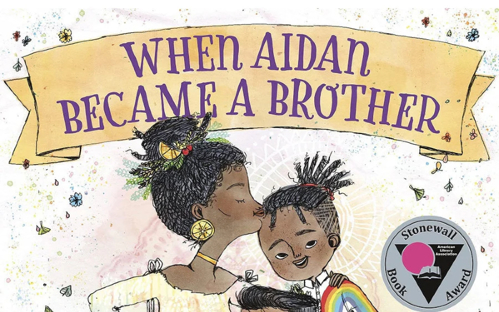 Fourth, Read Freely Alabama criticizes the policy for violating “basic rights” because “every Alabama family deserves the freedom to make its own choices about reading.” They are, presumably, referring to parental rights, although they disdain to mention them by name.
Here again, the group’s information was incorrect. Although the APLS Board did limit youth library cards to renting out books in the appropriate sections, nothing in the policy prevents liberal parents from checking out the gender ideology books on behalf of their children. In fact, the policy even allows youth to obtain an all-access card with written parental permission.
Thus, the policy does allow for a “family” unit to make whatever decision it wants; what it restricts is minors exploring transgenderism without their parents’ knowledge. That is precisely what the policy was designed to do, and that is precisely why the Left is enraged about it.
Unfortunately for them, this policy was designed in such a way that their best arguments fall flat. In the final vote, only one out of seven APLS board members, Ron Snider, voted against the policy. Apparently, Snider bought the censorship argument, or else he already shared the worldview that wants to push gender ideology on minors.
For most of the board, passing the policy was seen as a great success. Chairman Wahl, who also chairs the Alabama Republican Party, called the vote “a major step forward in putting parents back in control in what their children are exposed to.”
“We want to put Alabama families in charge,” he said. “We want them to make the decision what is best for their families.”
Editor's Note: This article originally appeared here.
Notice: This column is printed with permission. Opinion pieces published by AFN.net are the sole responsibility of the article's author(s), or of the person(s) or organization(s) quoted therein, and do not necessarily represent those of the staff or management of, or advertisers who support the American Family News Network, AFN.net, our parent organization or its other affiliates.