





New York City Mayor Zohran Mamdani recently acknowledged what legal experts had been saying all along: he has no authority to arrest Israeli Prime Minister Benjamin Netanyahu under an International Criminal Court (ICC) warrant.
But then he made an even more revealing statement. Rather than just conceding the issue, Mamdani called on the federal government to join the ICC and execute the warrant instead. (AP News)
That comment exposes a much larger debate than one involving Israel or Netanyahu. It’s a question of globalism vs sovereignty. Who governs the United States? The American people through our Constitution, or unelected bureaucrats in international institutions that claim authority above sovereign nations?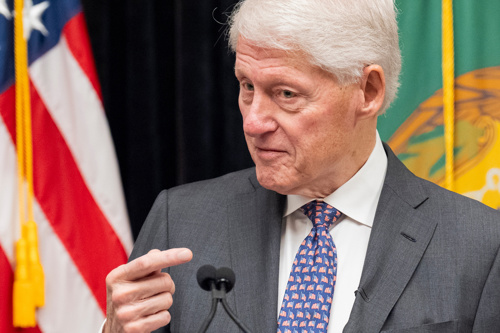
The ICC was created by the 1998 Rome Statute as a permanent international tribunal to prosecute “genocide, crimes against humanity, war crimes, and the crime of aggression.” Its advocates argue that the court provides justice when nations refuse to prosecute their own leaders or military officials.
The United States, however, has deliberately chosen not to become a party to the Rome Statute. While the Clinton Administration’s UN Ambassador signed the treaty in its final days, Clinton never submitted it for Senate ratification. Later administrations of both parties concluded that allowing an international court to exercise criminal jurisdiction over American citizens or officials raised serious concerns about constitutional self-government and national sovereignty.
They are right.
Clinton was right
The ICC may claim international jurisdiction, but it cannot manufacture authority where nations have declined to give over their sovereignty to a globalist regime. In the United States, an arrest must rest on the Constitution, an act of Congress and valid U.S. judicial process — not the command of a tribunal whose founding treaty the Senate never ratified.
In our constitutional system, extra-American authorities do not become binding simply because an international body says they should. The Constitution requires Senate ratification before treaties become part of the supreme law of the land. The ICC has never received that approval.
That is why Mamdani ultimately admitted New York lacked authority to carry out the warrant. But his suggestion that the federal government should simply “join the ICC and execute this warrant” overlooks the larger constitutional framework and the continued bipartisan rationale that the United States should not ever join the ICC.
In fact, Secretary of State Marco Rubio warned that a nation who gives up its sovereignty to an international tribunal gives over the liberty of its citizens and fails to fulfill the principal responsibility of government: protecting the individual rights of the people within the nation.

Sovereignty is not merely a political slogan. It is the principle that a nation governs itself through its own lawful institutions, and a biblical one. Acts 17 says that God created the nations, when they should rise and fall, and determines their boundaries. The Bible certainly affirms justice, but it does not envision a single earthly institution exercising unlimited authority over all nations. Human governments remain accountable to God, and each nation bears responsibility for administering justice within its own lawful constitutional order.
In America, governmental power originates with “We the People,” who delegated limited authority through the Constitution — not through international organizations headquartered thousands of miles away.
If Americans accept that unelected international tribunals may override our constitutional processes whenever they disagree with American policy, the question is no longer about accountability for one foreign leader like Netanyahu. The precedent becomes much broader. Could future ICC prosecutors seek action against American military personnel? Intelligence officials? Cabinet members? Even presidents? Those concerns have long shaped bipartisan skepticism toward ICC jurisdiction over Americans and rejection of such.
Do we really want to do this?
Mamdani’s remarks unintentionally clarified what is truly at stake. The question is not simply whether Benjamin Netanyahu should be arrested. The debate about Israel is a pretext for larger ideological questions, including whether Americans are willing to transfer constitutional authority from their own elected government to an international court whose judges answer to no American voter.
That answer must remain a firm no.
None of this means that world leaders are above accountability. Nations should investigate credible allegations of crimes, and allies should hold one another to high standards. But accountability and sovereignty are not mutually exclusive. A nation can pursue justice while remaining faithful to its Constitution.
And for anyone who values constitutional government, national sovereignty, and self-government under law, the answer should remain firmly in the hands of Americans, not globalists.
For more on this topic, listen to Jenna’s interview with Eugene Kontorovich, Senior Legal Fellow at Advancing American Freedom, here.
Notice: This column is printed with permission. Opinion pieces published by AFN.net are the sole responsibility of the article's author(s), or of the person(s) or organization(s) quoted therein, and do not necessarily represent those of the staff or management of, or advertisers who support the American Family News Network, AFN.net, our parent organization or its other affiliates.