



I have been asked by several media outlets to address a question that is increasingly on the minds of many Americans: Is the unrest spreading across the country a sign that the United States is heading toward another civil war?
It is a serious question and deserves a sober answer. The United States is not on the verge of a civil war as Americans historically understand that term. At the same time, it would be a mistake to dismiss current unrest as fleeting or harmless.
In my 2023 book, Divided We Stand, I argued that nations rarely fracture all at once. They weaken over time as citizens lose confidence in shared institutions, abandon a common sense of identity, and begin to excuse disorder as a political tool. What we are witnessing today reflects more than routine protest or policy disagreement. It reflects a widening belief that the rules no longer apply equally, and that lawful authority itself may not deserve obedience.
 It is important to remember how different today’s tensions are from those that produced the American Civil War of 1861–1865. That conflict was driven largely by a single moral and economic issue, slavery, and it unfolded along clear state lines. States formally seceded. Armies assembled. Authority and territory were clearly defined.
There was also a stark clash of worldviews in the 1850s, but those worldviews aligned largely with geography and state power. As catastrophic as that war was, its lines were unmistakable, and its conclusion brought constitutional amendments and a defined path toward national reunification.
Historians have long noted that before the Civil War, Americans often spoke of “the United States are,” emphasizing a collection of sovereign states, while after the war the phrase became “the United States is,” signaling a more unified national identity. That linguistic shift reflected a deeper political and cultural consolidation that followed the conflict.
No more shared vision
Today’s divisions bear little resemblance to that earlier conflict in structure, but they are no less profound in worldview. Our disagreements do not break cleanly by state borders. They cut across the country along regional, cultural, ideological, and moral lines.
Broadly speaking, the West Coast and much of the Northeast lean toward progressive or liberal worldviews, while the South and Midwest remain more conservative, though even within those regions there are sharp internal divisions. As in the 1860s, there are pockets of opposition on both sides of every divide.
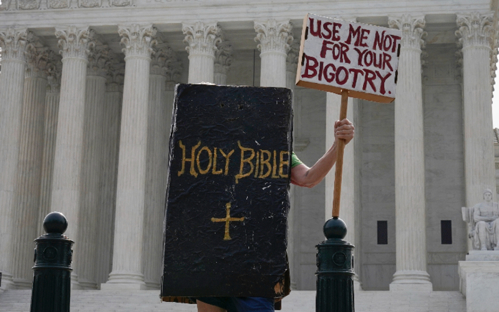 What makes the current moment especially unstable is that these competing worldviews often appear fundamentally incompatible. We no longer share an accepted vision of what the nation is for, what binds us together, or which moral framework should govern public life.
Outside cultural influences and ideological movements have increasingly challenged the foundational assumptions of American constitutionalism and Western civilization itself. History offers a cautionary parallel in ancient Rome, where imperial expansion and the absorption of competing cultures and belief systems gradually weakened civic cohesion and ultimately contributed to imperial collapse.
That difference matters because modern unrest rarely announces itself clearly. It unfolds unevenly and persistently. It appears through demonstrations that slide into obstruction, selective refusal to enforce the law, intimidation of public officials, and sustained efforts to delegitimize institutions rather than reform them. Power struggles today focus less on territory and more on control of narratives, enforcement, and moral authority.
Street violence being normalized
Recent events illustrate this danger without constituting civil war. In Minneapolis, protests erupted after a federal immigration agent fatally shot a U.S. citizen, triggering demonstrations that spread beyond Minnesota.
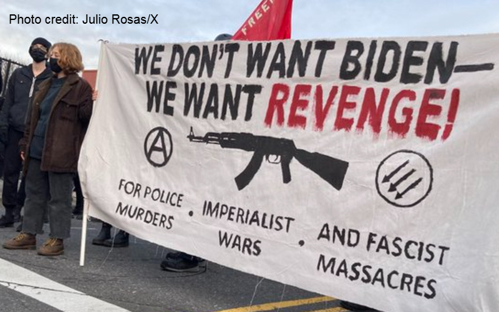 Similar unrest has followed federal immigration enforcement actions in Los Angeles and Chicago, where protests escalated into confrontations with law enforcement.
Meanwhile, cities such as Portland and Seattle exist in a near-constant state of political confrontation, marked by recurring riots, attacks on federal buildings, and prolonged disorder that has become normalized rather than exceptional.
These events are serious and disruptive, but they remain limited in scope. What matters is whether they stay that way. When protest shifts from dissent to obstruction, when violence is excused rather than condemned, and when enforcing the law is portrayed as inherently illegitimate, the damage extends beyond any single incident and begins to erode the foundations of self-government.
History has lessons for today
History offers warnings without providing a script. In Spain during the 1930s, years of polarization and street violence weakened public confidence in democratic government long before civil war erupted.
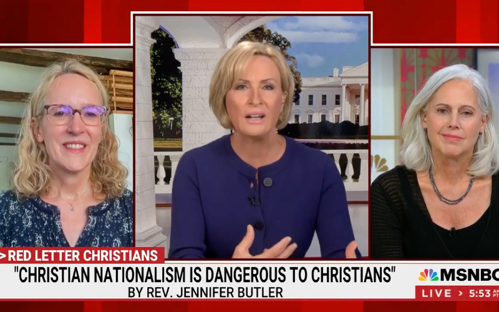 In Weimar Germany, repeated clashes between rival political movements, including the Communist Party of Germany, and the steady erosion of trust in democratic institutions, did not lead to civil war but paved the way for authoritarian rule.
The United States is not destined to follow either path. Our constitutional system remains intact, the military is unified, and most Americans still reject violence as a political tool.
Those facts should not be discounted. But neither should the warning signs be ignored.
 America still has time to steady itself. That requires leaders who apply the law consistently, condemn political violence without qualification, and rebuild confidence that citizenship, borders, and institutions matter. It also requires citizens willing to disagree without treating their fellow Americans as enemies.
Alarmism clouds judgment. Indifference invites decay. History suggests that stable societies endure not by denying tension, but by confronting it early and honestly. The question before us is not whether America is destined for civil war, but whether we still possess the will to preserve the shared civic rules that make peaceful self-government possible.
Notice: This column is printed with permission. Opinion pieces published by AFN.net are the sole responsibility of the article's author(s), or of the person(s) or organization(s) quoted therein, and do not necessarily represent those of the staff or management of, or advertisers who support the American Family News Network, AFN.net, our parent organization or its other affiliates.