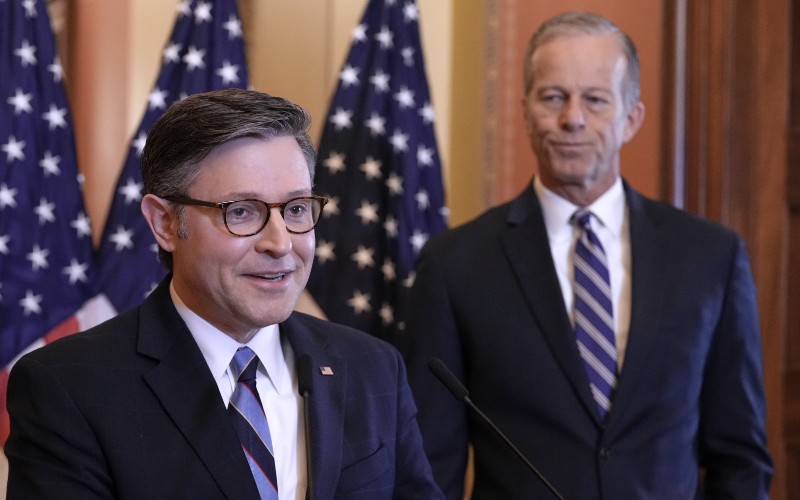


Both leaders discussed agreements on cooperation in the areas of the economy, finance, and military industry. but according to Gergely Gulyas, Orbán’s chief of staff, one key factor will be a path to a U.S.-Russia meeting, he noted last week.
Gulyas was optimistic: “This meeting also offers an opportunity for the two heads of state to ... determine the roadmap that could lead to a U.S.-Russian meeting and, through that, to a Russian-Ukrainian peace agreement.”
Rodrigo Ballester, Ministerial Commissioner for high education and part of the central European delegation, talked exclusively with The Washington Stand about some of the themes that both leaders should focus on.
The War in Eastern Europe
Regarding the Russia-Ukraine conflict, he affirmed that Hungary “is and will keep playing a pivotal role in the resolution of the war because it is one of the few Western countries that has been pro-peace since the very beginning of the conflict and constantly called for peace talks.”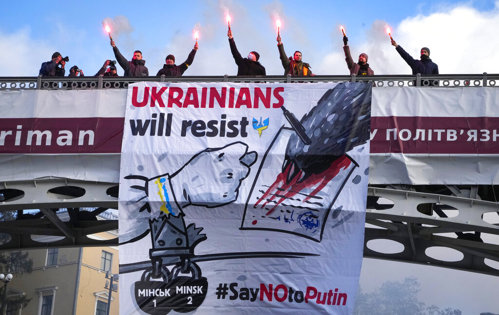
To Ballester, also a department director on the Mathias Corvinus Collegium, for years the only ally in that Hungarian endeavor was the Vatican. “Pope Francis relentlessly called for a peaceful settlement, and now Pope Leo has kept the same line.” He thinks that Trump’s second term is “a game changer, because now the U.S. went from being one of the proxy belligerents to joining this peace coalition.”
“Trump is a peace builder and has the courage to actively search for a negotiated solution to stop a bloody and cruel conflict after three years of massacres,” Ballester observed. “Once the counterparts reach the point where they can sit around the table, it goes without saying that Hungary, a country that favored peace to a never-ending war, is ready to host those talks and facilitate a deal.”
In contrast, he sees the European Union (EU) as an entity that “keeps sending weapons and billions of euros to Ukraine and, since it is running out of funds, it even envisages freezing 140 billion euros of Russian assets to guarantee a loan to Kiev, a reckless move that would poison the relations with Russia for decades.”
Moreover, Ballester thinks, that “while the EU doubles down on its pro-war stance, the consequence of the war is biting hard on European citizens, especially regarding energy prices. But given the EU’s ideological approach to this war, I’m afraid it will continue shooting itself in the foot to the detriment of the well-being of its citizens.”
Asked about the characterization of Orbán in Western mainstream media as an ally of Putin, Ballester answered: “As I said, Pope Francis had and Pope Leo has exactly the same position as Viktor Orbán on the war in Ukraine. Does that turn them into Putin puppets? Would the international press spread the same smears about them?”
“Orbán is not pro-Putin, he is pro-peace and pro-Hungary and his job is to defend the interests of its nation and its citizens, not to sacrifice them on the altar of ideology,” he affirmed.
Moreover, Ballester identifies “a great deal of hypocrisy” when several political actors approach the theme of the war in eastern Europe. “Who are the main importers of Russian gas in the EU? The answer is Spain, Belgium, and France, not Hungary, yet, nobody portrays them as ‘Putin’s best friends.’ It seems that any person not openly supporting the continuation of this war at any price is automatically described as ‘pro-Putin,’ a cynical manner to dismiss debates and cancel different views.”
‘Demographic Suicide’ and Tariffs
Last summer the Trump administration promoted some incentives for raising the birth rates, and Ballester sees that field as one with chances of exchanging experiences and information.
“The West’s largest existential problem is not climate change, not even the war, it is its demographic suicide,” noted Ballester. “Yet, few seem to care about that in Europe and remain obsessed with irrelevant ideological questions and keep repeating that the only solution to the demographic decline is migration. Again, Hungary did not follow the flow and, once again, was right to do the opposite, which is to encourage natality, promote traditional families, and make sure that having children is not a burden.”
 How was that possible? Ballester attributes it to “smart and pragmatic policies” instituted by Hungary: mothers of more than two are now exempt from the income tax for life, the government gives grants to buy a new home or car after the second kid, and tax benefits and even a personal leave are offered for grandparents so that they can look after their grandchildren.
“And since demographic decline is also a cultural issue, Hungary openly promotes families,” Ballester noted. “The first message you find when you land in Budapest’s airport are large banners stating that ‘Hungary is a family-friendly country!’”
“They also defend children from harmful ideologies like the gender cult, which the EU tries to impose,” he continued. “Did you know that Brussels confiscated billions of euros to Hungary because it prohibits the promotion of gratuitous sexuality, pornography, homosexuality, and gender ideology to minors? I am sure this situation rings a bell to American readers as they faced a similar situation under the Biden administration.”
The visit, Ballester thinks, will reflect the excellent relationship between two administrations that share “a common worldview based on political sovereignty, reindustrialization, and a strong rejection of woke ideology, something very few European countries can say.”
For Ballester, both Orbán and Trump are “leaders who do not talk the language of ideology (precisely what the Biden administration did against Hungary and what the EU still does), but the language of pragmatism and shared interests.”
Editor's Note: This article originally appeared in The Washington Stand.
Notice: This column is printed with permission. Opinion pieces published by AFN.net are the sole responsibility of the article's author(s), or of the person(s) or organization(s) quoted therein, and do not necessarily represent those of the staff or management of, or advertisers who support the American Family News Network, AFN.net, our parent organization or its other affiliates.