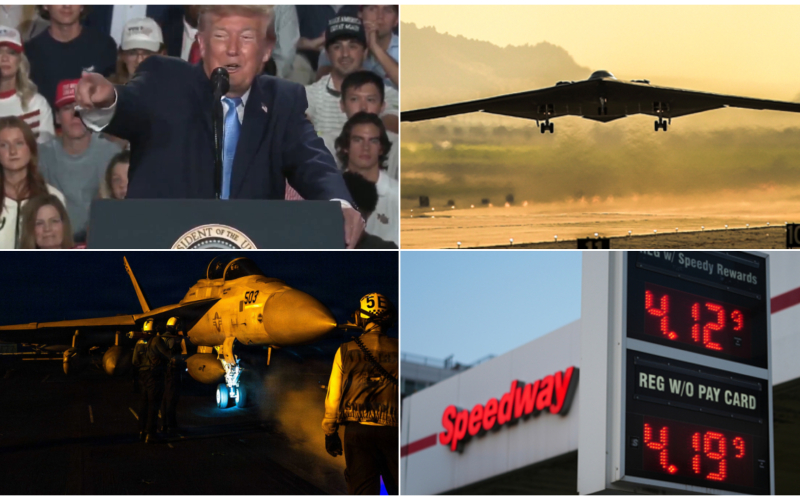



At the State of the Force Address on September 30, Hegseth unveiled a sweeping new initiative dubbed “FORTRESS America,” calling it a “national insurance policy for the American homeland.” The acronym FORTRESS stands for Federal Operations for Resilience, Troop Resources, Energy, Supply, and Survivability.
“Every major installation will generate its own power,” Hegseth stated, “independent of the civilian grid.” He went on to emphasize that even if an adversary takes down the national infrastructure through cyberattack or sabotage, “our bases stay lit, our aircraft keep flying, and our command centers never go dark.”

The establishment of FORTRESS America will onshore critical supply chains and build deep strategic reserves of munitions, fuel, and medical supplies to ensure military readiness even if global supply lines collapse. Alongside hardening domestic bases in this manner, the objective will also secure satellite and communications networks.
American Family News spoke to retired U.S. Army Lt. Col. Darin Gaub, who shared his insights on FORTRESS.
“The idea is that military installations should operate as independent lily pads — self-sufficient for critical needs like energy, communications, food, water, and shelter for at least ninety days, plus defensive capabilities,” the former UH-60 Black Hawk pilot and battalion commander explains.
He emphasizes that bases have always relied on civilian infrastructure — power grids, water systems — which he called a fundamental vulnerability. “For decades, people like me have argued this makes no sense. A base should be able to unplug and operate autonomously, whether due to natural disaster, cyberattack, or enemy action.”
When asked if the push signaled imminent conflict, he was firm. “Two things can be true: This is long-overdue prudence, and threats are real — ballistic missiles, cyberattacks, even civil unrest.”
Gaub estimates full implementation to take some time, especially for large-scale power and water infrastructure, though stockpiling supplies would move faster.
He also stresses the importance of civilian readiness. “This isn’t just about the military,” he told AFN. “Every family, every community should be asking themselves the same questions: Do you have food? Water? A network? Can your town generate its own power?”
Hegseth’s announcement has drawn mixed reactions. While many praise its strategic foresight in an era of hybrid warfare and gray-zone threats, others question both the timeline and ultimate cost — not merely in dollars but in the very definition of national security in a changing world.
This push for preparedness is not unique to the United States. Dozens of other nations — across Europe, the Americas, Asia, Africa, and Oceania — have issued official guidance or launched recent public campaigns advising residents to stock up on essentials for emergencies.