


From trade deficits to human rights violations, there are numerous topics for President Trump to raise with China’s authoritarian leader, Xi Jinping.
News reports, however, say it appears the three-day summit, which concludes today, will likely end without any blunt – and confrontational – discussions.
One exception is Taiwan, and its future as an independent nation, though Chinese state media reported it was Xi who brought up that topic to the U.S. president Thursday, according to a Reuters wire story.
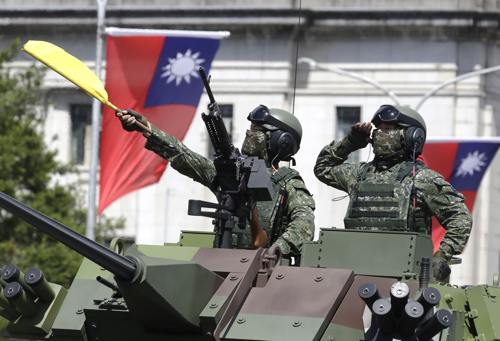
Xi urged Trump to take a “correct position” on Taiwan’s independence which means, according to the CCP, to look away when China raises its communist red flag on the tiny island and its 23 million citizens.
 A more immediate concern for Xi and the CCP is the Trump administration’s plan to sell Taiwan $14 billion in military arms, including air defense systems. That arms sale was approved by Congress in January, but Trump appeared to be using it as diplomatic leverage as the summit with Xi approached.
In a statement reacting to Xi, Taiwan’s foreign ministry stated: "Taiwan's sovereignty belongs to all the people of Taiwan. The Chinese Communist Party has no right to represent the Taiwanese people, and Taiwan's future can only be determined by the Taiwanese people through democratic means.”
Taiwan, which is about the size of Maryland, sits about 100 miles from China’s coast. China has demanded “reunification” with the mainland since 1949, when Chiang Kai-shek fled there after losing a civil war to Mao Zedong and his communist army.
 Interviewed on Thursday, Asia expert Dr. David Kang told the “Washington Watch” program the U.S. policy on Taiwan independence has been “ambiguity” going back decades and prior White House administrations.
“Trump, in being fairly silent or ambiguous, is well within normal decades of Washington foreign policy,” Kang told show host Tony Perkins.
The issue is not just supporting Taiwan independence, Kang cautioned, but if the U.S. is willing to go to war with China over the island and its future.
“That’s a very tricky issue,” he said.
Kang: Trade and human rights worthy topics
Asked by Perkins what topics Trump should be raising with Xi, Kang said one issue is trade and a “truce” in the back-and-forth tariff fight.
That truce in the high-stakes trade war was set to expire in November, but it has been pushed into January to help negotiations, he said.
 “This has direct impact on prices and jobs in the United States,” Kang pointed out.
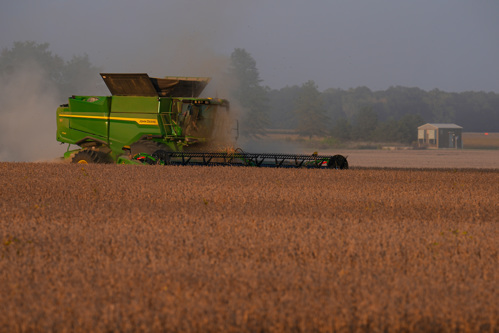
One trade issue raised by the news media, and by many U.S. farmers, is China's pledge to purchase U.S. crops such as corn and soybeans. China agreed to purchase 25 million metric tons of soybeans annually, which was part of a trade deal, as well as $17 billion on other U.S. crops.
The second issue mentioned by Kang is human rights.
AFN previously reported President Trump is being urged to demand basic freedoms for China’s citizens, who live under a totalitarian government overseen by the Chinese Communist Party.
Even though the Chinese Constitution describes freedom of speech, the Chinese Communist Party forbids any criticism of the party and its leaders. To maintain compliance, the Ministry of Public Security watches the population with an estimated 700 million surveillance cameras.
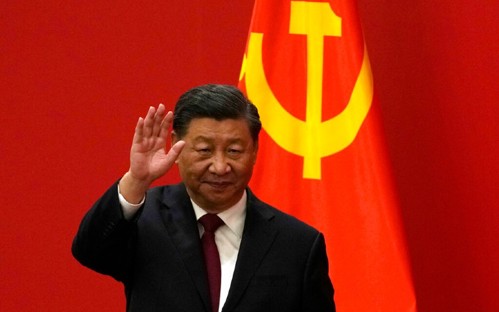 Xi, who has led China since 2012, rules the Asian nation as general secretary of the Chinese Communist Party.
“I would bring it up,” Kang insisted. “I would say that there's a real difference in our values and their values, and we don't want to hide from that.”
AFN also reported that U.S. Sen. Roger Wicker (R-MS) criticized the pageantry in Washington for Xi. In a floor speech, Wicker described the CCP leader as a "brutal, unelected, and oppressive dictator."