



Outgoing Rep. Thomas Massie (R-Kentucky) on Tuesday introduced eight articles of impeachment against Sec. Pete Hegseth. The charges are not limited to the war in Iran.
The resolution was filed as a privileged resolution, a procedural designation that allows Massie to force House consideration within a specified period.
The eight specific charges include:
- Waging the Iran war despite no declaration of war, statutory authorization, attack on the United States, or imminent threat.
- Continuing the Iran war after both Houses of Congress directed the removal of U.S. forces through House Concurrent Resolution 86.
- Continuing hostilities in Iran after expiration of the War Powers Resolution’s 60-day termination period and any potential 30-day withdrawal period.
- Ignoring laws that minimize civilian casualties.
- Replacing maritime law enforcement with unauthorized lethal military targeting of suspected drug traffickers, resulting in at least 221 deaths. It also addresses denial of quarter, secondary strikes on survivors, failure to rescue shipwrecked persons, and the creation of artificial legal authorities for the campaign.
- Using department authority to retaliate against and intimidate Senator Mark Kelly for constitutionally protected speech questioning unlawful military orders.
- Directing Operation Absolute Resolve to seize Nicolás Maduro and Cilia Flores in Venezuela without constitutional or legal authority.
- Initiating Operation Rough Rider, targeting the Houthis in Yemen, without congressional authorization or an imminent threat to the United States, while also violating war powers reporting requirements. It further addresses extensive civilian deaths and unlawful strikes on civilian objects, rescuers, and other protected persons.
Massie was defeated in Kentucky’s GOP primary in May by Trump-backed opponent Ed Gallrein, a former Navy SEAL. Gallrein won by almost nine percentage points.
“There are constitutional concerns with this administration and some of the things that are being done, and I do believe the President should be making the case to Congress for the war,” former Rep. Bob Good told show host Jenna Ellis, “but I don't agree that impeachment is the way to go or the best way to address it at this point.”

The central constitutional question is whether Trump and his administration have conducted military operations against Iran within the president's authority as commander in chief, or whether they have continued hostilities requiring authorization from Congress.
The Constitution does not explicitly settle every question about when a president can initiate military action without congressional approval. Legal scholars and administrations have disagreed about the scope of executive war powers for decades.
The executive and legislative branches have differing interpretations of the Constitution. Though it recognizes some limits on its authority, the executive branch often argues that not every military action constitutes a war.
In late June, both the House and Senate passed House Concurrent Resolution 86, marking the first time both chambers jointly directed Donald Trump to withdraw U.S. forces from hostilities against Iran under the 1973 War Powers Resolution.
The House has also voted in July and again on Tuesday rein in Trump’s ability to continue aggression against Iran without congressional approval.
In the previous House actions, four Republicans voted to halt the war in Iran, but that number rose to seven in Tuesday’s war powers vote, including GOP lawmakers from battleground Iowa, Rep. Zachary Nunn and Rep. Mariannette Miller-Meeks, and retiring Rep. Nancy Mace of South Carolina. The final count was 220 in favor of the resolution, 204 against.
The Senate has given Trump more room to maneuver.
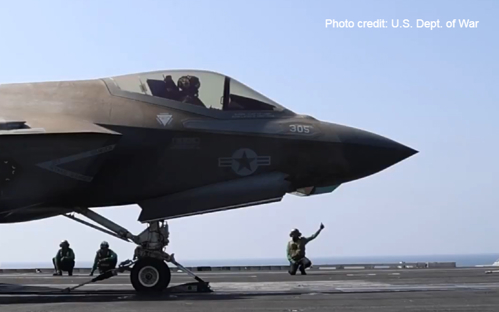 Critics argue that the scale and duration of the U.S. military campaign against Iran go beyond the president's authority to respond to an immediate threat and that the action requires congressional authorization.
A resolution does not require the president’s signature and thus cannot become law.
“It seems that some members of Congress want to abdicate, many members of Congress perhaps, want to abdicate their responsibility and like to go ahead and defer to the executive branch and leave the political pressure, the political responsibility to the executive branch instead of exercising the constitutional responsibility that each member of Congress has,” Good said.
The administration failed to explain whey February attacks against Iran were necessary after it hailed the success of Operation Midnight Hammer — the U.S. bombing of Iran’s nuclear facilities — last June. He called it “troubling.”
“The administration said it wasn't a war, but now here we are some seven months later, and the president has not really made the case to justify the continued hostilities or what the actual end game, the objective, or what victory looks like,” Good said.