


American Family News spoke to Jacob Schanck, a Special Forces Green Beret who retired in October 2025 with the experience of five combat deployments. In 2021, the retired Sergeant First Class documented his analysis in writing while he was still serving on active duty, prior to the release or compilation of any supporting records.
He explains, “I recorded what I had identified and assessed at the time: foreign intent to influence American elections; cyber and information capabilities; military-derived election-defense methods adapted to the civilian information environment; and government, nonprofit, private-sector, and platform relationships capable of influencing how election-related information was reported, referred, or acted upon.”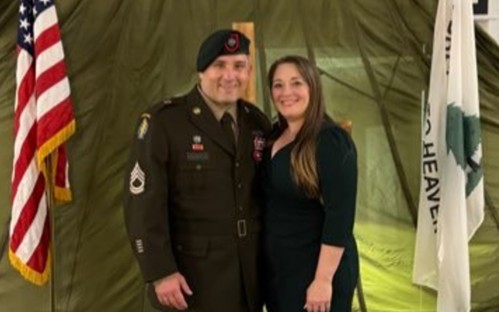
Schanck’s (shown in uniform right) findings were explained to him as a warning that “if exploited or abused, this convergence could facilitate fraudulent registration activity, unlawful interference, dilution or denial of lawful votes, disenfranchisement, viewpoint-based suppression, or concealment of compromise.”
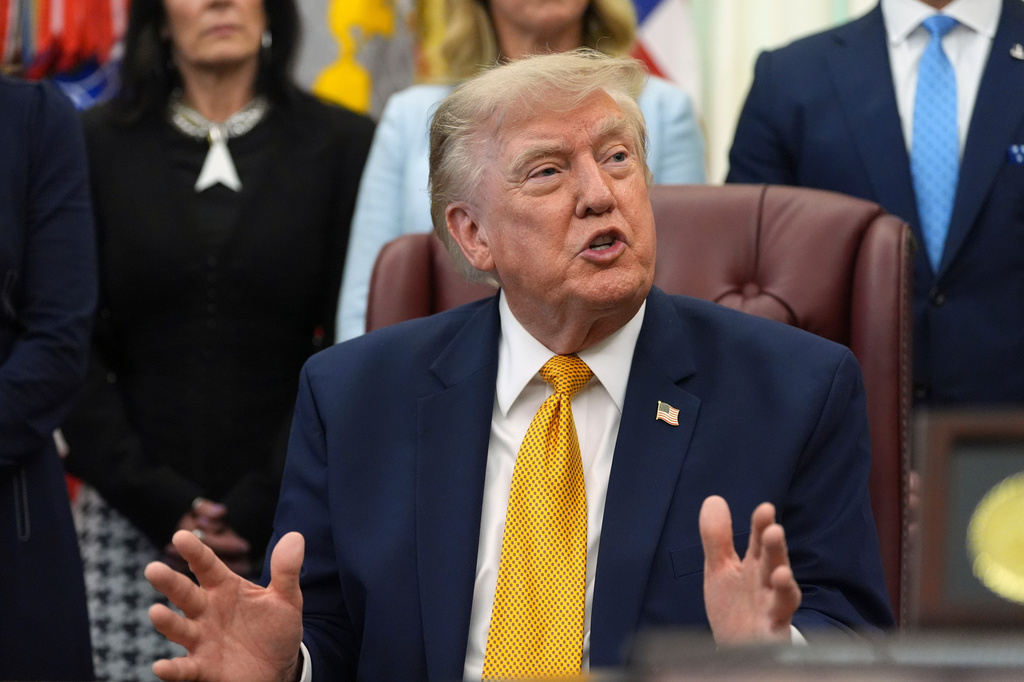
On July 16, President Donald Trump made public newly declassified intelligence — information that officials had intentionally withheld. The documents disclosed that foreign adversaries, primarily China, have significantly compromised U.S. voter data and that the integrity of America’s election infrastructure continues to be alarmingly susceptible to hacking and manipulation.
Three days later, Schanck turned to X to share his 2021 assertions with this newly declassified information. “The evidence now materially corroborates central warnings I had already made,” he shares. “The expanded record supports foreign election-related intent and preparation, voter-data targeting, persistent and successfully exploited registration-database vulnerabilities, documented fraudulent registration submissions in Michigan, and the existence of the Defending Digital Democracy architecture and referral pathways I had identified.”
He points out that what still needs to be confirmed is who enabled specific functions, under which authority, whether incorrect registrations resulted in ballots, if legitimate votes were compromised or voters were disenfranchised, whether referrals resulted in actions that discriminated based on viewpoints, and whether any actions influenced the certified results.
Consequences of actions
“In June 2022,” Schanck says, “a commander-signed counseling stated that the command had lost trust in allowing me access to classified systems.” He was subsequently barred from accessing a Sensitive Compartmented Information Facility (SCIF) and the Sensitive Internet Protocol Router (SIPR) system utilized by the Department of Defense. Additionally, he was required to surrender access-related items and assigned to non-classified duties.
For Schanck, the timing of this counseling and the events that followed raise a significant question: Was it a result of the election warning or his refusal of the once-mandated COVID-19 shot? He discloses that the truthful explanation involves several factors: election-security concerns, objections to the mandate, an unresolved Religious Accommodation Request (RAR), and command accountability.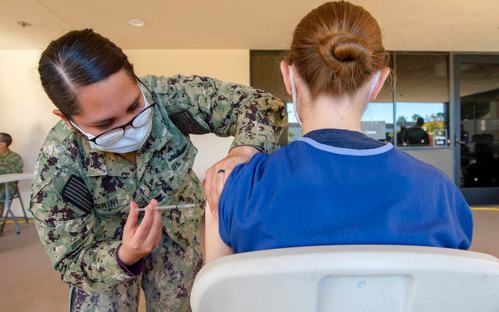
He was later granted access to a SCIF and SIPR, allowing him to return to classified work, but according to him, “This occurred only after I directly challenged how damaging it looked for Headquarters and Headquarters Company (HHC) leadership to employ a seasoned Special Forces non-commissioned officer in lawn mowing, pressure washing, tent setup, and other low-level tasks while I was trying to retire.”
Having enjoyed a successful retirement with his family, everything he expressed during his time in uniform continues to hold importance for him. “Foreign collection, voter-data exploitation, registration-system exposure, fraudulent submissions, public-private referral networks, religious liberty, and protection against reprisal remain live national-security and constitutional issues.”
Equally significant to him is the fact that, after serving 20 years in the Army, he was forced into retirement over the COVID-19 mandate. “It marked a profound breakdown in trust,” he admitted. “I submitted the Religious Accommodation Request in good faith, but it was never approved or denied.” Rather, he says, “it was ignored and disregarded.”
“The unresolved request affected the conditions under which I served and unfolded alongside a broader pattern of marginalization as I tried to retire,” Schanck notes. “I left service deeply concerned that the institution was failing to follow its own procedures or respect the conscience rights of its soldiers.”
Experience disregarded
He desires an independent review, correction of any unjust records, and full accountability. “If that review substantiates reprisal, discriminatory handling of my Religious Accommodation Request, or unjustified professional marginalization,” he tells AFN, “I believe Special Forces owes me an official apology.”
“The way I was treated conveyed that my command could not have cared less about the experience, sacrifice, combat-tested judgment, and record of service I brought to the unit,” Schanck laments. “More importantly, the Army owes every soldier assurance that raising a difficult warning or asserting a lawful right will not end a career in silence.”