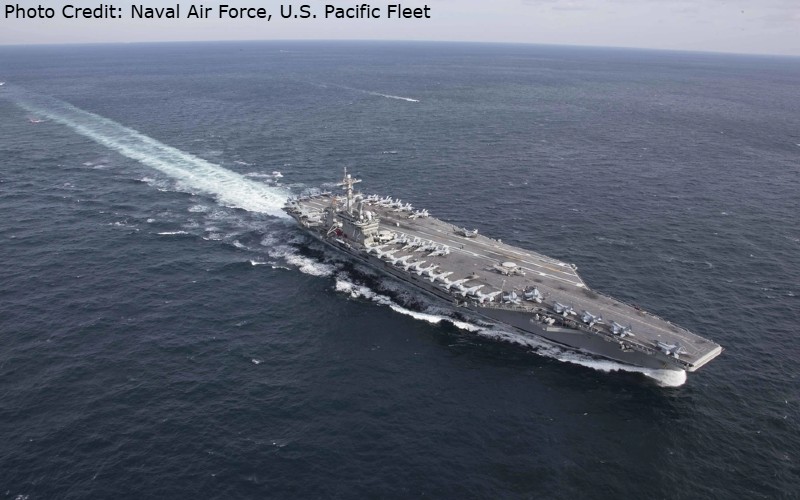



U.S. Central Command, in a July 21 statement, announced U.S. forces completed the 11th consecutive night of strikes in Iran. The statement further reads:
CENTCOM assets targeted Iranian military operations centers, maritime capabilities, aircraft hangars, drone storage facilities, and military logistics infrastructure to further degrade Iran's ability to threaten commercial shipping in the Strait of Hormuz.
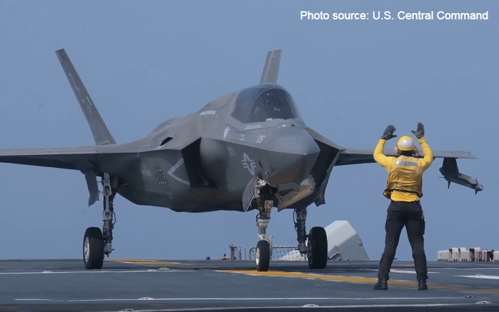 Describing that 11-day aerial attack, Scott Uehlinger told American Family Radio it is true the U.S. bombing campaign is hitting IRGC targets to protect commercial shipping from attacks.
One of those targets, struck July 16, is an IRGC surveillance tower at Iran's ocean port, Chabahar, CENTCOM announced the following day. Before it was destroyed, the tower was used to track and target commercial vessels.
What also stood out to Uehlinger, however, is the destruction of numerous bridges and tunnels across southern and western Iran. The military strategy is to close a transportation route to the coast to move missiles and attack drones, but Uehlinger predicts there is a political strategy at work, too.
“Also, it will prevent Iran from perhaps responding to open rebellions in some of their cities,” Uehlinger told show host Jenna Ellis.
A citizen-led revolt to topple Iran’s mullahs was encouraged by President Trump himself, now six months ago. In a Truth Social post, he urged the “Iranian Patriots” to keep protesting and to “take over your institutions.”
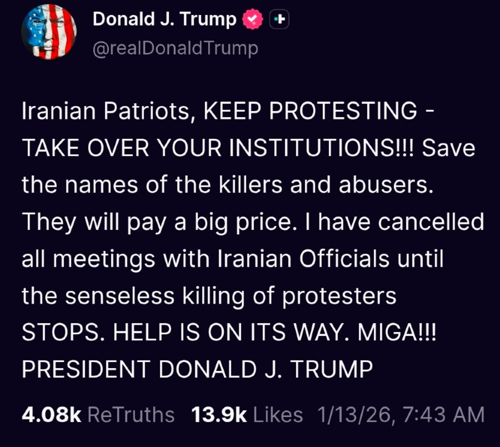 That post, which inspired millions of Iranians to fill the streets, also promised “HELP IS ON ITS WAY.”
The U.S. military operation “Operation Epic Fury” came about 45 days later, decapitating Iran’s top leadership within hours, but the regime has managed to hold onto power and butchered tens of thousands of protesters to beat back the rebellion.
Asked by show host Jenna Ellis why President Trump negotiated with Iran’s leaders, Uehlinger agreed those diplomatic overtures have not looked good for the U.S. president and his Cabinet.
“Because it's clear this regime cannot be negotiated with,” Uehlinger warned. “It just simply cannot because they are a terrorist death cult.”
After observing months of negotiations, the former intelligence officer said Trump deserves the benefit of the doubt despite the bad look.
 “Like the memorandum of understanding,” Uehlinger shared. “I was scratching my head about that because you can't really trust the regime, but at the same time the United States needed to replenish its munition stocks.”
Looking back at those back-and-forth negotiations, Uehlinger said, it’s now clear U.S. Central Command was using that temporary pause in military operations to collect intelligence. That intelligence led to the bombing campaign happening now.
“I think more than ever before, more than any other war in my lifetime,” Uehlinger said, “there is a lot going on behind the scenes because of the nature of the Iranian regime. It’s not a normal adversary.”

Looking ahead to the next phase, Uehlinger said a ground invasion is a controversial decision but he reasoned that seizing the strategic Karg Island would be both a military and political advantage.
Ellis, however, pointed out the White House and Republicans know there is “broad public opposition” to a prolonged military conflict that has cost the lives of 18 servicemembers and has cost taxpayers $37.5 billion so far.
Robert Maginnis, a national security analyst, said he remains concerned about a ground invasion after publicly opposing “Operation Epic Fury” when it began.
“I hope they are not planning a ground invasion in part because it would be political suicide for the Republicans,” Maginnis commented. “Further, we don't have anywhere enough troops and equipment in the Gulf to carry out a meaningful invasion.”