
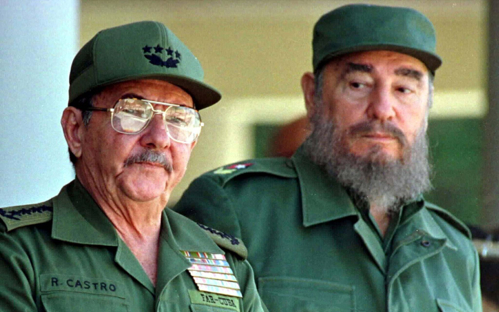
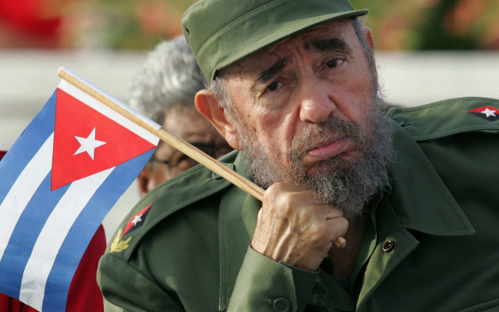
Castro, 94, brother of the late Fidel Castro and Cuba's former president, is facing U.S. charges for murder and conspiracy. Those charges stem from the 1996 downing of two planes, by a Cuban Mig fighter jet, that were operated by the Cuban exile group “Brothers to the Rescue.”
The incident, which happened in international airspace, killed four U.S. citizens attempting to help raft-riding Cubans heading to the U.S. coast.
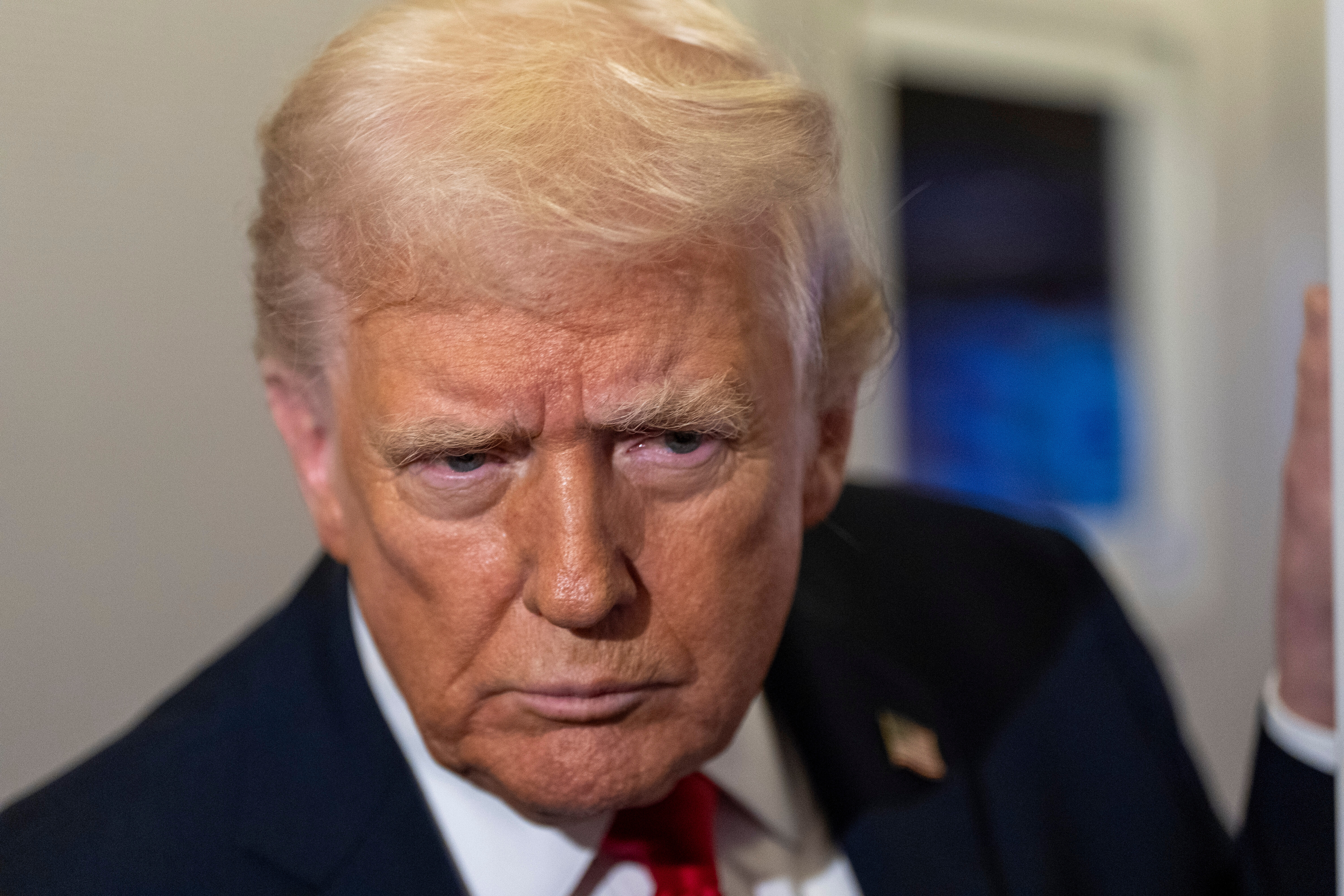
 President Trump has stated “there won’t be an escalation” between the two countries despite the federal indictment.
The indictment has put Cuban leadership “absolutely on the defensive,” Scott Uehlinger, a longtime U.S. intelligence agent, said on American Family Radio Thursday.
Trump’s strategy to bring about collapse in Cuba, the communist nation roughly 230 miles from American shoreline, is being described as similar to his strategy against Iran.
The president has been slow to resume attacks in the Middle East while ramping up economic pressure against the Islamic regime with the ongoing U.S. Naval blockade of the Strait of Hormuz.
 The U.S. mission against former Venezuelan president Nicolás Maduro has similarly accelerated dire economic conditions in Cuba.
“I don’t think there needs to be (escalation). Look, the place is falling apart. It's a mess, and they sort of lost control,” Trump said.
“What we're seeing with Cuba is Trump is just slowly chipping away at that problem, and it's been quite effective. The regime is economically devastated because of Venezuela,” Uehlinger told show host Jenna Ellis.
The charges also include five Cuban military pilots, with one already arrested in Florida on immigration fraud.
Rubio has been hard at work
U.S. Secretary of State Marco Rubio, himself a Cuban-American, is publicly seeking a free and democratic Cuba that puts the Castro regime in the past.
In a video message this week, made after Castro's charges went public, Rubio said it is "not impossible" for Cubans to enjoy basic freedoms enjoyed by many other nations.
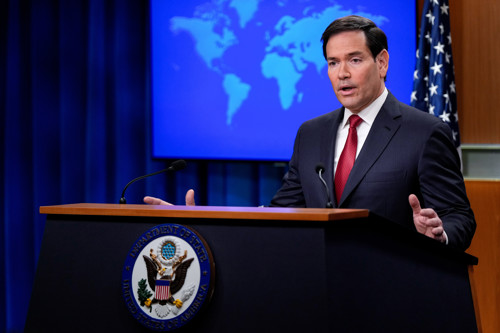 “If owning your own business and having the right to vote is possible around Cuba, why is it not possible for you in Cuba?” Rubio, speaking in Spanish, stated.
Rubio and the State Department are also offering $100 million in aid to the Cuban people, blaming the government for the current crisis, while Cuba accuses the U.S. of hypocrisy and economic warfare.
Rubio, whose parents came to the U.S. from Cuba in the 1950s, has been secretly meeting with a Castro family member, Raul Rodriguez Castro, 41, over several months. Those secretive meetings were first reported by Axios in February.
Cuban leadership, meanwhile, remains keenly aware of the U.S.’ Jan. 3 raid and capture of Maduro on Venezuelan soil.
Maduro became Venezuelan president in 2013. Now he remains in U.S. custody waiting to face charges related to drug-trafficking and narco-terrorism.
The oil factor
From late 2024 to late 2025, Cuba received approximately 70,000 barrels per day (bpd) of crude oil and refined products from Venezuela, according to a U.S. government analysis cited by El Nuevo Herald and the Miami Herald.
A significant portion — about 40,000 bpd (roughly 60%) — was allegedly resold to Asia, particularly China, for profit.
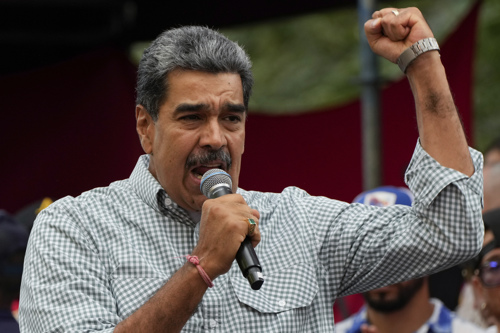 Maduro’s ouster ended a flow of oil that benefited not only the Cuban people but also corrupt government officials, the U.S. has alleged.
A State Department official in January described this oil resale as "further evidence that the illegitimate Cuban regime prioritizes its own enrichment over the needs of its people," who are enduring the worst energy and economic crisis in decades, CubaHeadlines.com reported.
Since late April, U.S. military vessels, including the logistics support ship USNS Laramie (T-AO-203), the littoral combat ship USS Wichita (LCS-13), and the USNS Patuxent, have actively operated in the Florida Strait between Key West, the Bahamas, and northern Cuba.
This activity is part of sustained operations involving strategic surveillance, particularly focused on monitoring maritime traffic and enforcing sanctions, CubaHeadlines.com reports.
“People don't really realize how vicious, actually, Cuban intelligence is or was the most vicious of every intel service on the planet, targeting Americans, very, very bad stuff. They had a very bad reputation in the CIA where we knew what they were doing,” Uehlinger said.

Uehlinger joined the CIA in 1996 and served for nearly two decades before retiring in 2014. During his career, he worked as an operations officer, primarily in the former Soviet Union, and served as CIA Station Chief in Moldova from 2008 to 2012.
Cuba became a communist nation because of Fidel Castro’s rise to power in 1959 and immediately began a close relationship with the former Soviet Union which provided Cuba with extensive economic aid, including subsidized oil, machinery, and financial support.
In return Cuba provided sugar and supported Soviet foreign policy.
The alliance peaked during the 1962 Cuban Missile Crisis, when the USSR placed nuclear missiles in Cuba, triggering a major Cold War confrontation with the U.S.
More than symbolism
The indictment of Raúl Castro came on May 20, a significant date in Cuban history, in which the U.S. ended its occupation following the Spanish-American War. It’s a date that is celebrated by many Cubans the country’s Independence Day from the United States.
“It shows that the United States wants to showcase that the Cuban regime has been responsible for horrific atrocities, committing extrajudicial acts of murder against civilians, unarmed civilians, in international territory,” Lawfare Project attorney Gerard Filitti told Ellis.
The indictment is much more than symbolism, Uehlinger said.
“This is a long time in coming. It’s appropriate; it’s justice. I remember that shoot-down 30 years ago and how awful it was that they would do this without a second thought.”