


A second view of the conflict is the American public is growing impatient and wants a resolution soon.
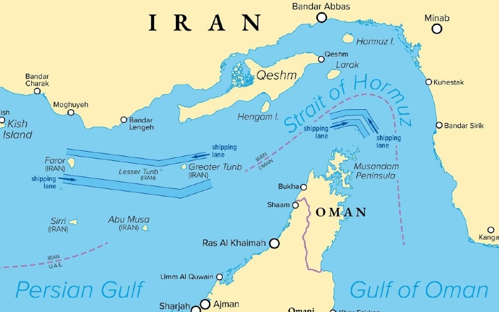
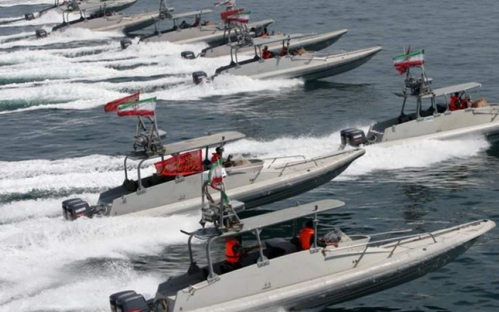
On Monday, the international news from the Strait of Hormuz was the U.S. Navy is wrestling control of the vital waterway from Iran as part of “Project Freedom.” That naval operation, led by two U.S. destroyers, came under fire from Iranian cruise missiles, drones, and mine-laying fast-attack speedboats, according to U.S. Central Command.
The narrow strait, which Iran claims is part of its coastal territory, is also a vital passage for foreign merchant vessels that have been harassed for decades by boats operated by the Iran Revolutionary Guard Corps (IRGC).
 At the same time that naval warfare was unfolding Monday, Middle East scholar Dr. David Rubin told “Washington Watch” whoever is in charge in Iran is trying to buy time and run out the political clock on the Trump administration.
“While Iran is a dictatorship, we're a democracy,” he said. “Therefore, what they're doing is fishing for a future official who might rescue them from the mess which the Iranians now find themselves in.”
As far as who is currently in control of the regime, Rubin and show host Tony Perkins agreed IRGC officials are most likely making decisions at the highest levels of Iran’s government.
While conscripted army soldiers aren’t dependable, the IRGC soldiers are among the most committed in Iran’s government, Rubin advised. Because they have been indoctrinated with radical Islam since childhood, he said, they can’t be reasoned with or bargained with, so they must be eliminated.
In the White House at the State Department, Rubin said, previous administrations were terribly naïve about the radical ideology driving Iran. So it has been dismissed repeatedly as nothing more than rhetorical flourish for political means.
“They're not rhetorical flourish,” Rubin warned.
In related comments to AFN, national security expert Robert Maginnis said it appears the IRGC is firmly in control of Iran after top leaders have been killed by U.S. and Israeli strikes. The power of the IRGC, he said, makes an internal uprising difficult.
“The IRGC is still firmly in charge. I don’t see an emergent group,” Maginnis said. “You don’t have a meaningful, organic potential to uprise.”
 With a U.S.-Iran standoff currently underway, Rubin said the U.S. is now in a “position of strength” because Iran’s economy is in free fall and the naval blockade is squeezing the regime’s stability.
Even though Iran has lost most of its leadership, and its military has been decimated, the greatest enemy of the Trump administration is the American public that is famously impatient with foreign conflicts.
Iran’s leaders know that, he said, and they are smartly using it to their advantage as Operation Epic Fury drags on with negotiations and ceasefires.
“We shouldn't go into a game of poker, having a full house or a royal flush, and be outbluffed by a pair of twos,” Rubin cautioned.
In his comments to AFN, Maginnis said the Iranian conflict needs a resolution soon. Trump needs to wrap it up, he warned, then pivot to improving the U.S. economy before midterm elections hand power to the Democrats.
“Or the Republicans are not going to be in power,” he said. “That’s just the sheer reality of domestic politics.”