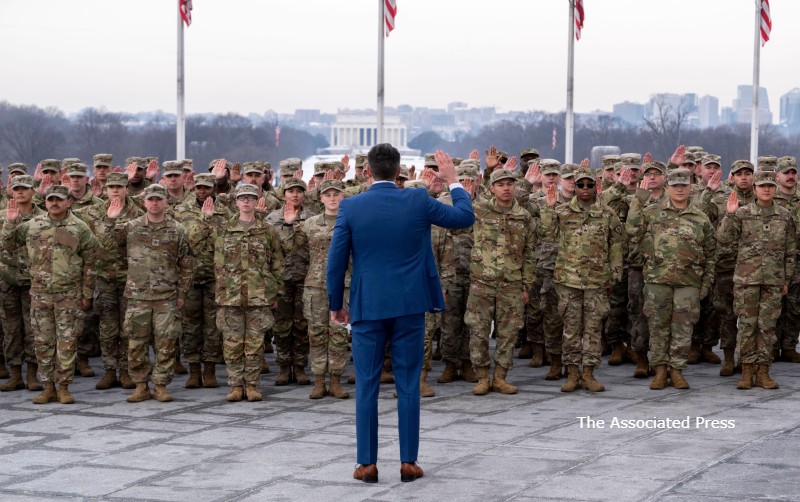


However, it gets a little easier if you know how to listen, Middle East expert Ilan Berman said on “Washington Watch” Wednesday.
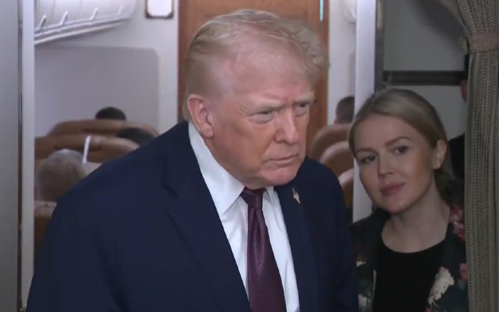 Berman, the senior vice president for the American Foreign Policy Council, who has served as a Middle East consultant for the CIA and the Departments of State and Defense, suggests favoring comments from the military leaders over President Donald Trump and other politicians.
“The proper term for this is the fog of war, and it happens in every conflict,” Berman told show host Jody Hice.
“All of the churn, all the turmoil is being amplified by social media and by the way the conflict is being reported. If you listen to the political leaders, it’s not so clear. If you listen to the military leader, it’s actually very clear,” Berman said.
Part of the murkiness stems from Trump’s lack of clarity in public comments.
For example, the president praised Iran's diplomatic efforts earlier this week saying Iran was ready to give the U.S. “a very big present, worth a tremendous amount of money.”
 That present, which was never named, led to endless speculation over Trump's hint it was related to oil and gas.
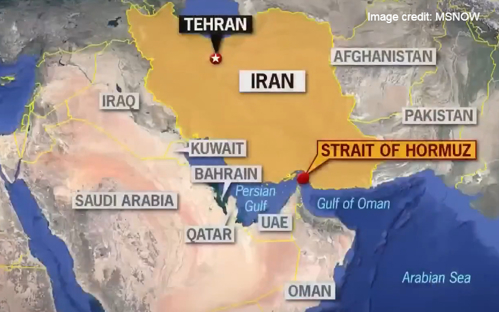
Israeli newspaper Times of Israel appeared to be the first news outlet to report the comment was tied to the Strait of Hormuz. Iran was permitting some tankers to use the key shipping channel that has been effectively blocked since the war began, leading to sky-rocketing gas and oil prices.
However, gas and oil prices have not decreased since Tuesday.
On Wednesday, the average price for regular gasoline was $3.98 per gallon, $5.37 per gallon for diesel.
Oil showed a slight decrease to $99.94 per barrel Wednesday but was back to $106.12 per barrel on Thursday.
Trump and 'boots on the ground'
There are also mixed signals on the administration’s long-range war objectives.
In the beginning, the White House said objectives for Operation Epic Fury included: Destroy Iran’s ballistic missile capabilities and production facilities, destroy the Iranian Navy and Air Force, ensure Iran never acquires a nuclear weapon and sever Iran’s support for regional militant terrorist groups.
But Trump seems to revel in the fog of war.
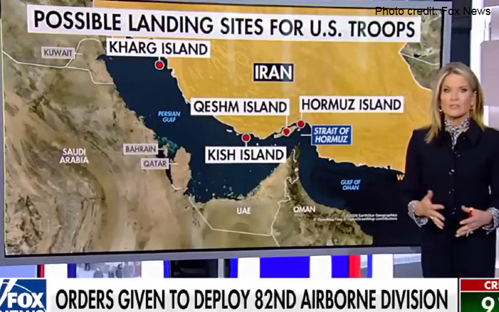 In one breath he says, “No, I’m not putting troops anywhere,” but in the next refuses to rule out ground forces.
“I don’t have the yips with respect to boots on the ground—like every President says, ‘There will be no boots on the ground.’ I don’t say it,” Trump told the Washington Post. “I say, ‘probably don’t need them’ [or] ‘if they were necessary.’”
Media reports indicate U.S. troops in the region could already total in the range of 55,000.
There’s much greater clarity from military commanders, Berman notes, but military commanders stick to what they know.
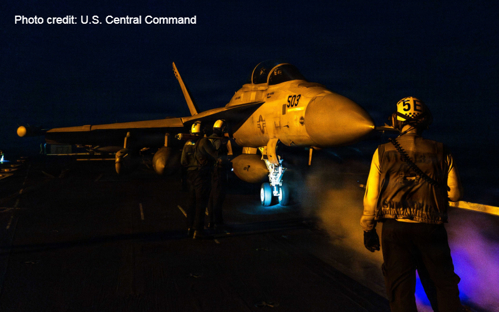
In recent comments, Admiral Brad Cooper, the head of U.S. Central Command (CENTCOM) and operational leader for Epic Fury, has said the Iranian regime is “operating in a sign of desperation,” its missile launch capability having decreased by more than 90%.
He’s touted the military’s precision strikes and destruction of Iran’s navy.
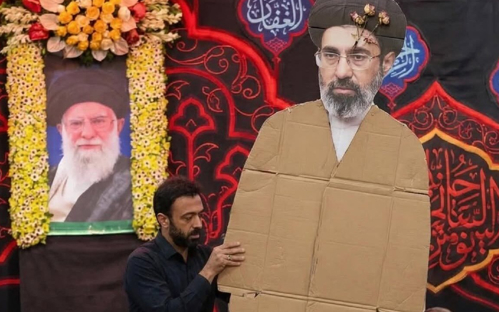
 Regime change, though desired, has never been a stated goal of the U.S. or of Israel, though leaders from both countries have said they hope to create conditions favorable for the Iranian people to overthrow their rulers.
In his February 28 address at the start of the war, Trump urged Iranians to seize the moment.
“America is backing you with overwhelming strength and devastating force. Now is the time to seize control of your destiny, and to unleash the prosperous and glorious future that is close within your reach. This is the moment for action. Do not let it pass,” Trump said.
More recently, President Trump said the White House is communicating with unnamed Iranian officials in backdoor diplomatic talks. That statement led to speculation in all directions: Trump made it up to sow confusion and distrust among Iran's leadership, or there really are secretive talks happening with Iranians who want to survive another Israeli strike.
Will the U.S. aid an overthrow?
A month later, there are still calls for action from the Iranian people, but the U.S. has to provide help, Gordon Klingenschmitt, a former Air Force missile officer told AFN this week.
"So far, there is no effort to arm the troops on the ground that would, among the Iranian population, rise up to take control of their own government. If the Ayatollahs and the Mullahs are the only ones with Iranian Revolutionary Guard Corps, IRGC weapons and every police station is also like their version of a National Guard, if they're the only ones with weapons, then how can the people rise up?"
 The lack of clarity in objectives “is a problem for the White House. It’s also a problem in terms of public sentiment. It’s not clear what the ultimate objectives of Epic Fury … what they actually are,” Berman said.
Trump has been very clear on some goals – eliminating Iran’s nuclear capabilities and it support of terror proxies – but the conflicting signals persist.
“There are things that are happening on the ground as a result of U.S. military operations. But whether or not the U.S. goes further, I think, frankly, the ball is in Iran's court in terms of making a compromise,” Berman said.