

Islamic Revolutionary Guard Corps, or IRGC, is the military unit that likely launched the intermediate-range ballistic missiles that traveled more than 2,000 miles to attack the key military base in the Indian Ocean.
Neither missile hit the base itself, however. One missile failed in flight and a U.S. Navy destroyer launched an interceptor missile that knocked down the second one, according to The Wall Street Journal, the first news outlet to report on the surprising missile attack.
Even though the missile strikes failed, the Journal reported the reach of the missiles alarmed European countries that were unaware Iran could hit them with missiles.
In a related Stars and Stripes article, a defense analyst called the 2,500-mile range a “strategic leap” after much of the world assumed Iran’s missile range was about 1,500 miles.
“The real story is not whether the missile was intercepted. It is that Iran may have demonstrated reach far beyond what much of the world believed it possessed,” the analyst, Nawaf Al-Thani, said.
NATO allies oppose war with Iran
Those same European countries were already on record opposing the U.S. attack on Iran, Operation Epic Fury.
 In fact, the missile attack on Diego Garcia came after the U.S. was informed by the U.K. it could not use Diego Garcia to stage bombers for a potential attack on Iran. That demand was later dropped but Keir Starmer, the UK prime minister, has publicly said he opposes “regime change” in Iran.
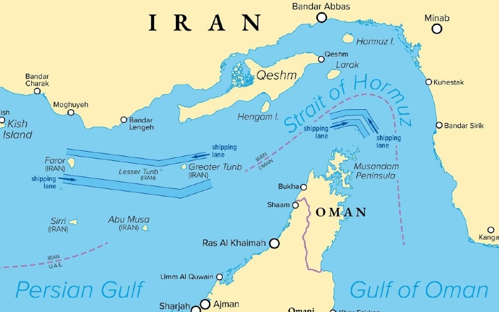
Those same European countries are also being pressured by President Trump to help protect vital oil shipments from Iran in the Strait of Hormuz. The oil that flows through the Strait, which has slowed to a stop, is 20% of the world’s supply and some of it goes to the European continent itself.
What is most vital in the Strait for European countries, however, is natural gas shipments that account for as much as 20% of its supply.
Discussing the danger Iran’s missiles pose to Europe, national security expert Robert Maginnis told “Washington Watch” the NATO countries do have Patriot missile batteries, an anti-ballistic missile system.
“But it’s not a comprehensive setup. It’s not like Israel,” he advised. “They don't have a multilayered capability to shoot down an incoming medium or long-range ballistic missile.”
 If an Iranian missile was aimed at London, for example, Maginnis said, its accuracy would be poor and any ability to deliver a “killing blow” would be unlikely.
“But they have obviously demonstrated a robust capability,” Maginnis, referring to the Diego Garcia attack, acknowledged.
Show host Jody Hice asked Maginnis the elephant-in-the-room question: Since it’s likely there will be U.S. troops on the ground soon, where is this war headed next?
It appears Iran has transitioned into “asymmetric warfare,” said Maginnis , which is a strategy to hit soft targets instead of facing an enemy head-on. This is why Trump is threatening to hit its energy infrastructure to weaken that capability, he said. "So there's a lot at stake, not only for the West and for the Middle East, but also for the Iranians.
It's a good thing that Trump is holding off on striking power plants within Iran, Maginnis said.
Deadline clock ticks
On Monday, the president extended his deadline for Iran to reopen the Strait of Hormuz. If Iran's leaders refuse, Trump says he will reconsider his plan to attack such critical infrastructure by the weekend.
"The president calling off what was supposed to have been an attack on their energy, especially their electric grid infrastructure, I think is good news for the Iranian people. And of course, the IRGC, that I assume is in charge of that country today, is willing to talk. I hope that we can resolve this and get back to something that is in all of our collective interest."
Maginnis believes the diplomacy effort is sincere from both sides.
"We'll have to wait and see whether or not we can reach a compromise that would be good for the Iranian people, good for the United States and the Middle East. I'm concerned, though, by leaving IRGC in charge and the Ayatollah's son, if he's alive, wouldn't change a lot of the things that we're concerned about that have been dominating those people for the last 47 years."