


Reza Pahlavi announced that he is ready to lead Iran's transition "as soon as the Islamic Republic falls," reports Fox News. Pahlavi, who is the son of the late Shah Mohammad Reza Pahlavi, announced that he has been working in recent months to develop a transition plan should the Iranian regime collapse in order to ensure the country does not experience a disruption in governance.
U.S. attacks on Iran were paused by President Donald Trump Monday morning.
In a social media post in Farsi, Pahlavi said that "capable individuals" have been identified both inside and outside Iran, to lead what he called a "transitional system." However, Pahlavi has lived in exile since the 1979 Islamic Revolution toppled Iran's monarchy and established the Islamic Republic.
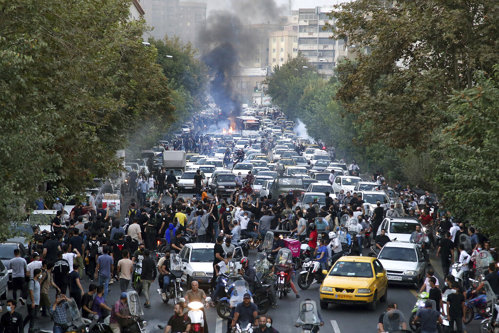 Many question whether he would have the support of the Iranian people.
Robert Maginnis is a national defense analyst and president of Maginnis Strategies, LLC.
"Now, I don't see that he has a significant following among the 93 million Iranians. Certainly, I would argue that MEK and NCRI have more of a following inside Iran,” Maginnis says.
The National Council of Resistance of Iran (NCRI) is a coalition of Iranian groups based in Paris, seeking to set up a secular, democratic government one the Iranian regime is overthrown. The People’s Mojahedin Organization of Iran (MEK) is only one member organization, but it is the largest and most dominant, having substantial influence in the coalition.

Maginnis says that if Pahlavi has a following, then he is not aware of it. Furthermore, he states Pahlavi has yet to articulate that to convince anyone.
“That's in part why Trump and his senior officials in state have not met with the crown prince. He has a title, but it doesn't really mean much unless you can cause things to happen inside," Maginnis says.
Meanwhile, Trump has dispatched the 31st Marine Expeditionary Unit (MEU), headquartered in Okinawa, to the Middle East. The deployment of 2,500 Marines appears to go against the president's pledge of no-boots on the ground, should the war resume after the current pause.
Maginnis says this signals that the war could expand.
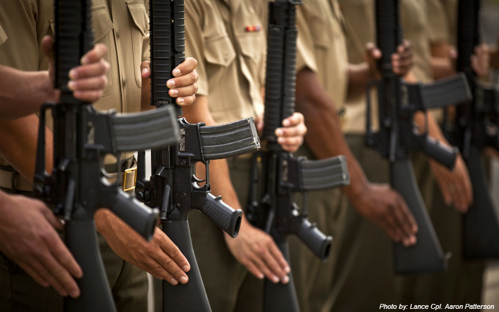
"That's been my reservation from the very beginning, that they're kind of guessing as they go forward. We'll have to wait and see where they specifically intend to use the Marine MEU," Maginnis says.
He notes the MEU has a lot of capabilities.
"The ground element, an air element, an amphibious element. They no longer have tanks in the Marine Corps. They gave those up, but they have artillery. And of course, they have other sophisticated weapons that they can bring to bear,” Maginnis states.
He points out that they’re a ground force designed to seize beaches, to hold land areas generally next to water resources.
However, Trump for now says that the U.S. and Iran are currently negotiating, but Iran has denied such talks. The U.S. is withholding from striking Iranian power plants in the meantime, a threat imposed if Iran doesn’t reopen the Strait of Hormuz for shipping.