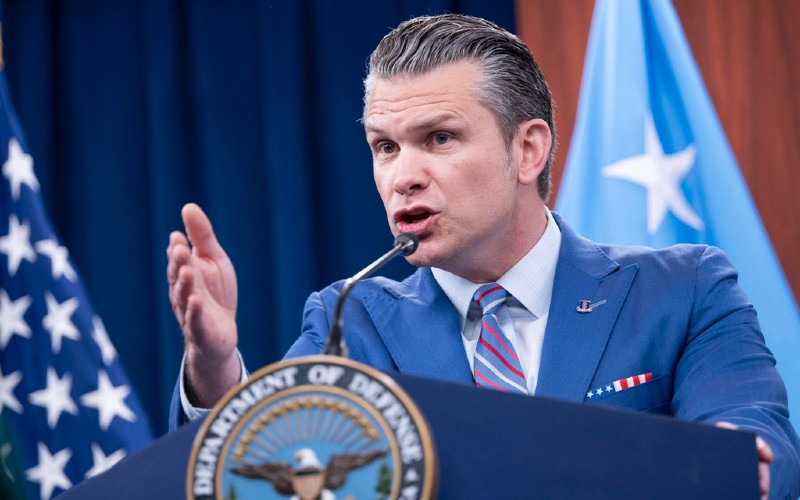


Since the U.S.-Israel military attack began Feb. 28, approximately 20 commercial vessels have been attacked and damaged by Iranian forces to date.
None of those tankers have been sunk so far by Iran’s missiles and drones, but the International Maritime Organization reported Monday more than 1,000 commercial vessels of every type are stranded near the Strait. The IMO also reported 3,000-plus vessels outside the Strait are also stranded, creating what it called a “rapidly deteriorating security situation” in the Arabian Sea, Seal of Oman, and the Gulf region.
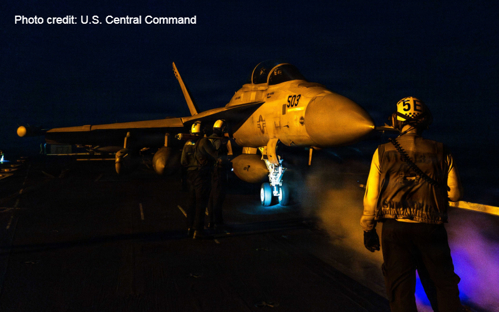 Dr. Brigham McCown, a Hudson Institute senior fellow, is a longtime expert on the Strait and how Iran has threatened oil tankers for decades. His expertise includes studying U.S. energy independence at Hudson, holding a senior leadership role at the Pentagon, as well as wearing a U.S. Navy uniform in a jet above the Strait of Hormuz.
Sharing his knowledge on the “Washington Watch” program, McCown first described why the Strait is in the news headlines now. With a war raging around them, the oil tankers and other vessels are attempting to traverse a narrow channel, about 21 nautical miles wide, in which one in five barrels of oil worldwide pass through.
“That’s 20 percent of global oil supply,” McCown pointed out.
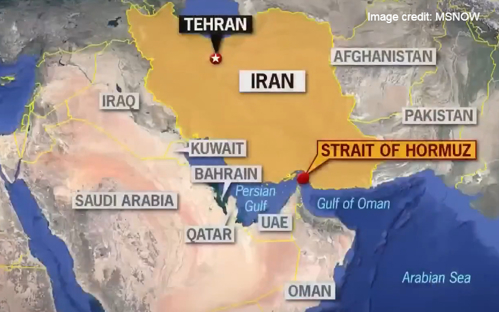 With the U.S. and Israel now pummeling Iran from the air and sea, the Iranian regime is predictably taking advantage of the Strait’s strategic importance after threatening to do so if attacked.
“The real issue is war risk insurance, which everybody has to carry, and whether or not Lloyd's of London will even insure these. Right now, the risk is too high,” he advised.
Iran has threatened to use the Strait to hold the world hostage going back 35 years, McCown said, and it’s “making good” on that threat right now with its drones and surface-to-surface missiles.
Meanwhile, the price of crude oil has predictably jumped a whopping 40% since Operation Epic Fury kicked off. The war in Iran and its ripple effect across the Middle East have spooked Wall Street and the Asian markets, which are the primary buyers of the oil that comes through the Strait.
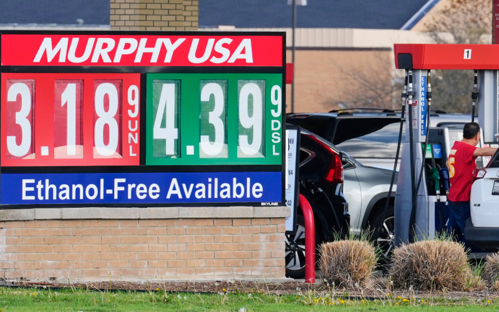
In the U.S., AAA reported today the national average price of a gallon of gas is $3.79. That price averaged $3.53 a week ago and $2.91 a month ago.
 At the same time the U.S. military is taking out Iran’s offensive capabilities near the Strait, President Trump has requested naval assistance from U.S. allies, especially NATO countries, to provide security in the Strait of Hormuz.
After U.S. allies publicly balked at that request, the president seemed to move from a diplomatic request for help to frustration by stating “WE DO NOT NEED THE HELP OF ANYONE!” in a social media post.
When AFN contacted the White House on Tuesday for comment about the Strait and Iran, it directed AFN to President Trump’s comments.
McCown told “Washington Watch” what he called a “coalition of the willing” is unlikely to help the U.S. for two reasons. One reason is those other nations are fearful of the danger involved, he said, and the second reason is they lack the naval assets to help.
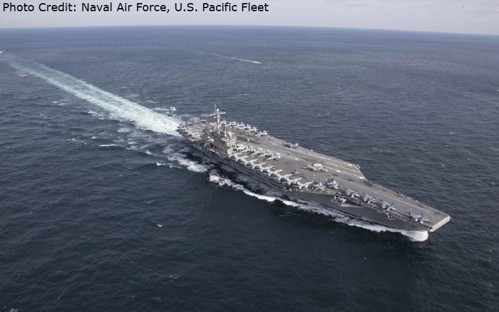 That situation is far different from Operation Earnest Will. Carried out in 1987 and 1988, the U.S. re-flagged oil tankers from Kuwait when Iran threatened to attack them during the Iran-Iraq War.
What sailed through the Strait of Hormuz back then was the largest naval armada since World War 2.
McCown, who participated in that convoy, warned it's a "different ballgame" in the Strait because of Iran's drones and missiles.