

The joint U.S.-Israel war against Iran concludes its first week Friday with the U.S. claiming complete control of the skies over Iran.
The engagement quickly drew its own verbal attacks against Trump from within the U.S. as Democrats seized on his 2024 campaign opposition to the U.S. war in Iraq in some 20-plus years ago.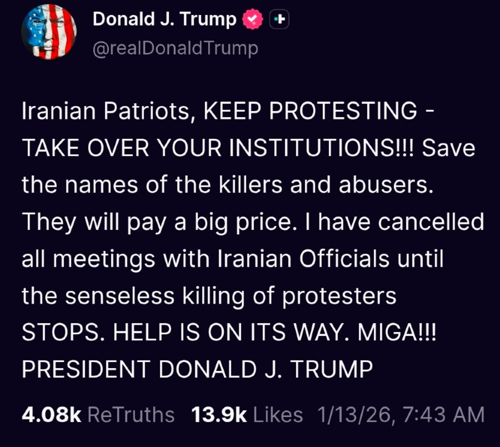
The strikes against Iran have led to Capitol Hill debates over a War Powers Resolution aimed at limiting the president’s authority to conduct military operations, but measures have failed in both the House (219-212 vote) and the Senate (53-47 vote).
“Draft-dodging chicken-hawks love to talk tough (from their fancy, gold-plated beach resorts), but they have NO CLUE what war is really about. We need a War Powers vote NOW,” wrote Rep. Pat Ryan (D-New York) last week. Ryan, a former Army intelligence officer, served two tours in Iraq.
It could be troops of Ryan’s expertise who ultimately become the U.S. boots on the ground in Iran, Rep. Keith Self (R-Texas), a retired colonel, told show host Tony Perkins. Self is hopeful that U.S. troops, if necessary, would be limited to intelligence and special operations.

Retired Gen. Jerry Boykin believes the regime is in its last days.
Quick air superiority in Iran is a major gain for the U.S., and Self sees the Americans and Israelis continuing to exploit the advantage.
“I think that the air campaign will go on for several weeks longer until we totally obliterate their ability for offensive operations. And that's the goal,” Self said.
Regime is wounded, not eliminated
The current regime – with its Supreme Leader and roughly 50 of its highest-ranking personnel already killed – could still survive, Self cautioned.
That depends on groups inside Iran, starting with the Kurds, he said, but from Self’s perspective, U.S. vs. Iran has indeed been a forever war, but it’s not at the start.
“The president is ending a forever war. Look, since 1979, when the Ayatollahs took control with this tyrannical regime, they've been chanting death to America, death to Israel. They've killed at least hundreds, if not thousands of Americans. This 50-year war, 47 years, has been with Iran, and they are the leading sponsor of terrorism around the world. So, this is ending a forever war,” Self said.
The U.S. has not directly armed Iranian Kurds in the past but has maintained strategic cooperation with Kurdish groups in Iraq and Syria — especially during the fight against ISIS.

Now, reports indicate the CIA is working to arm Iranian Kurdish opposition groups, aiming to foment an uprising against the Iranian regime.
The Kurds live primarily in Iran’s western provinces, a mountainous region that provides natural cover for insurgent movements and has historically been a base for Kurdish resistance.
Iran’s Kurdish population is estimated at 8–12 million, making up about 10% of the country’s population. They are predominantly Sunni Muslims in a Shia-majority state, which leads to systemic marginalization and repression by the Iranian government, which labels Kurdish groups as terrorist organizations.
These attacks by a U.S. president are necessary and a long time in coming, Boykin told Perkins.
Forty-seven years – which marked the beginning of the current regime – is the number being thrown around, but hostilities between the U.S. and Iran go back farther, Boykin said.
Former Iranian Prime Minister Mohammad Mosaddegh was overthrown in 1953 by Operation Ajax which was orchestrated by the U.S. Central Intelligence Agency (CIA) and British Intelligence (MI6).
Mosaddegh had nationalized Iran’s oil industry, which led to tensions with Western powers. The coup reinstated Shah Mohammad Reza Pahlavi as Iran’s leader, marking a pivotal moment in U.S.-Iran relations.
“The Shah was a different man. He did not believe in having a theocracy. He wanted something that was more relaxed for the people, and so he started opening things up there that were not open when it was a theocracy,” Boykin said.
U.S. playing the long game
Cancer caused the Shah to leave office, “and when he left the revolution kind of blew out of control,” Boykin said.
A theocratic government with a taste for terrorism took root.
“And we’ve been at each other’s throats since then,” Boykin said.
He doesn’t expect a quick operation in Iran.
“But we’re not going to quit until this regime is destroyed. I’m absolutely certain of that,” he said.
But once that time comes, “we will see them turn into a different government than what we have now. It will not be a religious government; it won’t be a theocracy. I think it will be something entirely different, and it will be more representative.”