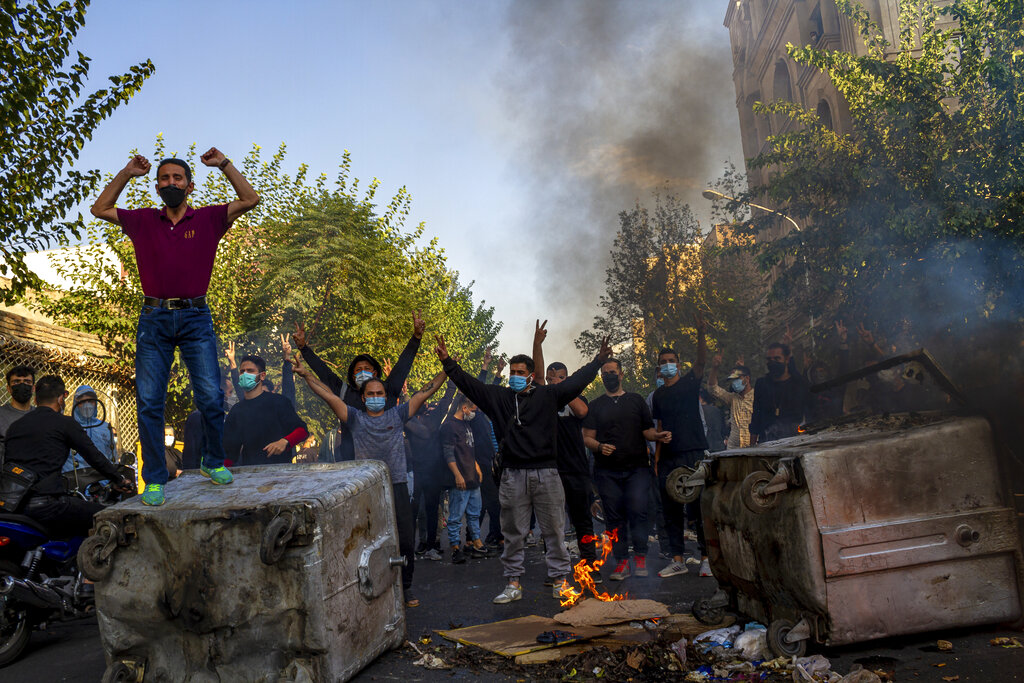
Hostility from Iran toward the United States did not just begin, and because Americans may have become accustomed to the relationship doesn’t mean a grave threat did not exist when President Donald Trump ordered strikes against Iran last Saturday, Joel Rosenberg, the publisher of All-Israel News and Middle East analyst, said on American Family Radio Wednesday.
Those strikes, coordinated attacks with Israel, set in motion the current state of affairs.
Trump tried twice for a diplomatic solution.
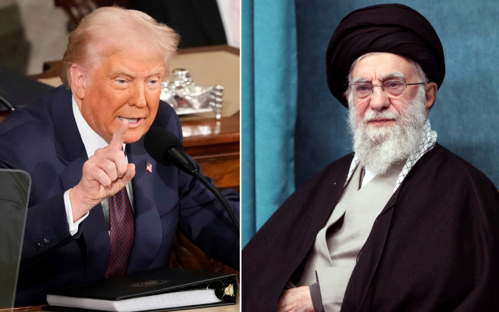 First, he initiated talks with the late Supreme Leader Ali Khamenei, killed during Saturday’s strikes, in April of last year.
Trump set a 60-day deadline and warning of military consequences if Khamenei continued Iran’s pursuit of nuclear weapons.
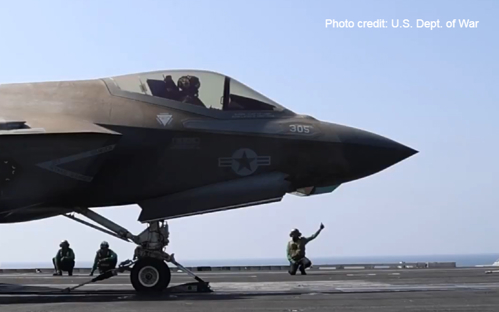
The result was Operation Midnight Hammer, U.S. strikes against three Iranian nuclear facilities last June.
More talks were ongoing when the strikes began, though U.S. officials had expressed frustration over what they said was Iran’s refusal to agree to zero uranium enrichment. Iranian officials, U.S. leaders said, even boasted about current levels of enriched uranium, enough for 11 nuclear bombs, Fox News reported.
Why wait to strike?
“It’s insane thinking on the Left that we should have waited for Iran to strike first,” Rosenberg told show host Jenna Ellis.
Mark Warner of Virginia, the top Democrat on the Senate Intelligence Committee, questioned the claim of an “imminent” Iranian threat and warned that equating a threat to Israel with an imminent threat to the U.S. sets a dangerous precedent. He stated, “There was no imminent threat to the United States of America by the Iranians,” implying that preemptive action was unjustified.
Senator Tim Kaine (D-VA) said the Joint Comprehensive Plan of Action (JCPOA), commonly known as the Iran nuclear deal, signed by President Barack Obama in 2015, was working fine, and Trump should have not meddled with Iran’s nuclear business.
 The Obama agreement aimed to limit Iran’s nuclear program in exchange for sanctions relief and was negotiated with the P5+1 nations (the U.S., UK, France, China, Russia, and Germany) and the European Union.
“Has President Trump learned nothing from decades of U.S. meddling in Iran and forever wars in the Middle East? Is he too mentally incapacitated to realize that we had a diplomatic agreement with Iran that was keeping its nuclear program in check, until he ripped it up during his first term?” Kaine wrote on X.
Rosenberg disagrees.
“So the idea that that we should have waited for Iran to strike first … oh, you mean when they took hostages 47 years ago, American hostages, when they killed 241 Marines in Beirut in 1983 and so on and so on and so on, when they started the October 7th war against Israel and our other allies?” he asked.
 Rosenberg believes that when U.S. envoys Steve Witkoff and Jared Kushner reported to Trump that Iranian officials bragged about their current capability to build 11 nuclear bombs, the president has a revelation.
“If you wait until they pull the trigger, that trigger might involve a nuclear warhead. So, you can't wait.
Iran wasn’t slowing down production during diplomatic talks.
“The Iranians were building hundreds of ballistic missiles a month. You’d get to a point where there'd be too many missiles that could attack American interests, American bases, Israel, the Arab world. You wouldn't be able to go in and successfully destroy Iran's offensive military capability. I think that President Trump has done the exact right thing at the exact right moment,” Rosenberg said.
The 'end times' discussion
Iran, known as Persia in the Bible, figures prominently in end times discussion.
Rosenberg believes the end times are now but refutes a report by the left-leaning Military Religious Freedom Foundation (MRFF) that U.S. commanders are seeking to motivate troops by telling them the current conflict part of God’s divine plan to usher in the return of Jesus Christ.
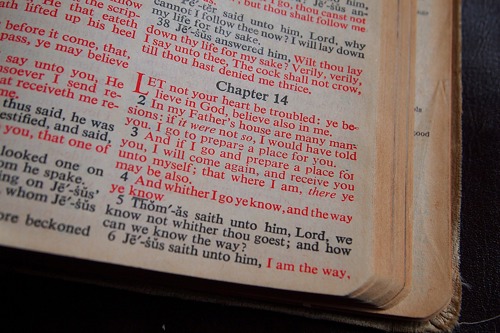 “I will say and unashamedly, we're watching Bible prophecy play out, and we are living in the last days, but I can't imagine a single commander in the United States military saying that to their troops,” he said.
MRFF claims to have received more than 200 inquiries expressing concern for “disturbing pronouncements from (their) Christian zealot commanders.”
Rosenberg calls the report fake news.
He says the U.S. Military is “winning a war that we should have fought years ago against a regime that hates us and chants death to America every single day of the year, but the idea that American commanders are teaching Bible prophecy, that's insane.”
But the prophecy is real.
Some Christian commentators and prophecy analysts interpret Jeremiah 49:38 – “I will set My throne in Elam and will destroy from there the king and the princes” -- as a prophecy that could apply to the current U.S.-Iran conflict.
Elam identifies with modern-day Iran, and the “king and princes” could refer to Iran’s current leadership, including Supreme Leader Ali Khamenei and senior officials.
Some Bible scholars also believe the prophecy was fulfilled in ancient times when Elam was attacked by stronger enemies that conquered its people, the Elamites. One attack came when Babylon, under King Nebuchadnezzar II, marched on Elam and attacked it. That attack came in 596 B.C., just a couple of years after Jeremiah's prophecy.

Khamenei’s death “was one of the biggest moments in geopolitical history led by President Trump," Rosenberg stated, "but I believe it's also prophetic history.”
The death of an Iranian leader had not happened in decades, Rosenberg said.
“I think you'd have to go back to the 1950s. This is a big deal,” he said.