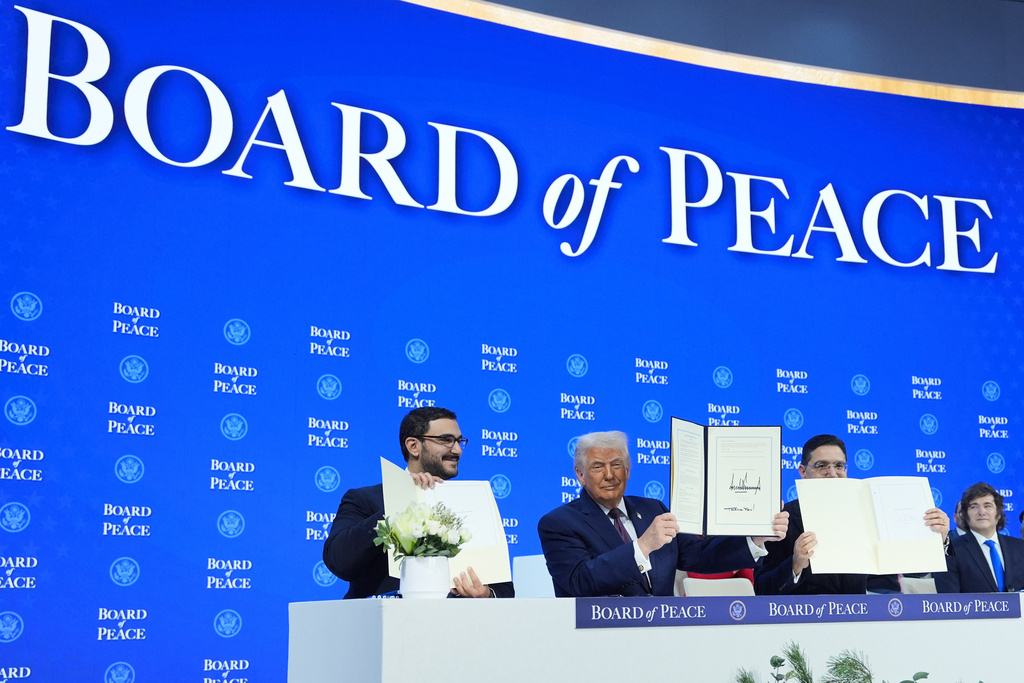


Most European leaders strongly oppose Trump’s Greenland involvement in any fashion, seeing it as an infringement on Greenland’s sovereignty and the rights of its people to decide their own future.
 Trump’s blustering is undermining international law and NATO unity, they say.
Earlier this month the U.S. president announced plans to impose 10 percent tariffs on imports from Denmark and seven other NATO allies—Norway, Sweden, France, Germany, the UK, the Netherlands, and Finland—starting February 1, escalating to 25 percent by June 1 unless a deal for Greenland was reached.
British Prime Minister Keir Starmer said, "Applying tariffs on allies for pursuing the collective security of NATO allies is completely wrong.,” he said.
Greenland is “part of the Kingdom of Denmark and its future is a matter for the Greenlanders and the Danes," he said.
France President Emmanuel Macros also railed against Trump.
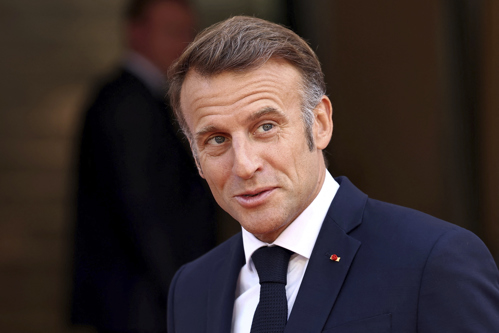 "France is committed to the sovereignty and independence of nations,” he said, taking a jab at Trump policies outside of Greenland as well. "No intimidation nor threat will influence us, neither in Ukraine, nor in Greenland, nor anywhere else in the world when we are confronted with such situations."
Macron says European leaders stand together against Trump.
"Tariff threats are unacceptable and have no place in this context. Europeans will respond to them in a united and coordinated manner if they were to be confirmed. We will know how to uphold European sovereignty," Macron said.
Europe is getting it wrong, national security analyst Gordon Chang said on Washington Watch Friday.
“European leaders are more focused on their hatred for President Trump and their anger rather than on their national interests. They’ve got to realize that their job is to protect their countries, and they don’t have an alliance with Trump, they have an alliance with the United States,” Chang told show host Jody Hice.
The United States is the only country that can protect Greenland, Canada and the Arctic from increasing Chinese and Russian activity and influence in Greenland, Chang said.
The southern tip of Greenland sits in the North Atlantic closer to the U.S. and Canda but between the U.S. and Canada and Norway, Denmark and the United Kingdom.
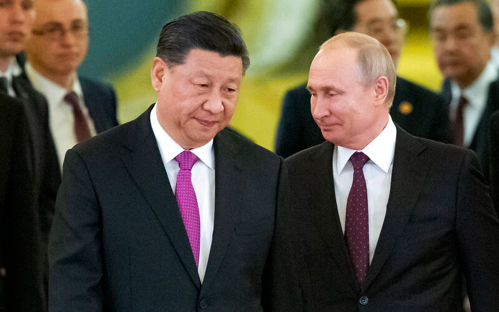 Geography makes no difference to America’s enemies.
“We’ve seen a noticeable increase in what Beijing and Moscow are doing up there not only with their commercial activities but also with their military fly-bys and their naval patrols,” Chang said.
NATO’s Supreme Allied Commander Europe highlighted increased joint military cooperation between Russia and China in the broader Arctic — including long-range bomber patrols and maritime activity that concern alliance planning around regions like Greenland’s Arctic approaches.
Denmark’s Joint Arctic Command says its security focus is on possible Russian activity in the wider Arctic, even as it notes there are no Chinese or Russian warships currently near Greenland’s immediate waters.
Strategic goals for America and Europe really aren’t that different, Chang said.
“America first is also really good for Europe. You’ve got to remember that NATO Gen. Sec. Mark Rutte last month said that NATO has never been stronger, and he was saying it because of what President Trump did,” Chang said.
What Trump, who has long said the U.S.’s European partners should pay their fair share for defense, did was get North Atlantic Treaty Organization (NATO) allies to commit up to 5 percent of their countries’ Gross Domestic Product (GDP) for defense and security spending.
European reactions varied. Some welcomed increased defense for security reasons, others accepted the pledge under political pressure or compromise language.
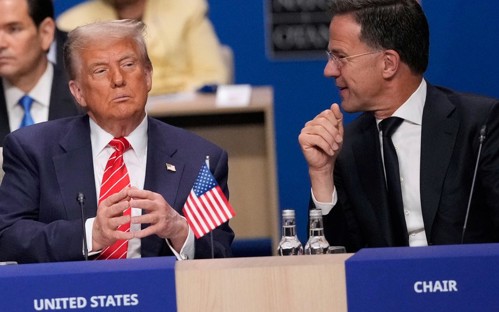 Rutte credited Trump’s push as a factor in Europe agreeing to higher spending goals, while also emphasizing NATO’s overall strength.
For the Europeans, increased defense spending “was something that was considered almost impossible just a couple of years ago,” Chang said.
But Trump’s personality made a difference “by threatening and by doing a number of things that actually irritated the European leaders. Nonetheless it got them to do what’s important for their own interests and of course for us as well because it is a collective defense right now against militant China and Russia,” Chang said.