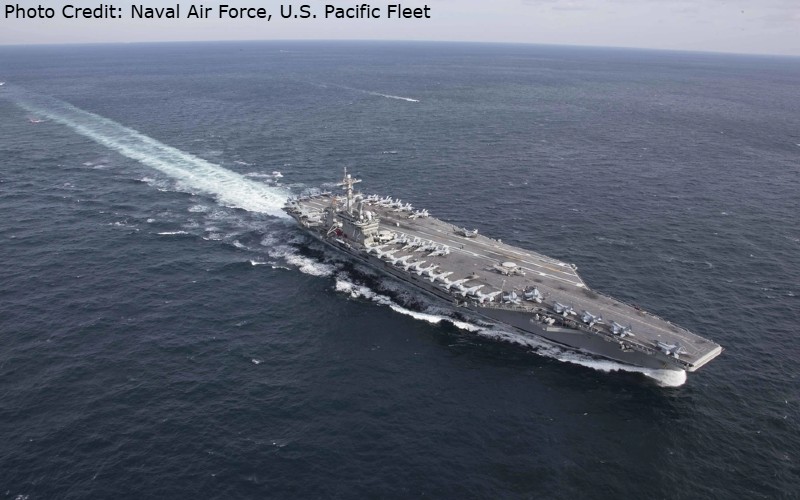


The bank accounts for the country’s Islamic government are drying up, and their proxy terrorist allies are taking notice.
“Iran's terrorist proxies are complaining. The Houthis, Hezbollah, their militias in Iraq, Hamas and others aren't getting the plane loads of cash, and now Venezuela, as well, aren't getting the plane loads of cash that they used to,” Mike Waltz, the U.S. Ambassador to the United Nations, said on Washington Watch Monday.
 President Donald Trump’s policies are making this happen, Waltz told show host Tony Perkins.
Multiple regional analysts say Iran’s proxy network is weaker and less effective since Iran’s war with Israel, the subsequent U.S. bombing of its nuclear sites and now the street protests of its citizens.
Some commentators argue Iran’s overall position — and by extension its ability to project power through proxies — has deteriorated following setbacks including Israeli strikes and regime pressures, Chatham House reported last summer.
Hezbollah has faced disrupted Iranian supply lines, with Lebanese and Syrian authorities cracking down on Iranian cash and weapons transits.
As a result, the group is increasingly tapping its own global fundraising networks in Africa and South America, reports Foreign Policy Magazine.

“President Trump is focused on fundamental change. And first and foremost, it's drying up the regime's money that it's used to fuel these wars all over the Middle East and the world,” Waltz said.
From an economic standpoint, the gas on the fire came in late December when Iranian currency, the rial, plunged to historic lows. Earlier this month it was trading at 1.4 million to every U.S. dollar.
Iran’s failure to budge in negotiations with the U.S. last year, prior to the bombing of its nuclear facilities in late June, is also coming home to roost. Tehran had a chance to halt its enrichment of uranium. Doing so would have gained Iran some relief from devastating international sanctions.
The problems worsened after Israel’s bombing campaign and the U.S.’s Operation Midnight Hammer. The rial lost 60% of its value against the U.S. dollar last summer. Inflation hit 52.6% in December, The National reported.
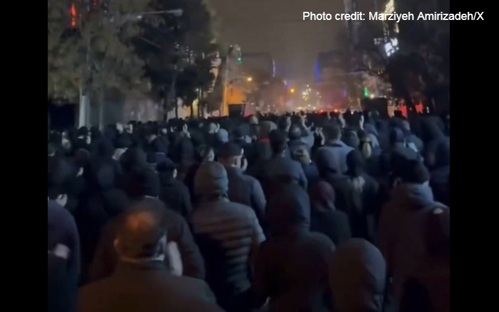 “The Iranian economy is not going to approve any time soon. Their currency is tanking,” Waltz said.
Iran is able to export less and less of its oil because Trump put the buyers of that oil – and anything else coming from Iran – “on notice,” Waltz said.
“So, the regime is ultimately afraid. It's afraid of its own people. It's afraid of losing power, and it certainly is afraid of the potential action from President Trump,” he said.
The regime threatened the U.S. with combative language after strikes against nuclear sites at Fordow, Natanz and Isfahan.
Iranian government leaders called the attacks illegal and warned that U.S. actions would have “everlasting consequences” and that “all options” were on the table.
Ultimately, a mild response was hardly felt. Iran targeted U.S. bases in Qatar and Iraq, but no U.S. personnel were killed or seriously injured. Most missiles were intercepted, according to CriticalThreats.org.
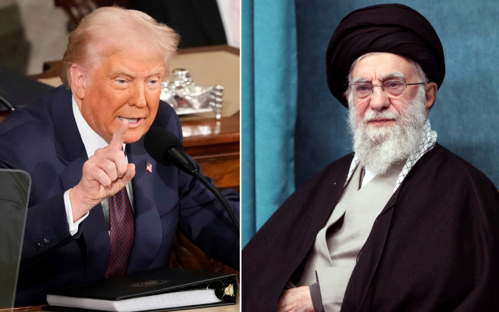 While the regime faces instability and a questionable future, its playbook usually calls for attacks against those in reach, its neighbors in the Middle East, Waltz said.
In 2019, Iran attacked Saudi Arabia’s oil-processing facilities at Abqaiq and Khurais in a coordinated assault with drones and cruise missiles causing massive fires. About half of Saudi Arabia’s oil production was temporarily shut down equating to roughly 5.7 million barrels a day or 5% of the global oil supply.
“So look, the region will always want to be sure that they can defend themselves and that we can help defend them if the regime lashes back. I can promise you, Secretary (Pete) Hegseth, (Marco) Rubio, and, of course, the president will make sure that we hear their concerns and address them,” Waltz said.