



The National Institutes of Health describes Anthony S. Fauci, M.D., former director of the National Institute of Allergy and Infectious Diseases (NIAID), as a "doctor, scientist, and infectious disease expert" who contributed to "groundbreaking discoveries that saved countless lives."
After "serving the American public" for over five decades, including during the height of the COVID-19 pandemic, he retired from public service in December 2022.
Throughout his career, Fauci kept a log of his personal notes and reflections, and on July 25-26, just ahead of a Senate committee hearing, Sen. Rand Paul (R-Ky.) publicly released his entries from Dec. 2019 to Dec. 2022.
The 1,500-plus pages of entries were obtained from government servers, and American Family Radio podcaster Sandy Rios says Fauci wrote about things like "how Hollywood is beginning to think that he's so handsome."
"He says, 'I'm just a celebrity. I am the most famous person in the world everywhere I go,'" she relays. "He goes on and on."
Fauci also detailed how he enriched himself during the health crisis.
"The revelation that came out in that hearing was shocking, and that is that he had received eight different grants — that's federal money," Rios reports. "One of them … was $950,000."
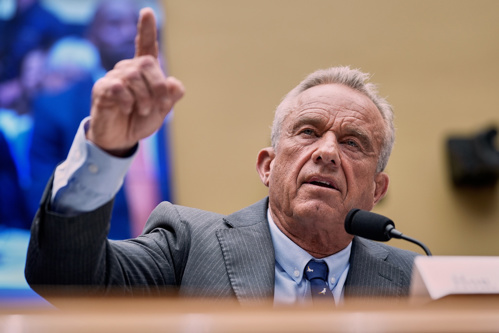 Robert F. Kennedy Jr., secretary of the U.S. Department of Health and Human Services (HHS), says Fauci also privately revealed that he got a pulmonary embolism in July of 2021, after receiving the vaccine.
"He took the Moderna vaccine on national TV, telling a very, very highly publicized press conference ... to show people that it was safe," Kennedy told Fox News.
It was on Fauci's recommendation that vaccines became almost a religious rite for the Left, despite mounting evidence that they were deadly.
"He was telling other people to take this product and concealing the fact that he himself had actually gotten very, very sick from an injury that was highly expected and highly likely to be caused by the vaccine," the HHS secretary summarized.
First step toward accountability
The Trump administration has issued a new government-wide policy to end dangerous and high-risk gain-of-function research, and Rios hopes the hearing marks the beginning of an effort to hold Fauci accountable for the damage he did to the country during the pandemic.
Though the Senate hearing got a little tedious, with Fauci invoking the Fifth Amendment over 100 times, Rios thinks it was a good thing.

"When Anthony Fauci answers questions, he filibusters, he confuses, he talks about medical terms that most people don't understand," she says. "But he is a liar, so, he was silenced."
She says Wednesday's hearing was one of the few times Republican senators came prepared.
"In most Senate hearings, the senators really don't know much," notes Rios. "Their staff prepares a few talking points and sits behind them and helps them when they can't think of things or don't understand the issue. But this was a real hearing, the way our Senate is supposed to work."
The Democrats have tried to downplay the hearing as a waste of time, but Rios disagrees.
"Anthony Fauci is responsible for the deaths of about 1.2 million Americans, and that's only those that died from the vaccine," she points out.
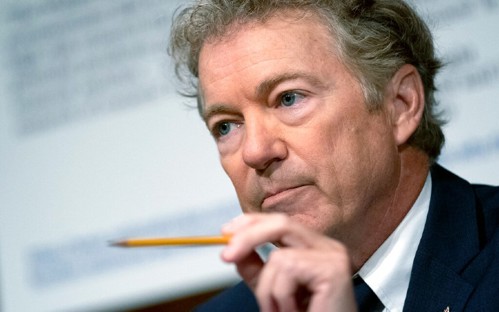 Sen. Paul, who chairs of the Senate Homeland Security and Governmental Affairs Committee, is considering holding Fauci in contempt for stonewalling Congress. He has stated that the objective of the hearing is accountability — determining whether Fauci misled Congress or the public and whether reforms or legal action are warranted.
Though criminal proceedings are unlikely, Rios believes this is worth the effort.
"To ask if we should just forget about this thing and move on would be like saying we should have just moved on once we won World War II," she submits. "Why did we punish those Nazis at Nuremberg? Why did we go over and over the things that they did to the Jews?"