


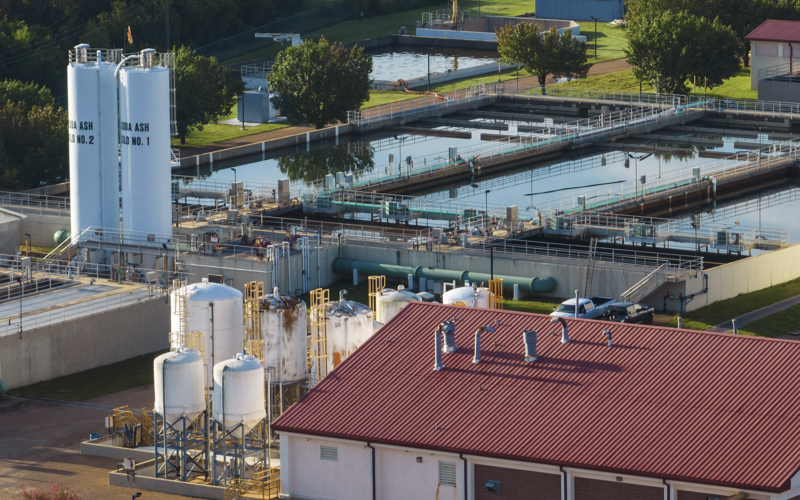
As previously reported by AFN, 14 Republican state attorneys general, led by Missouri AG Catherine Hanaway, recently signed a letter to the U.S. Environmental Protection Agency (EPA).
The letter warns that the increase of at-home abortion is a serious risk to the Safe Drinking Water Act (SDWA) as chemically tainted medical waste is flushed into the water system. The AGs want the EPA to investigate the effects of the chemical abortion pill in the water and whether it is causing abortions or infertility in women.
Ron Bryce is a retired physician, who serves as Republican state representative for Kansas’ 11th district and as vice chairman of the Committee on Health and Human Services. He tells “Washington Watch” that previous data done on the abortion pill is now obsolete.

“The abortion pill (mifepristone) was approved in the year 2000, and the EPA relied on studies that were done in 1996, which is 30 years ago, to make sure that the excreted chemicals in the wastewater and the thrown-away pills in the wastewater would not reach a level that would hinder U.S. fertility rates and so forth,” Bryce explains.
With 63% of abortions done chemically, he notes the mifepristone levels in wastewater have risen dramatically. He believes that the EPA needs to do another study, especially since the fertility rate and childbirth rate has dropped dramatically in the U.S. and other Western countries.
“In about the year 2000, it was something like 70 births per thousand women. Now, it's down to 53 — even lower — per thousand women,” states Bryce. “People are not having babies like they used to. That may or may not be due to the abortion pill in the water. That's more or less a theory, but it's something that could be contributing.”
Both sides of the issue, he says, argue about this, but the point is that there is no raw scientific data to rely on, which is why he stresses for action by the EPA.
When asked why the EPA doesn’t already have the research, Bryce believes it’s because there’s a “wall of opposition” from people in bureaucracies and agencies who would be responsible for carrying it out — people who may want to suppress pro-life voices.
“My impression is there's been a push from a large contingency of powerful people who don't want this study done. They don't want to know the answer. They want it to be in question because they have an agenda that may not be as yours or mine,” Bryce says.
This is one of the times, he says, that people should not argue opinions but rather look at the facts. He says people should be very concerned, likening a situation to a young pregnant female drinking water that is known to have some sort of concentration of mifepristone.
Two ways to check
As for the drug, Bryce mentions two ways of checking its harmful potential.
“One is to measure the levels, the concentrations in the water, in our drinking water. The other is to look at the effects, not the levels, but the effects,” states Bryce. “A study was done about a year ago on female frogs, and when they were exposed to mifepristone that is considered the level that is in our drinking water today, they had half as many babies.”
Because genetics have not changed, he says the problem is either environmental, behavioral or a combination of both. It’s an existential crisis, he says, that the fertility and birth rate are so low, which is why environmental factors, like the levels of mifepristone in the water, need to be studied.
“I think we really need to take a look at that. If we can do it on the state level, we will, but it's really more of a federal issue with the EPA. I hope that others will join with the attorneys general that have already approached them and really study this issue,” Bryce says.