



Also notable as the Court declined to consider a lawsuit brought by Dr. Azadeh Khatibi and the medical watchdog group Do No Harm is the absence of influence from conservative justices. Four votes are required to hear a case. The Court’s conservative voices managed only three.

At issue is California’s requirement that medical education courses instruct hopeful healthcare professionals how the “implicit bias” of doctors often leads to disparities in health outcomes.
The state successfully defended the lawsuit, Khatibi v. Yip, in the 9th Circuit Court of Appeals.
Writing the minority response, Justice Clarence Thomas expressed concern for free speech. Keeping the “implicit bias” language could open the door for the state to promote far-left social initiatives.
“On the 9th Circuit’s view of government speech, could California require a CME instructor to communicate the state’s preferred message on the availability of abortion?” he asked. “Could the state require a CME instructor to inform participants that for certain patients, gender-transition surgery is ethically required?”
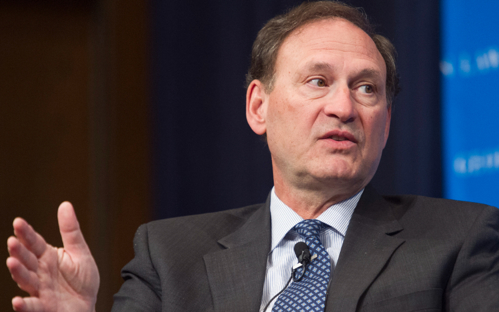 Samuel Alito and Neil Gorsuch joined Thomas in support of the case. A single vote from John Roberts, Brett Kavanaugh or Amy Coney Barrett would have brought it before the Court.
Thomas hit the nail on the head, Tyler O’Neil, senior investigative reporter for The Daily Signal, told AFR show host Jenna Ellis.
“If the government of California can mandate that continuing medical education courses have to include this extremely controversial statement about bias in medicine, then can the government require pro-life clinics to advertise for abortion? Can the government require therapists to only present one view when it comes to these controversial LGBTQ issues?” he asked.
Confusion from the Court
Failure to hear the case casts confusion where the Court twice in the last eight years — including earlier this year in March — had stood strong to protect free speech rights.
In National Institute of Family and Life Advocates v. Becerra in 2018, the abortion-supporting California legislature had enacted a law requiring pro-life pregnancy centers to notify clients that the state offers free or low-cost services, including abortion.
The Supreme Court ruled 5-4 against that requirement in a significant victory for the First Amendment and for the pro-life centers.
In March, the Court ruled that Colorado could not prevent licensed counselors from using talk therapy that might not affirm an individual’s chosen gender identification. The Colorado law counselors to affirm and support certain identity-related goals but prohibited counseling intended to change sexual orientation or gender identity.
Counselor Kaley Chiles (pictured below) argued that applying the prohibition to conversations in which she helped clients pursue their own stated goals restricted protected speech.
The state argued that it was regulating professional conduct, not speech.
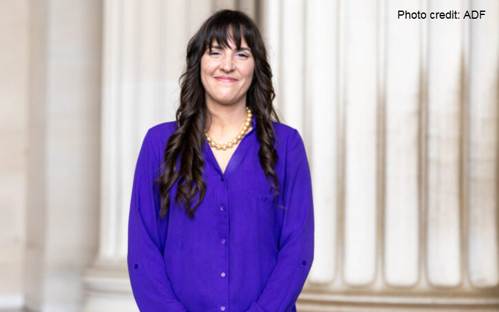 The Court sided with Chiles in a near-unanimous 8-1 verdict.
“A lot of times the government claims that it's just regulating professional speech and that this speech doesn't have the same protections as the First Amendment. But in both of those cases, the Supreme Court rightly said no,’” O’Neil said.
The absence of a fourth conservative voice in Khatibi v. Yip is perplexing.
“It’s a real question as to why enough justices did not take up this case to enable that same message to be delivered again from the nation's highest court,” O’Neil said.
Not only a California thing
California’s victory is not only viewpoint discrimination but also creates compelled speech.
“Do No Harm and Dr. Khatibi didn't sue just because they thought they were being discriminated against. They sued because these mandates would have required them to endorse a message that they disagreed with,” O’Neil said.
Similar cases are popping up elsewhere in which states are trying to force an ideological stance, O’Neil said.
“That raises all sorts of constitutional issues because if you can force abortion extremism in the name of healthcare, what is it that you cannot do by presenting yourself as a regulator of an industry?”